Skin Longevity 2026: Why Dermatologists Say It Replaces Anti-Aging
Skin Longevity 2026: Why Dermatologists Say It Replaces Anti-Aging

In April 2026, the beauty industry has officially declared the end of the anti-aging era. The concept of skin longevity—a science-backed approach that prioritizes cellular health, barrier resilience, and long-term repair over quick-fix wrinkle erasers—has become the dominant philosophy in modern skincare. Board-certified dermatologists, cosmetic chemists, and leading K-beauty innovators are all converging on a single message: fewer products, smarter ingredients, and a focus on how your skin functions at the cellular level. Skin longevity is not a trend; it is a paradigm shift in how we understand and care for our largest organ.
What Is Skin Longevity and Why Does It Matter?
Skin longevity is the practice of supporting your skin's biological resilience over time. Rather than targeting surface-level symptoms like wrinkles or dark spots, this approach works at the cellular level to maintain the natural processes that keep skin healthy: DNA repair, collagen synthesis, antioxidant defense, and barrier integrity.
"Anti-aging implies that aging is a problem to be solved," explains Dr. Aderonke Obayomi, a board-certified dermatologist. "Skin longevity reframes the conversation. It is about giving your cells what they need to function optimally—at any age." The distinction is more than semantic. Traditional anti-aging products often rely on aggressive actives like high-concentration retinoids and exfoliating acids that can strip the skin barrier and cause sensitization. Skin longevity takes the opposite approach: protect the barrier first, then introduce targeted repair.
The global skincare market, valued at $150.14 billion in 2025 and projected to reach $206.9 billion by 2030, is increasingly driven by consumers who want clinical proof over marketing hype. As covered in our Anti-Aging Skincare Guide 2026, the industry's center of gravity is shifting toward biotech-driven efficacy, and skin longevity sits at the heart of that transformation.
NAD+: The Cellular Energy Molecule Reshaping Skincare

If skin longevity has a flagship ingredient in 2026, it is NAD+ (nicotinamide adenine dinucleotide). This coenzyme, naturally present in every cell of the body, plays a critical role in cellular energy metabolism, DNA restoration, oxidative stress modulation, and mitochondrial activity. NAD+ essentially fuels the powerhouses of our cells while orchestrating the repair mechanisms that keep skin resilient.
The problem is that NAD+ levels decline naturally with age and are further depleted by UV exposure, pollution, poor sleep, and stress. When NAD+ drops, the skin becomes slower to repair itself, collagen production decreases, and visible signs of aging accelerate. This is why NAD+ has moved beyond the supplement aisle and into topical skincare formulations.
There is an important nuance, however. NAD+ itself has a relatively large molecular size that limits its ability to penetrate the epidermis when applied topically. The most effective formulations use NAD+ precursors—particularly niacinamide (vitamin B3), nicotinamide riboside (NR), and nicotinamide mononucleotide (NMN)—that enhance the skin's capacity to synthesize NAD+ intracellularly. When well designed, these precursor-driven products can meaningfully promote cellular renewal and resilience at the skin surface.
Korean brand numbuzin's No.9 NAD+ Bio Lifting Serum has become a breakout product in this category, combining NAD+ precursors with peptides to target sagging skin and fine lines. Meanwhile, goop Beauty's Youth Boost NAD+ Peptide Rich Cream represents the luxury end of the spectrum, featuring Gwyneth Paltrow's endorsement as her "holy grail" moisturizer. For a comprehensive look at how NAD+ relates to other cutting-edge actives, check our K-Beauty Ingredients Encyclopedia 2026.
Peptides: The Quiet Powerhouse Behind Skin Longevity
Peptides have been steadily climbing the ingredient hierarchy for years, but 2026 marks the year they graduate from supporting player to lead role. These short chains of amino acids act as cellular messengers, telling skin cells to produce more collagen, elastin, and other structural proteins essential for youthful-looking skin. Unlike retinoids, peptides achieve this signaling without irritation, dryness, or sensitization—making them ideal for the barrier-first philosophy of skin longevity.
Next-generation peptide complexes now go beyond simple collagen stimulation. Biomimetic peptides, which mimic naturally occurring peptides in the skin, can target specific pathways including inflammation reduction, melanin regulation, and even muscle relaxation (a mechanism similar to Botox). As we explored in our review of Dr. Barbara Sturm's Peptide Serum, the latest formulations use encapsulation technology to deliver peptides deeper into the skin, improving both bioavailability and efficacy.
Dermatologists now recommend peptide serums as a core step in any longevity routine, particularly for those over 30. The key is consistency: peptides work cumulatively, building results over weeks and months rather than delivering overnight transformation. This aligns perfectly with the longevity mindset—slow, sustainable progress over dramatic but unsustainable interventions.
The Simplified Routine: Why Less Is Finally More
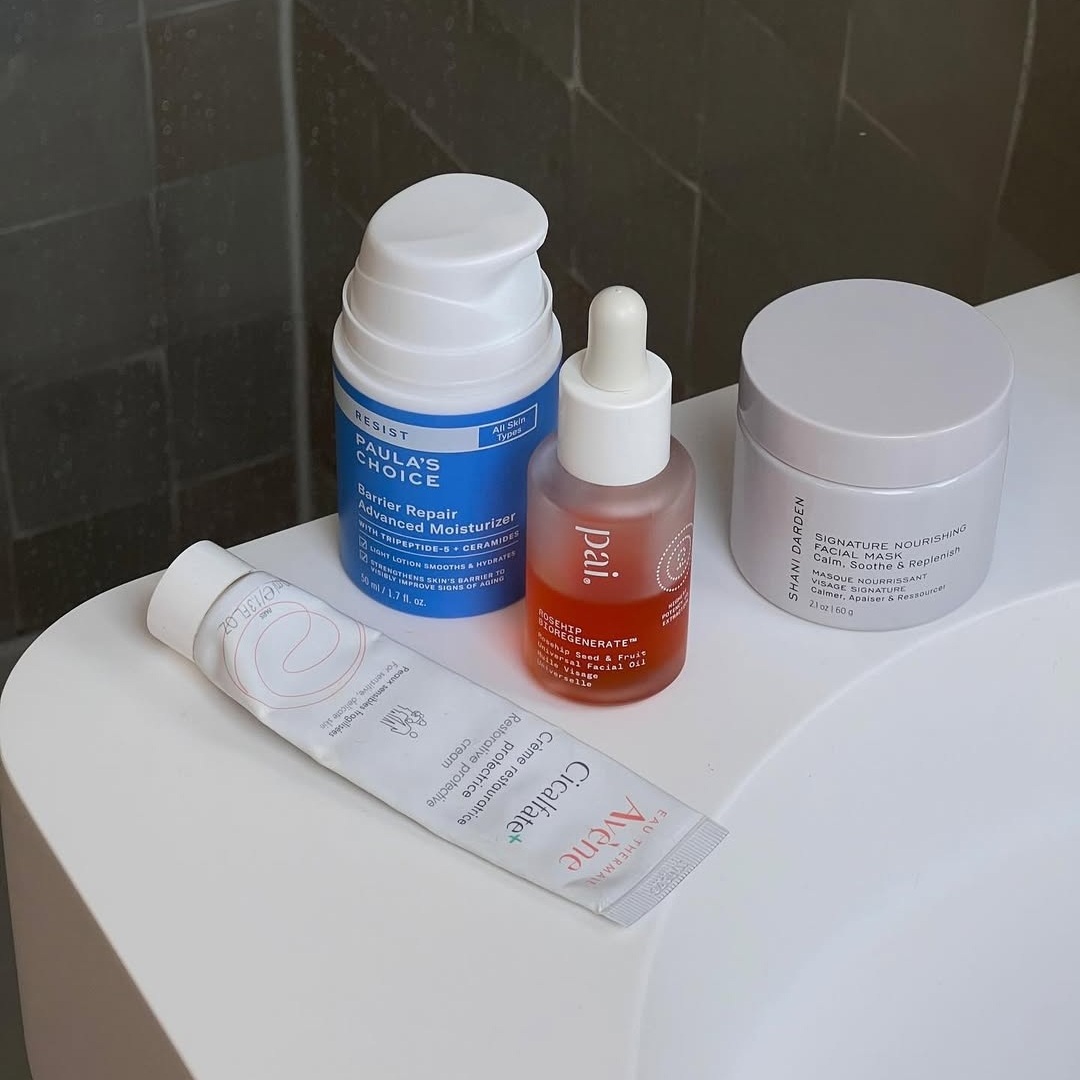
"The days of 50 different serums are done," says Dr. Obayomi. "People are exhausted, their skin is sensitized, and they are realizing that more steps often mean more problems." This declaration from a leading dermatologist encapsulates the most practical aspect of skin longevity: routine simplification.
In 2026, dermatologists consistently recommend a focused approach of four to six well-chosen products that outperforms complicated multi-step regimens. The philosophy is straightforward—think less miracle and more math: protect in the morning, repair at night, and repeat. Because consistency beats chaos every time.
The ideal skin longevity morning routine looks like this: a gentle cleanser, a stabilized vitamin C serum or niacinamide treatment, a lightweight moisturizer with ceramides, and a broad-spectrum SPF 50 sunscreen. Sunscreen remains the single most critical anti-aging product, as UV exposure causes up to 80% of visible facial aging. At night, the routine shifts to repair: the same gentle cleanser, a retinoid or peptide treatment (alternated based on skin tolerance), and a richer moisturizer to support overnight barrier repair.
This simplified approach does not mean settling for less effective results. On the contrary, improved formulation technologies in 2026 allow single products to deliver what previously required three or four. Multi-tasking formulas now combine NAD+ precursors, peptides, and barrier-supporting lipids in one serum, reducing both cost and the risk of ingredient conflicts. For those building a K-beauty routine, our Best Korean Vitamin C Serums 2026 guide helps identify products that combine efficacy with simplicity.
The Barrier-First Revolution: Ceramides, Postbiotics, and Microbiome Science
Skin longevity is inseparable from barrier health. The skin barrier—that thin lipid matrix on the surface of your skin—is your body's first line of defense against environmental aggressors, moisture loss, and infection. When the barrier is compromised, every other skincare active works less effectively. This is why 2026 has been called the "Year of the Barrier."
Ceramides, the lipids that make up roughly 50% of the skin barrier, have been a dermatologist staple for years. But the latest innovation is postbiotic ceramides—a new generation of smart barrier actives that unite microbiome science with lipid engineering. Unlike traditional ceramides that simply replenish lost lipids, postbiotic ceramides communicate with the skin's microbiome and immune receptors, increasing the expression of structural proteins like filaggrin and loricrin that are essential for barrier integrity.
Clinical trials have demonstrated impressive results: participants experienced a 35% decrease in transepidermal water loss (TEWL) and a 30% increase in hydration within just two weeks of using postbiotic ceramide formulations. Korean skincare brands are leading this innovation, combining fermented ingredients, prebiotics, and next-generation ceramides in formulations that support the barrier ecosystem rather than just patching it. Our guides on ectoin and beta-glucan explore two more barrier-supporting ingredients that pair perfectly with the longevity approach.
K-Beauty's Role in the Longevity Revolution
Korean beauty innovation continues to be the engine driving many of 2026's most significant skincare advances. The longevity movement aligns naturally with K-beauty's long-standing emphasis on skin health over cosmetic coverage. Where Western beauty traditionally focused on concealing imperfections, K-beauty has always prioritized achieving healthy, resilient skin that needs minimal makeup.
Three K-beauty innovations are particularly relevant to skin longevity in 2026. First, PDRN (polydeoxyribonucleotide), the salmon DNA-derived ingredient that provides cells with the building blocks for self-repair, has gone mainstream with products from Medicube, VT Cosmetics, and Dr. Ceuracle. Second, exosome technology, which uses cell-derived vesicles to deliver repair signals directly into the skin, is rewriting the rules of anti-aging efficacy. Third, the modernization of hanbang (traditional Korean herbal medicine), pairing ancient ingredients like ginseng and mugwort with cutting-edge delivery systems, represents a uniquely Korean contribution to the longevity conversation.
Olive Young, Korea's largest beauty retailer, has identified skin longevity as one of its top consumer categories for 2026. As the brand prepares to open its first U.S. flagship stores, these innovations are becoming more accessible to global consumers than ever before.
What the Research Says: Clinical Evidence Behind Skin Longevity
The skin longevity approach is backed by a growing body of peer-reviewed research. A comprehensive review published in the Annals of Dermatology in 2026 examined microbiome-based interventions for skin aging and barrier function, concluding that probiotic-derived postbiotics enhance ceramide synthesis, improve barrier function, and increase skin hydration through multiple biochemical pathways.
Separately, research on NAD+ published in the Journal of Tropical Medicine (Wiley, 2026) confirmed that bioactive metabolites including short-chain fatty acids, peptides, exopolysaccharides, and sphingomyelinase promote ceramide synthesis, antioxidant defense, and antimicrobial protection. Clinical trials with specific probiotic strains—Lactobacillus plantarum HY7714 and Bifidobacterium breve—reported measurable improvements in skin elasticity and reductions in wrinkle depth.
Perhaps most convincingly, the longevity-focused approach has shown results that rival or exceed traditional anti-aging treatments. The key difference is sustainability: where aggressive retinoid protocols often lead to cycles of irritation and recovery, barrier-first strategies deliver steady improvement without the disruption that causes many people to abandon their routines entirely.
You May Also Like
- PDRN Skincare 2026: Why Salmon DNA Is K-Beauty's Hottest Anti-Aging Ingredient
- Exosome Skincare 2026: How This Biotech Ingredient Is Rewriting the Rules of Anti-Aging
- Dr. Barbara Sturm Peptide Serum 2026: Celebrity-Backed Biomimetic Science for Skin Longevity
- Ectoin Skincare 2026: The Stress-Protection Molecule Dermatologists Say Your Skin Barrier Needs
- Anti-Aging Skincare Guide 2026: Science-Backed Ingredients, Routines, and Expert Strategies
Frequently Asked Questions
Q: What is skin longevity and how is it different from anti-aging?
A: Skin longevity focuses on supporting your skin's natural cellular repair processes—DNA repair, collagen synthesis, barrier integrity, and antioxidant defense—rather than simply targeting surface-level signs of aging. Traditional anti-aging often relies on aggressive actives that can compromise the skin barrier. Skin longevity takes a barrier-first approach, using ingredients like NAD+ precursors, peptides, and ceramides to help skin function optimally at any age. The goal is long-term skin health, not just wrinkle reduction.
Q: What is NAD+ in skincare and does it actually work?
A: NAD+ (nicotinamide adenine dinucleotide) is a coenzyme essential for cellular energy production and DNA repair. While NAD+ itself has limited topical absorption due to its molecular size, formulations using NAD+ precursors like niacinamide, nicotinamide riboside (NR), and NMN can effectively boost NAD+ synthesis within skin cells. These precursor-driven products promote cellular renewal, improve skin elasticity, and support repair mechanisms. Dermatologists consider NAD+ precursors a promising category, especially when combined with peptides and antioxidants.
Q: How many skincare products do I actually need for skin longevity?
A: Dermatologists recommend four to six well-chosen products. A morning routine of cleanser, vitamin C or niacinamide serum, moisturizer, and SPF 50 sunscreen—plus an evening routine of cleanser, retinoid or peptide treatment, and richer moisturizer—covers all the essential bases. The 2026 approach emphasizes quality and consistency over quantity.
Q: Are peptides better than retinoids for anti-aging in 2026?
A: They serve complementary roles. Retinoids remain the gold standard for accelerating cell turnover and stimulating collagen, but they can cause irritation and barrier disruption. Peptides achieve collagen stimulation through cellular signaling without irritation, making them ideal for sensitive skin or as daily-use products alongside retinoids. Many dermatologists now recommend alternating peptide nights and retinoid nights for optimal results with minimal disruption.
Q: What K-beauty ingredients support skin longevity?
A: Several Korean innovations are central to the skin longevity movement: PDRN (salmon DNA) provides cellular repair building blocks, exosomes deliver intercellular repair signals, fermented postbiotics enhance barrier ceramide synthesis, and modernized hanbang ingredients like ginseng and mugwort offer antioxidant and anti-inflammatory protection through advanced delivery systems. Korean brands like Medicube, VT Cosmetics, and Dr. Ceuracle are at the forefront of longevity-focused formulations.
The Bottom Line
Skin longevity represents the most meaningful evolution in skincare philosophy in decades. By shifting focus from erasing the signs of aging to supporting the cellular processes that keep skin healthy, this approach offers more sustainable, scientifically grounded results. The formula is simple: protect your barrier, fuel your cells with NAD+ precursors and peptides, use fewer but better products, and trust consistency over intensity. In 2026, the smartest thing you can do for your skin is stop fighting aging and start investing in longevity.
Sources: Beauty Independent, NBC News, Who What Wear, Annals of Dermatology (PMC)


댓글
댓글 쓰기