Hyaluronic Acid Skincare Guide 2026: Science, Best K-Beauty Products, and How to Build Your HA Routine
Hyaluronic Acid Skincare Guide 2026: Science, Best K-Beauty Products, and How to Build Your HA Routine
Hyaluronic acid (HA) remains the single most popular hydrating ingredient in skincare in 2026 — and for good reason. Naturally present in human skin, connective tissue, and eyes, this glycosaminoglycan holds up to 1,000 times its weight in water, making it the gold standard for skin hydration. Korean beauty brands have spent the last decade perfecting multi-weight HA formulations that deliver moisture at every layer of the skin, from the surface down to the dermis. This comprehensive guide breaks down the science behind hyaluronic acid, ranks the best K-beauty HA products of 2026, and shows you exactly how to incorporate HA into your routine for maximum results — whether your skin is dry, oily, sensitive, or aging.

What Is Hyaluronic Acid and Why Does Your Skin Need It?
Despite the word "acid" in its name, hyaluronic acid is not an exfoliant — it is a humectant, meaning it draws water from the environment and deeper skin layers to hydrate the outer epidermis. Your body naturally produces HA, with roughly 50% of total body HA found in the skin. However, HA production declines with age: by your 40s, your skin contains roughly half the HA it had in your 20s, contributing to dryness, fine lines, and loss of plumpness.
According to a systematic review published in the journal Molecules (PMC, 2023), topical hyaluronic acid enhances skin hydration and elasticity by retaining moisture in the epidermis. It also stimulates fibroblast activity, increasing the production of collagen, elastin, and extracellular matrix proteins — which contributes to skin firmness, elasticity, and resistance to mechanical stress. In simpler terms, HA does not just hydrate the surface; it triggers biological processes that help your skin rebuild from within.
This dual action — immediate surface hydration plus deeper biological stimulation — is why dermatologists and K-beauty experts consistently rank HA as an essential ingredient in any well-rounded skincare routine.
The Science of Molecular Weight: Why It Matters for Your Skin
Not all hyaluronic acid is created equal. The key differentiator is molecular weight, measured in Daltons (Da). Understanding this concept is critical when choosing a Korean HA product, because K-beauty brands have pioneered multi-weight formulations that Western brands are only now starting to adopt.
Here is how molecular weight affects skin penetration and function:
| Molecular Weight | Size (Daltons) | Penetration Depth | Primary Function |
|---|---|---|---|
| High MW | 1,000–1,800 kDa | Stays on surface | Film-forming barrier, anti-inflammatory, immediate plumping |
| Medium MW | 100–1,000 kDa | Upper epidermis | Moisture retention, skin barrier support |
| Low MW | 10–100 kDa | Deeper epidermis | Collagen synthesis, wrinkle reduction |
| Ultra-Low MW | <10 kDa | Dermis | Deep tissue hydration, wound healing support |
A 2022 randomized controlled trial in 65 women with periocular wrinkles demonstrated that after 60 days, the lowest-molecular-weight HA formulations produced significantly greater wrinkle depth reduction compared to high-MW formulations — confirming that smaller HA molecules deliver superior anti-aging results when they can reach deeper skin layers.
This is precisely why the best Korean HA serums in 2026 use 3-to-5 different molecular weights in a single formula: the high MW provides immediate surface plumping, the medium MW locks in moisture, and the low/ultra-low MW penetrates to stimulate collagen. This "5D hyaluronic acid" approach was pioneered by Korean brands and remains one of K-beauty's most significant contributions to global skincare science. For a deeper dive into trending K-beauty actives, see our K-Beauty Ingredients Encyclopedia 2026.
7 Best Korean Hyaluronic Acid Products in 2026
After analyzing ingredient lists, clinical data, user reviews, and Hwahae rankings, here are the seven best Korean HA products you can buy in 2026:
1. Torriden DIVE-IN Low Molecular Hyaluronic Acid Serum
The undisputed king of K-beauty HA serums. Torriden's DIVE-IN uses a proprietary 5D multi-weight hyaluronic acid complex that hydrates at five different skin depths simultaneously. The addition of D-panthenol and madecassoside (a centella derivative) provides anti-inflammatory soothing, making it ideal for sensitive and irritation-prone skin. It is vegan-certified, fragrance-free, alcohol-free, and clinically tested non-irritating. At around $13 for 50ml, it offers exceptional value.
- Best for: All skin types, especially sensitive and dehydrated
- Key ingredients: 5-weight HA complex, panthenol, allantoin, madecassoside
- Texture: Lightweight, water-like, fast-absorbing
2. COSRX Hyaluronic Acid Hydra Power Essence
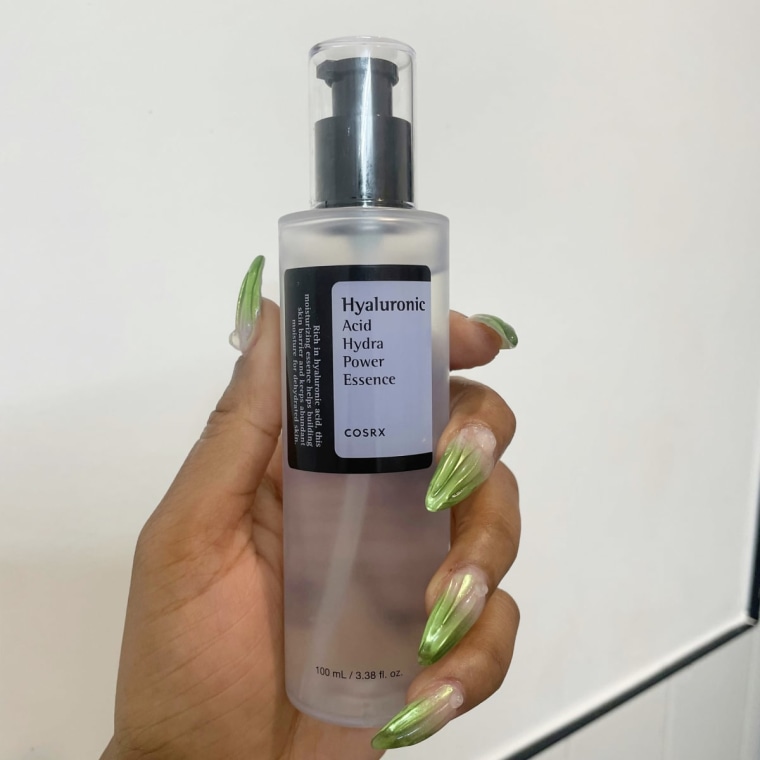
A fan-favorite essence that combines sodium hyaluronate with glycerin and sea buckthorn water. Unlike most HA serums, this is formulated as a lightweight essence — meaning it layers beautifully under other products without pilling. Non-comedogenic, paraben-free, and fragrance-free. At 100ml per bottle, it is one of the most affordable options per milliliter. For those who prefer a more concentrated formula, the COSRX Hyaluronic Acid 3 Serum delivers 3% HA in a 20ml dropper bottle.
- Best for: Oily and combination skin, budget-conscious shoppers
- Key ingredients: Sodium hyaluronate, glycerin, sea buckthorn water
- Texture: Thin, watery essence
3. Isntree Hyaluronic Acid Water Essence
Isntree's formula stands out for pairing ultra-low molecular HA with glyceryl glucoside and beta-glucan — creating a hydration + barrier-repair combination that goes beyond simple moisture. The glyceryl glucoside stimulates aquaporin channels (the skin's internal water-transport system), enhancing the skin's own ability to move moisture where it is needed. This makes it a particularly smart choice for skin that feels chronically dehydrated despite using hydrating products.
- Best for: Dehydrated skin, barrier-damaged skin
- Key ingredients: Multi-weight HA, glyceryl glucoside, beta-glucan
- Texture: Lightweight gel-essence
4. Anua PDRN Hyaluronic Acid Capsule 100 Serum
One of the hottest launches on Hwahae's 2026 rankings, this serum combines PDRN (polydeoxyribonucleotide, also known as "salmon DNA") with low-molecular hyaluronic acid. PDRN stimulates tissue regeneration and has been used in clinical dermatology for wound healing. Combined with HA, it addresses both hydration and anti-aging in a single product. The "capsule" format encapsulates the PDRN for controlled release upon application.
- Best for: Aging skin, post-procedure recovery
- Key ingredients: PDRN, low-molecular HA
- Texture: Capsule-in-serum, slightly viscous
5. Innisfree Green Tea Seed Hyaluronic Serum
Innisfree combines Jeju green tea extract with hyaluronic acid for a dual hydration-plus-antioxidant approach. The green tea provides catechins that protect against environmental free radicals, while the HA handles moisture retention. At $32 for 80ml, it sits at a mid-range price point but delivers generous volume. The serum also contains amino acids that support the skin's natural moisturizing factor (NMF).
- Best for: Combination skin, environmental stress protection
- Key ingredients: HA, Jeju green tea seed extract, amino acids
- Texture: Lightweight serum, slightly green-tinted
6. SKIN1004 Madagascar Centella Hyalu-Cica Water-Fit Sun Serum SPF50+
A multitasking product that combines hyaluronic acid with centella asiatica and broad-spectrum SPF50+ sun protection. This represents the 2026 trend of "hybrid products" — skincare ingredients embedded in sun protection. The HA keeps skin hydrated under sunscreen (which can be drying), while centella soothes irritation. It eliminates the need for a separate HA serum step in the morning routine.
- Best for: Minimalists, those seeking streamlined morning routines
- Key ingredients: HA, centella asiatica, chemical UV filters
- Texture: Fluid, water-like sunscreen
7. Laneige Water Sleeping Mask
While not a serum, this overnight sleeping mask delivers HA in a unique format. The proprietary Sleep-tox technology combines hyaluronic acid with probiotics and minerals from sleeping water, creating a hydration reservoir that works while you sleep. The mask format means the HA has extended contact time with skin — potentially 8 hours versus the 20-30 minutes of a serum before it is sealed by subsequent products. For a comparison with other hydrating products, check our 10 Best Korean Moisturizers 2026 guide.
- Best for: Nighttime hydration, dry winter skin
- Key ingredients: HA, probiotics, mineral water
- Texture: Gel-cream sleeping mask
How to Build the Perfect Hyaluronic Acid Routine
Knowing which HA product to buy is only half the equation. How and when you apply it dramatically affects results. Here is a step-by-step HA-focused routine based on the Korean skincare layering philosophy:
Morning Routine:
- Cleanser — Use a gentle, pH-balanced cleanser. See our Double Cleansing Guide for the full method.
- Toner — Apply a hydrating toner to damp skin. This provides the initial layer of water that HA needs to work. Check our 15 Best Korean Toners 2026 for recommendations.
- Hyaluronic Acid Serum — Apply 2-3 drops to damp skin (this is critical — never apply HA to dry skin). Pat gently, do not rub.
- Moisturizer — Seal the HA with a moisturizer containing occlusives (ceramides, squalane, or shea butter) to prevent moisture evaporation.
- Sunscreen SPF 50+ — Always finish with broad-spectrum sunscreen. Or use a hybrid like the SKIN1004 Hyalu-Cica Sun Serum.
Evening Routine:
- Oil Cleanser → Water Cleanser (double cleanse)
- Exfoliant (2-3x/week) — AHA/BHA/PHA acids can be used before HA. Wait 20 minutes after acid exfoliation before applying HA.
- Toner — Hydrating toner on damp skin.
- Hyaluronic Acid Serum — Same application method as morning.
- Treatment — Retinol, niacinamide, or peptide serums.
- Moisturizer or Sleeping Mask — Seal everything in.
The golden rule: HA must always be applied to damp skin and sealed with an occlusive product. If you apply HA to dry skin in a low-humidity environment, it can actually pull moisture from deeper skin layers to the surface where it evaporates — causing net dehydration. Always mist your face or apply HA immediately after toner while skin is still damp.
Hyaluronic Acid Ingredient Combinations: What Works and What to Avoid
HA plays well with almost everything, but certain combinations produce synergistic results:
| Combination | Synergy | Recommended For |
|---|---|---|
| HA + Niacinamide | HA hydrates while niacinamide strengthens the barrier and reduces pores | Oily, combination, acne-prone |
| HA + Vitamin C | HA buffers potential irritation from ascorbic acid while boosting brightness | Dull, uneven skin tone |
| HA + Centella Asiatica | Combined anti-inflammatory + hydration calms redness and repairs barrier | Sensitive, rosacea-prone |
| HA + Retinol | HA counteracts retinol-induced dryness and flaking | Anti-aging routines |
| HA + Ceramides | HA provides water while ceramides lock it in — the ultimate hydration duo | Dry, eczema-prone |
| HA + PDRN | Hydration + tissue regeneration for accelerated skin renewal | Aging, post-procedure recovery |
| HA + Snail Mucin | Double humectant power — mucin adds glycoproteins that HA lacks | Dry, damaged skin |
There are very few ingredients that conflict with HA. The main caution is using high-concentration AHA/BHA immediately before HA application without a buffer period — the low pH of acids can temporarily reduce HA efficacy. Wait 15-20 minutes after acid exfoliation before applying your HA serum, or use them on alternate days.
Common Hyaluronic Acid Mistakes (and How to Fix Them)
Even skincare enthusiasts make these HA mistakes. Here are the five most common errors and how to correct them:
Mistake 1: Applying HA to dry skin. This is the number one reason people say "HA does not work for me." On dry skin in low-humidity conditions, HA has no environmental moisture to draw from — so it pulls water from deeper skin layers instead, leading to transepidermal water loss. The fix: always apply to damp skin after toner or mist, then immediately seal with moisturizer.
Mistake 2: Using only high-molecular-weight HA. Many drugstore HA products contain only high-MW hyaluronic acid, which sits on the skin surface and provides temporary plumping that washes off. Look for products that specify "multi-weight," "5D complex," or "low-molecular" HA for deeper, longer-lasting hydration.
Mistake 3: Skipping the occlusive seal. HA is a humectant, not an occlusive. It draws moisture but cannot lock it in. Without a moisturizer or sleeping mask on top, the moisture HA attracted will simply evaporate. Always follow HA with a cream, oil, or sleeping mask containing occlusives like ceramides, squalane, or dimethicone.
Mistake 4: Thinking more is better. Using multiple HA serums in the same routine provides diminishing returns. Your skin can only absorb so much HA at once. One well-formulated multi-weight HA serum is more effective than layering three different HA products. If you want to maximize hydration, pair a single HA serum with complementary humectants like glycerin or snail mucin.
Mistake 5: Expecting HA to fix all dehydration. If your skin is persistently dehydrated despite HA use, the problem may be a compromised skin barrier — not insufficient humectants. In this case, focus on barrier repair with ceramides and fatty acids first, then reintroduce HA once the barrier is intact. Our Bloom Skin Trend guide covers the barrier-first approach that Korean dermatologists now recommend.
The Future of HA in Korean Skincare: 2026 and Beyond
Korean beauty brands continue to push the boundaries of HA technology. Key trends emerging in 2026 include:
- HA + PDRN combinations — The fusion of hydration and tissue regeneration is the hottest product category on Korean beauty platforms this year.
- Snow Mushroom (Tremella fuciformis) — Dubbed "vegan hyaluronic acid," this mushroom extract holds up to 500 times its weight in water and is appearing in an increasing number of K-beauty formulations as either a complement to or replacement for animal-derived HA.
- Encapsulated HA delivery systems — Brands like Anua are using capsule technology to protect HA from degradation and deliver it in a controlled-release format for extended hydration.
- Hybrid SPF + HA products — The trend toward multi-step reduction (the skinimalism movement) is driving demand for sunscreens, toners, and moisturizers that already contain clinical concentrations of HA.
You May Also Like
- Complete Guide to Glass Skin 2026: The 10-Step Korean Skincare Routine
- Niacinamide Skincare Guide 2026: Benefits, Best Products, and How to Build Your Routine
- Retinol vs Bakuchiol 2026: Which Anti-Aging Ingredient Is Right for Your Skin?
- Centella Asiatica in Skincare 2026: Complete Benefits Guide
- Snail Mucin Skincare 2026: Science, Benefits, and Best Products
- K-Beauty Product Database 2026: Complete Buying Guide
Frequently Asked Questions
Q: Can you use hyaluronic acid every day?
Yes. HA is one of the safest and most well-tolerated skincare ingredients. It can be used twice daily — morning and evening — on all skin types, including sensitive and acne-prone. There is no risk of over-exfoliation or irritation because it is a humectant, not an active exfoliant or retinoid.
Q: What molecular weight of hyaluronic acid is best for wrinkles?
Low-molecular-weight HA (10-100 kDa) has the strongest clinical evidence for wrinkle reduction because it penetrates deeper into the epidermis and stimulates collagen synthesis. However, a multi-weight formula that includes both low and high MW HA delivers the best overall results — surface plumping plus deep anti-aging action.
Q: Does hyaluronic acid work in dry climates?
It can, but you must adapt your application method. In humidity below 40%, HA has less environmental moisture to draw from, so it may pull water from your skin instead. The solution: apply HA to very damp skin (use a mist), immediately seal with a heavy occlusive moisturizer, and consider using a humidifier indoors. Korean sleeping masks are excellent for locking in HA overnight in dry environments.
Q: Is Korean hyaluronic acid better than Western brands?
Korean brands have pioneered multi-weight HA formulations that deliver hydration at multiple skin depths simultaneously — a technology Western brands are only beginning to adopt. Products like Torriden DIVE-IN (5 molecular weights) and Isntree Hyaluronic Acid Water Essence (with aquaporin-activating glyceryl glucoside) represent formulation sophistication that is still rare in Western pharmacy-brand HA serums. So while the ingredient itself is the same, the formulation science in K-beauty HA products is typically more advanced.
Q: Can I use hyaluronic acid with retinol?
Absolutely — and you should. HA is one of the best ingredients to pair with retinol or retinoids. Retinol increases cell turnover but can cause dryness, flaking, and irritation, especially during the adjustment period. Applying HA before retinol creates a hydration buffer that reduces these side effects. Alternatively, some people prefer to apply retinol first, wait 20 minutes, then layer HA on top to soothe and hydrate.
Q: What is the difference between hyaluronic acid and sodium hyaluronate?
Sodium hyaluronate is the sodium salt form of hyaluronic acid. It has a smaller molecular size and higher skin penetration than pure HA, which is why most Korean skincare products actually use sodium hyaluronate rather than hyaluronic acid itself. When a product label says "hyaluronic acid," it often contains sodium hyaluronate as the actual ingredient. Both are effective; sodium hyaluronate simply absorbs better.
Q: How long does it take to see results from hyaluronic acid?
Hydration effects are immediate — you will notice plumper, dewier skin within minutes of application. However, the deeper anti-aging benefits (reduced fine lines, improved elasticity, collagen stimulation from low-MW HA) require consistent use over 4-8 weeks. Clinical studies typically measure significant wrinkle reduction at the 60-day mark.
Sources: Molecules/PMC: Hyaluronic Acid in Cosmeceuticals, PMC: Benefits of Topical Hyaluronic Acid, NBC News Select, BeautyMatter 2026 K-Beauty Forecast, Hwahae Global Rankings 2026


댓글
댓글 쓰기