Retinol vs Bakuchiol 2026: Which Anti-Aging Ingredient Is Right for Your Skin?
Retinol vs Bakuchiol 2026: The Definitive Dermatologist Guide to Choosing Your Anti-Aging Active
The retinol vs bakuchiol debate has become one of the most searched skincare questions of 2026, with Google search interest for "bakuchiol serum" surging 54 percent and "retinol alternative" climbing 47 percent year over year. Both ingredients promise to reduce wrinkles, even out skin tone, and boost collagen production, but they work very differently and suit very different skin profiles. This comprehensive guide breaks down the science, compares clinical results head to head, and helps you decide which anti-aging powerhouse belongs in your routine.
What Is Retinol and How Does It Work?
Retinol is a derivative of vitamin A and belongs to the broader family of compounds known as retinoids. It has been the gold standard in anti-aging skincare for over four decades, backed by hundreds of peer-reviewed studies. When applied topically, retinol converts to retinoic acid inside the skin through a two-step enzymatic process. Retinoic acid then binds to retinoic acid receptors (RARs) in skin cells, triggering a cascade of biological effects.
The primary mechanisms of retinol include accelerating cellular turnover, stimulating collagen and elastin synthesis in the dermis, reducing melanin production to fade dark spots, and normalizing sebum production. These combined effects make retinol effective against fine lines, wrinkles, uneven texture, hyperpigmentation, and even acne. Over-the-counter retinol products typically contain concentrations between 0.025 percent and 1.0 percent, while prescription retinoids like tretinoin deliver stronger results at the cost of more pronounced side effects.
However, retinol comes with well-documented drawbacks. The so-called "retinol purge" — a period of increased dryness, peeling, redness, and breakouts — can last anywhere from two to eight weeks and discourages many new users. Retinol also increases photosensitivity, requiring diligent sunscreen use (check out our Centella Asiatica guide for soothing post-retinol irritation). Furthermore, all vitamin A derivatives are contraindicated during pregnancy and breastfeeding due to potential teratogenic effects.
What Is Bakuchiol and Where Does It Come From?

Bakuchiol (pronounced "bah-KOO-chee-ol") is a meroterpene compound extracted from the seeds and leaves of Psoralea corylifolia, commonly known as the babchi plant. This plant has been used for centuries in both Ayurvedic and traditional Chinese medicine to treat a range of skin conditions. Unlike retinol, bakuchiol is not chemically related to vitamin A. It has a completely different molecular structure, yet it activates many of the same gene expression pathways in skin cells.
Research published in the International Journal of Cosmetic Science revealed that bakuchiol functions as a "functional analogue" of retinol. It stimulates type I and type III collagen production, accelerates cell turnover, and inhibits matrix metalloproteinases (the enzymes that break down collagen). A 2022 study in Experimental Dermatology went further, showing that bakuchiol also stimulates fibronectin production and accelerates epidermal wound healing — effects not seen with retinol.
What makes bakuchiol particularly appealing in 2026 is its additional antioxidant and anti-inflammatory properties. It scavenges free radicals, calms redness, and does not increase photosensitivity, meaning it can be safely used in the morning as well as at night. These qualities have made it a favorite among K-beauty formulators who prioritize gentle yet effective actives.
Head-to-Head: Retinol vs Bakuchiol Clinical Evidence
The landmark study that put bakuchiol on the map was a 2019 prospective, randomized, double-blind trial published in the British Journal of Dermatology. Researchers compared 0.5 percent bakuchiol (applied twice daily) against 0.5 percent retinol (applied once daily at night) over 12 weeks. The results were striking:
- Both groups showed statistically significant improvements in wrinkle surface area and hyperpigmentation
- There was no statistically significant difference between the two groups in anti-aging efficacy
- The retinol group reported significantly more scaling and stinging
- The bakuchiol group reported zero adverse effects
A 2022 multidirectional activity study confirmed these findings and added new data points: bakuchiol demonstrated high antioxidative efficacy that retinol did not match, and it showed unique regenerative properties including fibronectin stimulation and accelerated wound healing. According to Harvard Health, bakuchiol delivers clinical outcomes comparable to 0.5 percent retinol concentration but with approximately 50 percent less irritation.
However, dermatologists note important caveats. Retinol has decades more research behind it, with studies proving benefits at higher concentrations and in combination with other retinoids. For moderate to severe photoaging, deep wrinkles, or persistent acne, prescription-strength retinoids still outperform bakuchiol. The clinical evidence for bakuchiol, while promising, is still relatively young — most studies are 12 weeks or shorter, and long-term data beyond a year remains limited.
Side-by-Side Comparison Table
| Factor | Retinol | Bakuchiol |
|---|---|---|
| Source | Synthetic vitamin A derivative | Plant-based (babchi seeds) |
| Mechanism | Converts to retinoic acid; binds RAR receptors | Activates similar gene pathways without vitamin A conversion |
| Anti-Wrinkle Efficacy | Strong (40+ years of evidence) | Comparable at 0.5% concentration |
| Irritation Risk | High (dryness, peeling, purging) | Low (minimal side effects) |
| Sun Sensitivity | Increases photosensitivity | No increase in photosensitivity |
| Time of Use | Night only | Morning and night |
| Pregnancy Safe | No (contraindicated) | Generally considered safe |
| Antioxidant Activity | Minimal | High |
| Ingredient Compatibility | Avoid with AHA/BHA, vitamin C (caution) | Compatible with vitamin C, niacinamide, AHAs |
| Price Range | $10–$80 (widely available) | $15–$65 (growing availability) |
Who Should Choose Retinol?
Retinol remains the better choice for specific skin concerns and profiles. Dermatologists generally recommend retinol if you:
- Have moderate to severe signs of photoaging (deep wrinkles, significant sun damage)
- Are dealing with persistent acne that has not responded to other treatments
- Have resilient, non-sensitive skin that can tolerate an adjustment period
- Want maximum potency with the option to upgrade to prescription retinoids
- Are not pregnant, breastfeeding, or planning to conceive in the near future
- Are willing to commit to strict nighttime-only application and daily SPF use
When starting retinol, the "low and slow" approach is critical. Begin with a 0.025 to 0.05 percent concentration two to three nights per week, gradually increasing both concentration and frequency over several months. Always buffer with moisturizer and pair with a broad-spectrum SPF 50 sunscreen during the day. For sunscreen recommendations that pair well with active ingredients, see our dermatologist-backed ingredient guide for complementary routines.
Who Should Choose Bakuchiol?
Bakuchiol is the optimal choice for a growing number of skincare consumers in 2026. Consider bakuchiol if you:
- Have sensitive, reactive, or rosacea-prone skin
- Experience eczema or dermatitis flare-ups with active ingredients
- Are pregnant, breastfeeding, or planning to conceive
- Want a plant-based, vegan-friendly anti-aging ingredient
- Prefer a simpler routine without worrying about ingredient conflicts
- Want to use your anti-aging active both morning and night for faster results
- Are new to anti-aging skincare and want a gentle entry point
- Have tried retinol previously and could not tolerate the side effects
One of bakuchiol's biggest advantages is its versatility. You can layer it with vitamin C serums in the morning, mix it with centella asiatica for enhanced soothing, or combine it with niacinamide for a multi-target approach to hyperpigmentation. This ingredient flexibility is a major reason K-beauty brands have embraced bakuchiol in their 2026 formulations.
Best Retinol and Bakuchiol Products in 2026
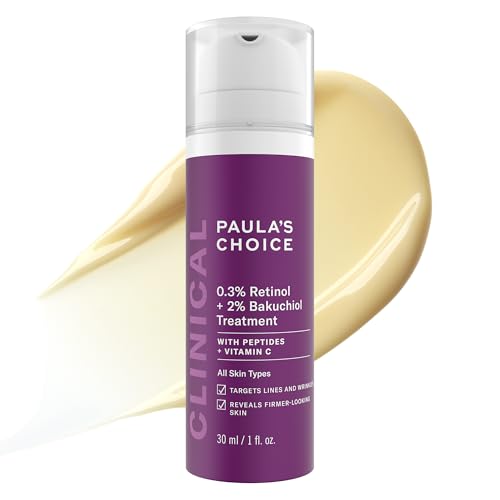
Here are dermatologist-tested products worth considering in each category:
Top Retinol Products:
- Paula's Choice Clinical 0.3% Retinol + 2% Bakuchiol Treatment — A hybrid formula that combines both ingredients for maximum efficacy with reduced irritation. Ideal for those who want the best of both worlds.
- La Roche-Posay Retinol B3 Serum — Pairs 0.3% retinol with niacinamide and hyaluronic acid, minimizing irritation while targeting wrinkles and dark spots.
- CeraVe Skin Renewing Retinol Serum — Budget-friendly option with ceramides and encapsulated retinol for gradual release and less irritation.
- SkinCeuticals Retinol 0.5 Refining Night Cream — Higher concentration for experienced retinol users seeking advanced anti-aging results.
Top Bakuchiol Products:
- Dr. Jart+ Prejuvenation Firming Bakuchiol Serum — A K-beauty favorite combining bakuchiol with tremella mushroom for hydration. Clinical results show 91 percent improved elasticity in one week.
- Herbivore Botanicals Bakuchiol Retinol Alternative Serum — Clean beauty formulation with bakuchiol and plant-based squalane.
- Isntree Hyper Retinol EX 10 Serum — Affordable K-beauty option starting at around $14, blending bakuchiol with other retinol-like botanicals.
- COSMEDIX Bakuchiol Complete — Combines bakuchiol with peptides for a multi-pathway approach to firming and smoothing.
- Acure Radically Rejuvenating Dual Phase Bakuchiol Serum — Budget-friendly, vegan, and cold-pressed botanical formula.
Can You Use Retinol and Bakuchiol Together?
Yes, and this is actually one of the most exciting developments in skincare formulation in 2026. Several brands now combine retinol and bakuchiol in a single product, and the clinical rationale is sound. Bakuchiol appears to buffer retinol's irritation potential while adding its own unique benefits (antioxidant protection, fibronectin stimulation). The result is a formula that delivers retinol-level results with bakuchiol-level tolerance.
If you want to combine them from separate products, dermatologists suggest applying bakuchiol first as a base layer, followed by a low-concentration retinol on top. Start with this combination two to three nights per week and monitor your skin's response. This layering approach has become particularly popular in Korean skincare routines, where multi-step application is already the norm.
For those interested in cutting-edge biotech ingredients that work alongside both retinol and bakuchiol, our exosome skincare guide explores the latest regenerative actives reshaping the anti-aging landscape.
How to Build a Routine Around Each Ingredient
Retinol Nighttime Routine:
- Gentle cleanser (double cleanse if wearing SPF/makeup)
- Hydrating toner or essence
- Wait until skin is completely dry (2-3 minutes)
- Apply retinol serum (pea-sized amount)
- Wait 10-15 minutes for absorption
- Apply rich moisturizer with ceramides
- Apply eye cream (avoid retinol around the eyes initially)
Bakuchiol AM + PM Routine:
- Gentle cleanser
- Vitamin C serum (morning) or hydrating essence (evening)
- Bakuchiol serum
- Niacinamide moisturizer
- SPF 50 sunscreen (morning) — always recommended even though bakuchiol does not increase photosensitivity
The 2026 Trend: Why Bakuchiol Is Gaining Ground
The clean beauty movement, heightened ingredient awareness, and the growing K-beauty influence on global skincare have all contributed to bakuchiol's rise. In 2026, Google Trends data shows "bakuchiol" searches have increased consistently quarter over quarter. The ingredient aligns perfectly with several macro trends: plant-based formulations, pregnancy-safe beauty, sensitive skin solutions, and simplified routines.
K-beauty brands in particular are driving innovation. Korean formulators are combining bakuchiol with other trending botanicals — centella asiatica for soothing, rice bran for brightening, green tea for antioxidant protection — creating multi-functional serums that deliver comprehensive anti-aging benefits without irritation. For more on how K-beauty innovators are pushing boundaries with biotech ingredients, explore our feature on senolytic skincare and the science of cellular renewal.
You May Also Like
- Centella Asiatica in Skincare 2026: Complete Benefits, Best Products, and How to Use
- Azelaic Acid Skincare 2026: The Dermatologist-Backed Ingredient for Acne, Rosacea, and Dark Spots
- Exosome Skincare 2026: The Biotech Ingredient Dermatologists Say Will Transform Anti-Aging
- Senolytic Skincare 2026: How Zombie Cell Science Is Rewriting the Anti-Aging Playbook
Frequently Asked Questions
Q: Is bakuchiol as effective as retinol for wrinkles?
Clinical studies show bakuchiol at 0.5 percent concentration delivers comparable wrinkle reduction to 0.5 percent retinol after 12 weeks. Both ingredients significantly decreased wrinkle surface area with no statistical difference. However, retinol is available in higher concentrations and prescription strengths that may outperform bakuchiol for severe photoaging.
Q: Can I use bakuchiol if I am pregnant or breastfeeding?
Unlike retinol, which is contraindicated during pregnancy due to potential teratogenic effects, bakuchiol is generally considered safe for use during pregnancy and breastfeeding. Its plant-based origin and gentler mechanism of action make it the preferred anti-aging active for expectant and nursing mothers. However, always consult your OB-GYN before starting any new skincare ingredient during pregnancy.
Q: How long does it take to see results from bakuchiol?
Most clinical studies show visible improvements in skin texture and fine lines within four to eight weeks of consistent twice-daily use. Some dermatologist-tested products like Dr. Jart+ Prejuvenation Bakuchiol Serum report improved elasticity in as little as one week. For hyperpigmentation, expect eight to twelve weeks for meaningful fading.
Q: Can I use bakuchiol and vitamin C together?
Yes, one of bakuchiol's key advantages over retinol is its excellent compatibility with other active ingredients. You can safely layer bakuchiol with vitamin C, niacinamide, AHAs, BHAs, and hyaluronic acid. This makes it ideal for multi-step K-beauty routines where ingredient layering is central to the approach.
Q: Does bakuchiol cause purging like retinol?
No. The "retinol purge" occurs because retinol rapidly accelerates cell turnover, pushing existing breakouts to the surface faster. Bakuchiol stimulates cell renewal more gently, so purging is extremely rare. If you experience breakouts after starting bakuchiol, it is more likely a reaction to other ingredients in the formulation rather than the bakuchiol itself.
Q: What is the best concentration of bakuchiol to look for in products?
Look for products containing 0.5 to 2.0 percent bakuchiol. The landmark clinical study used 0.5 percent applied twice daily. Higher concentrations up to 2 percent are common in serums and may deliver faster results. Unlike retinol, there is no need to gradually increase bakuchiol concentration, as it is well tolerated at effective doses from the start.
Q: Should I use sunscreen with bakuchiol even though it does not increase sun sensitivity?
Absolutely. While bakuchiol does not increase photosensitivity the way retinol does, daily SPF 50 sunscreen remains essential for any anti-aging routine. UV exposure is the single largest contributor to premature skin aging, and no anti-aging serum can fully counteract ongoing unprotected sun exposure. Apply broad-spectrum sunscreen every morning regardless of which active ingredient you use.
Sources: British Journal of Dermatology (2019) | Experimental Dermatology (2022) | Cleveland Clinic | Harvard Health | TODAY.com


댓글
댓글 쓰기