Korean Sunscreen 2026: 11 Best K-Beauty SPF Products Dermatologists Actually Recommend
Korean Sunscreen 2026: 11 Best K-Beauty SPF Products Dermatologists Actually Recommend

Korean sunscreen has officially taken over the global beauty market in 2026, and for good reason. Unlike traditional Western SPF formulas that often feel heavy, greasy, or leave a chalky white cast, Korean sunscreens have cracked the code on lightweight, serum-like textures that make daily sun protection genuinely enjoyable. Dermatologists, beauty editors, and skincare enthusiasts alike are calling Korean sunscreen the single most important innovation in sun care this decade, with K-beauty SPF products consistently outselling their Western counterparts on platforms like Amazon, Sephora, and Olive Young Global.
The secret behind the Korean sunscreen revolution lies in regulation. In South Korea, sunscreens are classified as cosmetics rather than pharmaceuticals, which means Korean manufacturers have access to newer, more advanced UV filters that are not yet approved by the FDA in the United States. These next-generation filters, including Tinosorb and Uvinul variants, offer superior broad-spectrum protection with better photostability, all while maintaining the weightless, skin-like finish that has made K-beauty SPF products a viral sensation on social media.
Whether you are battling oily skin, dealing with sensitivity, or simply searching for a sunscreen that doubles as a moisturizer, there is a Korean sunscreen for every skin type and concern. Here are the 11 best Korean sunscreens of 2026 that dermatologists actually recommend, tested and reviewed for real-world performance.
Why Korean Sunscreens Are Different From Western SPF Products
Before diving into the product picks, it helps to understand what sets Korean sunscreen apart from the sunscreens you find at your local drugstore. The most significant difference is the UV filter technology. South Korea and the European Union approve a wider range of UV-blocking ingredients than the FDA currently allows, which gives Korean formulators a massive advantage in creating sunscreens that are simultaneously more protective and more cosmetically elegant.
Korean sunscreens also prioritize the user experience in a way that Western brands are only beginning to adopt. Textures range from watery gels and milky essences to serum-like fluids that absorb in seconds, leaving behind nothing but a dewy, healthy glow. Many Korean sunscreens are formulated with active skincare ingredients like hyaluronic acid, niacinamide, centella asiatica, and peptides, effectively turning your daily SPF into a treatment step. As we explored in our Skin Longevity 2026 guide, consistent sunscreen use is the single most impactful anti-aging strategy you can adopt, and Korean sunscreens make that habit effortless.
Another key innovation is the PA rating system. While Western sunscreens primarily advertise SPF (which measures UVB protection), Korean sunscreens use the PA system to rate UVA protection on a scale from PA+ to PA++++. The highest rating, PA++++, indicates excellent UVA protection, which is critical because UVA rays are responsible for premature aging, hyperpigmentation, and deeper skin damage that SPF alone does not fully address.
The 11 Best Korean Sunscreens of 2026
1. Round Lab Birch Juice Moisturizing UVLock SPF 45
Ranked number one in NBC Select's test of over 100 sunscreens, Round Lab Birch Juice is the gold standard of Korean sunscreen in 2026. Formulated with birch sap for intense hydration alongside niacinamide and amino acids, this chemical sunscreen delivers SPF 45 broad-spectrum protection without a trace of greasiness or white cast. The lightweight essence texture absorbs instantly, making it perfect as a makeup base. It is also ocean-friendly and reef-safe. Price: $19.99 to $28.00.
2. Beauty of Joseon Relief Sun: Rice + Probiotics SPF 50+ PA++++
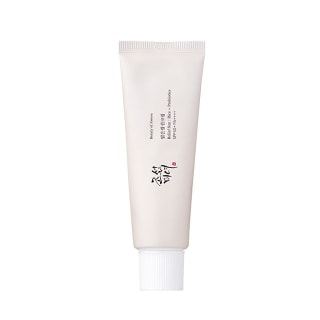
Beauty of Joseon has become one of the most recognizable names in K-beauty sunscreen, and the Relief Sun remains a viral favorite heading into 2026. Enriched with rice extracts and probiotics, this SPF 50+ PA++++ formula targets microbiome-friendly skincare while delivering a lightweight, serum-like consistency that suits all skin types. At just $14.40 to $18.00, it offers exceptional value for a dermatologist-approved sunscreen that performs at a premium level.
3. SKIN1004 Madagascar Centella Hyalu-Cica Water-Fit Sun Serum SPF 50
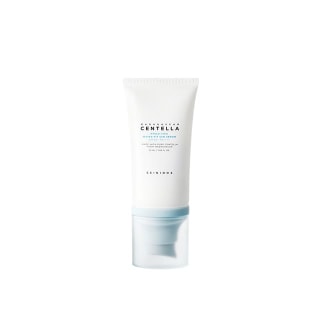
SKIN1004 pioneered the sun-serum category, and their Madagascar Centella Hyalu-Cica formula is a masterclass in multi-functional sun protection. Combining centella asiatica extract with hyaluronic acid, this water-resistant, reef-safe SPF 50 sunscreen is excellent for dry skin that craves hydration alongside protection. The serum texture feels like a skincare treatment rather than a traditional sunscreen, and at $10.45 to $24.95, the price-to-performance ratio is outstanding.
4. Belif The True Cream Aqua Bomb SPF 50
Belif combines their cult-favorite Aqua Bomb moisturizer technology with SPF 50 mineral protection, creating a true two-in-one product. Powered by marigold extract, sunflower seed oil, and noni extract, this sunscreen improves skin barrier health while shielding against UV damage. The mineral formula is ideal for those who prefer physical UV blockers, and its moisturizing properties mean you can eliminate a step from your routine. Price: $29.95 to $38.00.
5. Laneige Hydro UV Defense Sunscreen SPF 50+
Laneige brings their signature hydration expertise to sun protection with the Hydro UV Defense formula. Centella asiatica, glycerin, and mineral water combine to deliver a plump, dewy finish that looks like you have just applied a hydrating primer. Hypoallergenic and dermatologically tested, this SPF 50 Korean sunscreen is safe for sensitive skin and layers beautifully under makeup. Price: $30.00.
6. Isntree Hyaluronic Acid Watery Sun Gel SPF 50
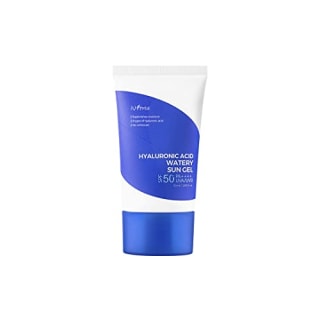
For those who hate the feeling of sunscreen on their face, Isntree's Watery Sun Gel is a revelation. Formulated with eight different types of hyaluronic acid, this silicone-free gel sunscreen has a smooth, runny texture that sinks into the skin without a trace. It is ideal for combination skin types who struggle with oiliness in the T-zone but dryness on the cheeks. The clean, minimal formula has earned it a devoted following among skincare minimalists. Price: $18.30 to $24.40.
7. Etude Sunprise Mild Weightless SPF 50+
Dermatologists specifically recommend Etude Sunprise for darker skin tones, as its chemical formula leaves absolutely zero white cast. With aloe vera, acai berry, and centella asiatica, the gel-like consistency feels refreshing and cooling on application. This is one of the most affordable Korean sunscreens on the market at $15.76 to $26.20, making it an excellent entry point for anyone curious about K-beauty SPF.
8. Dr. Jart+ Every Sun Day Invisible Sunscreen Stick SPF 40
Innovation meets convenience with Dr. Jart+'s stick-format sunscreen. Perfect for on-the-go reapplication, this portable SPF 40 stick blurs pores and primes skin for a matte finish while delivering broad-spectrum protection. Hyaluronic acid keeps the formula hydrating despite the matte effect. This is the Korean sunscreen to keep in your bag for midday touch-ups. Price: $30.00.
9. Innisfree Daily UV Defense Sunscreen SPF 36
Innisfree's green tea-infused chemical sunscreen is a gentle, soothing option suitable for all skin types including sensitive and acne-prone skin. The lightweight formula combines green tea, cica, and sunflower seed oil for antioxidant protection that extends beyond UV shielding. At $18.00, it is a reliable daily driver that disappears into the skin. If you are interested in how K-beauty brands are reshaping the Western market, our K-Beauty at Ulta 2026 guide covers the full brand landscape.
10. Innisfree Daily UV Defense Mineral Sunscreen SPF 45
For those who prefer mineral sunscreen, Innisfree offers a color-correcting green-tinted version that neutralizes redness while providing SPF 45 protection. Hyaluronic acid and squalene maintain hydration, while the mineral filters sit gently on the skin surface without causing irritation. This is an excellent choice for rosacea-prone or post-procedure skin. Price: $22.00.
11. KraveBeauty Beet The Sun SPF 40 PA+++

KraveBeauty's Beet The Sun is the go-to Korean sunscreen for the conscious consumer. Vegan, cruelty-free, and water-resistant, this SPF 40 PA+++ formula is powered by beetroot extract, vitamin E, and hyaluronic acid to support the skin barrier while providing reliable sun protection. The non-greasy texture applies smoothly with zero pilling and no white cast, making it compatible with any skincare routine or makeup look. Price: $20.00.
How to Choose the Right Korean Sunscreen for Your Skin Type
With so many options available, selecting the right Korean sunscreen comes down to understanding your skin type and daily needs. For oily or combination skin, gel-based formulas like Isntree Watery Sun Gel or Etude Sunprise offer lightweight, matte-finish protection without adding excess shine. Dry skin types will benefit from essence or cream textures like Round Lab Birch Juice or Belif Aqua Bomb, which deliver hydration and SPF simultaneously.
For sensitive or post-procedure skin, mineral options like Innisfree's green-tinted formula provide gentle, surface-level protection without chemical filters that can trigger irritation. And if you are concerned about environmental impact, look for reef-safe designations on products like Round Lab and SKIN1004, which use ocean-friendly formulations.
One important note: dermatologists recommend applying approximately a quarter-teaspoon of sunscreen to the face and reapplying every two hours during extended sun exposure. The elegance of Korean sunscreen formulas makes this reapplication habit significantly easier to maintain, which is ultimately the key to effective sun protection. As highlighted in our Climate-Proof Skincare 2026 report, rising temperatures make consistent SPF use more critical than ever.
The Science Behind Korean Sunscreen Innovation
The Korean sunscreen market's rapid innovation cycle is driven by intense domestic competition and a consumer base that demands both high performance and cosmetic elegance. South Korean consumers spend an average of 13 steps on their skincare routine, and sunscreen must earn its place as a product that enhances rather than burdens that routine.
Korean labs have pioneered several key technologies that distinguish their sunscreens. Micro-encapsulation technology wraps UV filters in tiny spheres that break down gradually on the skin, providing sustained protection while reducing the irritation potential of chemical filters. Hybrid filter systems combine organic and inorganic UV blockers in ways that maximize broad-spectrum coverage while minimizing the drawbacks of either approach alone.
Perhaps most notably, Korean sunscreen R&D teams have embraced the concept of "skincare-fied SPF," where the sunscreen base is treated as a delivery vehicle for active ingredients. This is why you find hyaluronic acid, niacinamide, centella asiatica, and even PDRN in Korean sunscreens. As we discussed in our PDRN Skincare deep dive, these regenerative ingredients work synergistically with sun protection to support skin repair at the cellular level.
Korean Sunscreen vs. Western Sunscreen: A Quick Comparison
| Feature | Korean Sunscreen | Western Sunscreen |
|---|---|---|
| UV Filter Technology | Next-gen filters (Tinosorb, Uvinul) | FDA-approved filters only |
| Texture | Lightweight gels, essences, serums | Thicker creams and lotions |
| White Cast | Minimal to none | Common in mineral formulas |
| Skincare Benefits | HA, niacinamide, centella, peptides | Limited active ingredients |
| UVA Rating | PA system (PA+ to PA++++) | Broad Spectrum label only |
| Price Range | $10 to $38 | $12 to $60+ |
You May Also Like
- Skin Longevity 2026: Why Dermatologists Say Prevention Is the New Anti-Aging
- Climate-Proof Skincare 2026: How Rising Temperatures Are Reshaping Your Beauty Routine
- High Rise Skin 2026: The Beauty Trend Replacing Glass Skin
- K-Beauty World at Ulta 2026: 17 Viral Korean Brands Guide
- Snail Mucin Skincare 2026: Science, Benefits, and 10 Best K-Beauty Products
Frequently Asked Questions
Q: Are Korean sunscreens safe to use in the United States?
A: Yes, Korean sunscreens are safe to use. While they may contain UV filters not yet FDA-approved, these filters have been extensively tested and approved in South Korea, the European Union, Japan, and Australia. Millions of consumers worldwide use Korean sunscreens daily without issues. However, they are technically classified as cosmetics rather than drugs in the US market.
Q: What does PA++++ mean on Korean sunscreen?
A: PA++++ is the highest UVA protection rating in the Asian sunscreen grading system. PA stands for Protection Grade of UVA, and the plus signs indicate the level of protection. PA++++ means the product offers extremely high UVA protection, which guards against photoaging, dark spots, and long-term skin damage caused by UVA rays.
Q: Why do Korean sunscreens feel so much lighter than American sunscreens?
A: Korean sunscreens use newer-generation UV filters that require lower concentrations to achieve high SPF levels, along with advanced formulation techniques like micro-encapsulation and hybrid filter systems. Korean consumers demand elegant textures, so brands invest heavily in cosmetic chemistry to create lightweight gels, essences, and serums that absorb quickly without residue.
Q: How often should I reapply Korean sunscreen?
A: Dermatologists recommend reapplying every two hours during continuous sun exposure, regardless of the brand or origin of your sunscreen. For indoor days with minimal UV exposure, a single morning application is generally sufficient for most people, though reapplication before afternoon outdoor activities is still advisable.
Q: Can I use Korean sunscreen on sensitive or acne-prone skin?
A: Absolutely. Many Korean sunscreens are specifically formulated for sensitive and acne-prone skin. Look for products labeled hypoallergenic and non-comedogenic, such as Innisfree Daily UV Defense or SKIN1004 Centella Sun Serum, which contain soothing ingredients like centella asiatica that calm inflammation while protecting against UV damage.
The Bottom Line
Korean sunscreen has fundamentally changed the global conversation about sun protection. What was once a chore, applying a thick, white, greasy cream every morning, has become a pleasurable skincare step thanks to K-beauty innovation. In 2026, the best Korean sunscreens deliver SPF 50+ protection with the texture of a lightweight serum, the skincare benefits of a premium treatment, and price points that make daily use accessible to everyone.
If you take away one thing from this guide, let it be this: the best sunscreen is the one you will actually wear every day. Korean sunscreens have removed every excuse not to wear SPF, and your future skin will thank you for it.
Sources: NBC News Select, Seoul Sister, Cosmetics Business


댓글
댓글 쓰기