Lancome Absolue Longevity MD 2026: Inside the $155 Urolithin A Cream Redefining Anti-Aging Skincare
Lancome Absolue Longevity MD 2026: How Urolithin A Is Redefining Anti-Aging Skincare
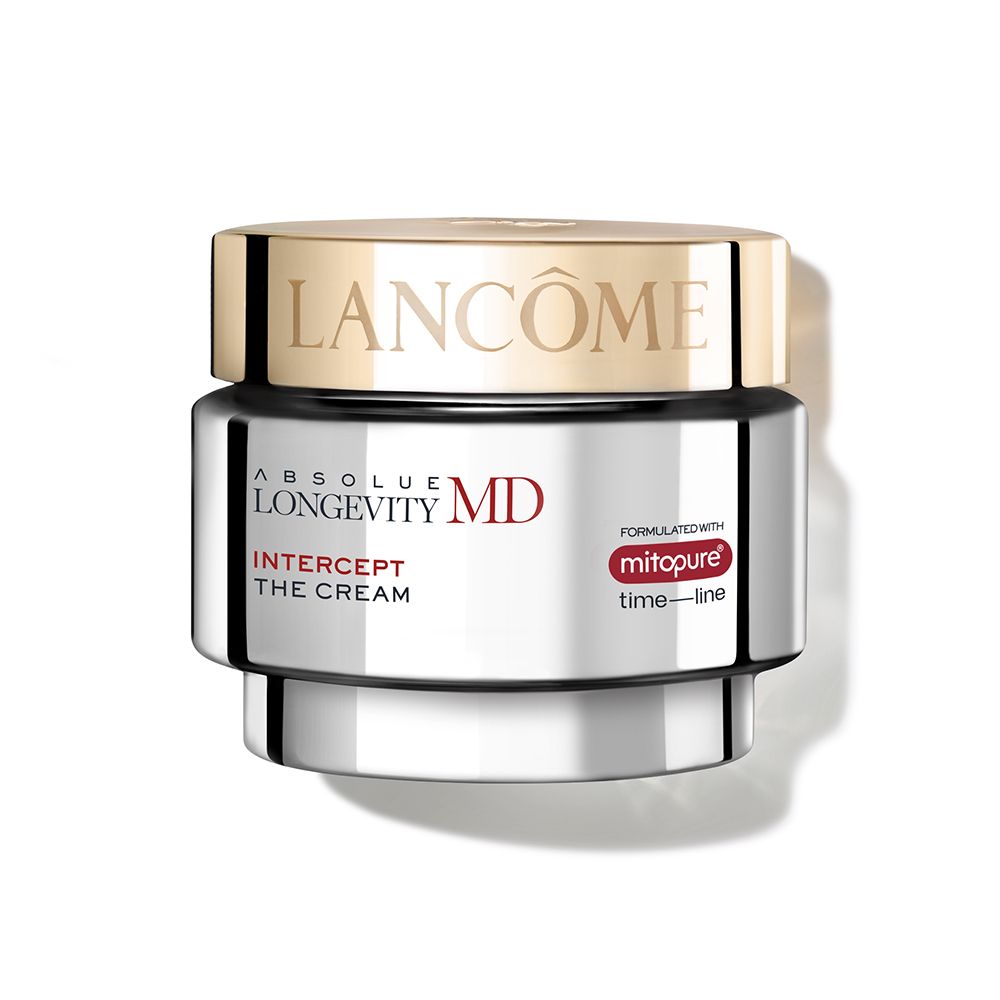
The Lancome Absolue Longevity MD cream is the most scientifically ambitious anti-aging skincare launch of 2026, and it arrives with a price tag (and a research dossier) to match. Unveiled at the American Academy of Dermatology Annual Meeting in Denver on March 27, 2026, and hitting luxury counters May 1, the $155 Intercept Cream is the first prestige beauty product to embed Mitopure, the urolithin A molecule developed by Swiss longevity biotech Timeline. For a category that has spent two decades recycling the word "anti-aging," Lancome's bet on cellular longevity may finally justify the language shift.
Why Longevity Skincare Is the New Anti-Aging
The pivot from "anti-aging" to "longevity" is not a marketing rebrand. It reflects a genuine scientific reorientation toward cellular health, particularly mitochondrial function. As skin ages, mitochondria, the energy-producing organelles inside every cell, accumulate damage and lose efficiency. The body's natural cleanup process, mitophagy, slows down. Damaged mitochondria pile up. Energy output drops. Skin cells produce less collagen, regenerate more slowly, and visibly age.
Urolithin A is a postbiotic metabolite produced when gut bacteria break down ellagitannins found in pomegranates, walnuts, and certain berries. Most people, however, lack the gut microbiome capable of synthesizing it efficiently. Timeline solved this by developing Mitopure, a pharmaceutical-grade synthetic urolithin A that has spent more than a decade in clinical trials demonstrating measurable improvements in muscle strength, mitochondrial gene expression, and cellular energy output in oral form. Lancome Absolue Longevity MD is the first time this molecule has been formulated for topical skincare at scale.
What Is Inside the $155 Lancome Absolue Longevity Cream
The Lancome Absolue Longevity MD Intercept Cream pairs Mitopure with a stack of clinically validated dermatology ingredients. LHA (lipo-hydroxy acid) provides gentle exfoliation. Matrixyl, a signal peptide, stimulates collagen and elastin synthesis. Niacinamide reinforces the skin barrier and brightens tone. Pro-Xylane, Lancome's proprietary collagen-supporting molecule, has anchored the brand's high-end skincare for over a decade. Absolue Perpetual Rose extract and PDRN (polydeoxyribonucleotides) round out the formula with antioxidant and tissue-repair functions.
Lancome claims the cream supports the creation of up to 4 million new skin cells per day and delivers visible firmness improvements in 98% of users within one week of trials. Hydration increases by 65% and skin firmness by 36%, according to brand-sponsored clinical testing. The 50ml jar retails for $155, with a $145 refill available, signaling Lancome's intent to retain users in an ongoing regimen rather than treat the product as a one-time splurge.
The Timeline Partnership and the AAD Strategy
Lancome's choice of venue matters as much as the formula. Rather than debuting Absolue Longevity MD at a Paris fashion week activation or Sephora exclusive, the brand unveiled it at the AAD Annual Meeting, the most influential gathering of board-certified dermatologists in the United States. The strategy positions Lancome alongside clinical brands like SkinCeuticals and iS Clinical rather than its traditional prestige peers.
"We are not just rebranding anti-aging into longevity," said Annie Black, Ph.D., Lancome's international scientific director. "This is a really different approach, with new ingredients." To support that claim, Lancome assembled a Longevity MD Advisors Board featuring David Luu, MD, Tiffany Moon, MD, Gabrielle Lyon, DO, and Amy Killen, MD, each known for prevention-oriented and regenerative medicine practice. The brand also introduced Cell BioPrint, a proprietary diagnostic that measures biological skin age via protein biomarkers, allowing dermatologists to recommend regimens based on individualized cellular data.
How Mitophagy Actually Works in Skin
To understand why dermatologists are paying attention, it helps to understand what mitophagy does at the cellular level. Each skin cell contains hundreds to thousands of mitochondria. When these organelles become damaged through UV exposure, pollution, oxidative stress, or simply the passage of time, they leak reactive oxygen species and consume energy without producing it efficiently. Healthy cells clear these damaged mitochondria through a process called mitophagy, a specialized form of autophagy, and replace them with new functional ones.
With age, mitophagy efficiency declines. Damaged mitochondria accumulate. Skin cells lose ATP output. Fibroblasts, the collagen-producing workhorses of the dermis, slow their synthesis of structural proteins. Visible aging follows. By upregulating mitophagy, urolithin A theoretically restores cellular energy turnover, supporting fibroblast function and the renewal capacity of basal keratinocytes. This is a meaningfully different mechanism than the surface-level exfoliation or peptide signaling that has dominated anti-aging skincare for the past 20 years.
Where Lancome Sits in the 2026 Cellular Skincare Landscape
Lancome is not alone in pursuing cellular-level interventions. As we covered in our NAD+ Skincare 2026 guide, K-beauty labs have been working with nicotinamide adenine dinucleotide precursors to address the same mitochondrial decline through a different pathway. The exosomes biotech trend targets cell-to-cell signaling and regenerative messaging, while modernized hanbang formulas draw on Korean herbal medicine's centuries of anti-aging botanicals reframed through clinical research.
What separates Lancome's launch is the scale of validation and the choice of a single molecule with extensive oral clinical data being translated to topical use. Most luxury anti-aging launches lean on proprietary peptide complexes whose efficacy data lives only inside the brand's internal trials. Mitopure has been studied in independent academic and clinical settings for muscle function, healthspan, and inflammatory markers. The topical delivery to skin is new, and the topical clinical data is still proprietary, but the underlying molecule has a published evidence base that few cosmetic ingredients can match.
Expert Insights: What Dermatologists Are Saying
Dermatologists evaluating the launch have responded with cautious interest. The mechanism is biologically plausible. The clinical claims, particularly 98% reporting firmer skin within a week, are unusually high and reflect brand-funded testing protocols that may not translate to clinical practice. Most dermatologists agree that mitochondrial-targeted skincare represents the next frontier, but they note that topical delivery of urolithin A to the dermis depends on formulation chemistry that remains undisclosed.
The consensus emerging from AAD coverage: Lancome Absolue Longevity MD is a credible scientific bet, not a guaranteed clinical breakthrough. Patients with realistic expectations and existing antioxidant, retinoid, and sunscreen regimens are the most likely to benefit. Patients expecting it to replace prescription retinoids or in-office procedures will be disappointed. Dermatologists also caution that any "longevity" claim should be evaluated against actual clinical endpoints, not biomarker shifts, and the field still lacks standardized regulatory definitions for what longevity skincare means.
You May Also Like
- NAD+ Skincare 2026: K-Beauty's New Cellular Anti-Aging Frontier
- Exosomes Skincare 2026: The K-Beauty Biotech Trend Dermatologists Are Watching
- Hanbang Skincare 2026: How K-Beauty's Modernized Korean Herbal Medicine Is Powering Anti-Aging
FAQ
Q: What is urolithin A and why is it in the Lancome Absolue Longevity cream?
A: Urolithin A is a postbiotic compound that activates mitophagy, the cellular process that clears damaged mitochondria. Lancome partnered with Swiss biotech Timeline to incorporate Mitopure, a pharmaceutical-grade synthetic urolithin A, into the Absolue Longevity MD line to target mitochondrial decline at the source rather than just the surface signs of aging.
Q: How much does Lancome Absolue Longevity MD Intercept Cream cost?
A: The 50ml jar retails for $155, with a refill option at $145. It launched on Lancome's U.S. website April 20, 2026 and arrived at select luxury retailers May 1, 2026, positioning it at the top of Lancome's skincare portfolio.
Q: Does the Lancome Absolue Longevity Cream actually work?
A: Lancome's brand-sponsored trials report 98% of users seeing firmer skin within one week, a 65% increase in hydration, and a 36% improvement in firmness. Independent dermatologist commentary at AAD 2026 calls the mechanism biologically credible, but cautions that real-world results will depend on consistent use, surrounding skincare regimen, and individual skin biology.
Q: How is longevity skincare different from anti-aging skincare?
A: Anti-aging skincare typically focuses on surface signs, wrinkles, pigmentation, texture, via exfoliation, peptides, and antioxidants. Longevity skincare targets cellular health, particularly mitochondrial function, autophagy, and stem cell preservation. The goal shifts from reversing visible damage to preserving the cellular machinery that prevents damage in the first place.
Q: Who is the Lancome Absolue Longevity MD cream best for?
A: Adults in their 30s through 60s with established skincare routines, sufficient budget, and realistic expectations are the strongest candidates. Patients should already be using daily SPF and ideally a retinoid before adding a longevity-positioned product. The cream is not a replacement for prescription dermatology, professional procedures, or sun protection.
The Bottom Line
Lancome Absolue Longevity MD is the most credible attempt yet by luxury beauty to translate longevity science into daily skincare. The Timeline partnership, the AAD launch, and the dermatologist advisory board signal a brand strategy built on clinical validation rather than aspirational marketing alone. At $155, the Intercept Cream is not for everyone, but it sets a new bar for what prestige anti-aging can credibly claim, and it puts every competing brand on notice. If 2026 is the year longevity skincare graduates from buzzword to category, Lancome just published the founding document. For consumers, the smart move is to evaluate the cream against your existing regimen, your dermatologist's guidance, and your budget, rather than the hype cycle alone.
Sources: NewBeauty, Glossy, PR Newswire


댓글
댓글 쓰기