Best Korean Eye Creams 2026: Dermatologist-Approved Picks for Dark Circles, Puffiness, and Wrinkles
Best Korean Eye Creams 2026: Dermatologist-Approved Picks for Dark Circles, Puffiness, and Wrinkles

The best Korean eye creams in 2026 combine biotech-grade peptides, snail-derived growth factors, ginseng, and tranexamic acid to target the three signature under-eye concerns dermatologists hear about most: dark circles, puffiness, and fine lines. Unlike Western eye creams that often rely on a single hero ingredient, K-beauty formulas layer five to ten actives at low, well-tolerated concentrations, which is why Korean eye cream has become the under-eye category benchmark for sensitive, thin periorbital skin. This guide ranks twelve dermatologist-vetted Korean eye creams across budgets, decodes the actives that actually work, and explains the 4-finger application technique that doubles their absorption.
Why the Eye Area Needs a Dedicated Korean Eye Cream
The skin under your eyes is roughly 0.5 mm thick — about 40% of the thickness of cheek skin — and contains very few sebaceous glands. That structural difference matters: it dehydrates faster, shows vascular shadowing more readily (the bluish-purple tint we call dark circles), and is the first facial zone to display fine, crepey lines. Standard face moisturizers are formulated for the sebum-rich cheek and forehead environment and frequently contain fragrance, denatured alcohol, or essential oils that the orbital area cannot tolerate.
Korean eye creams take a different formulation philosophy. They are typically pH-buffered to 5.0–5.5 to match the periorbital acid mantle, free of common irritants, and built around occlusive-humectant pairings (squalane plus glycerin, ceramides plus panthenol) that create a slow-release hydration reservoir without weighing the lid down. The result is a product you can apply morning and night without the stinging or milia that aggressive face creams sometimes trigger.
Dark Circles vs Puffiness vs Wrinkles: Diagnose Before You Shop
Most under-eye complaints fall into three biological categories — and the right Korean eye cream depends on which one is yours.
Pigmented dark circles are caused by melanin overproduction, often inherited or worsened by sun exposure and chronic eye-rubbing. Press lightly on the under-eye: if the brown tone stays the same, it is pigment. Look for niacinamide, tranexamic acid, vitamin C derivatives, and licorice root.
Vascular dark circles are blue-purple shadows from dilated capillaries showing through thin skin. Stretch the skin gently: if the color lightens, it is vascular. Caffeine, vitamin K, and peptides that strengthen capillary walls are the targeted actives.
Structural puffiness is fluid retention or fat-pad herniation. Caffeine, green tea polyphenols, and cooling metallic applicators offer temporary depuffing; severe cases may require dermatologic intervention.
Fine lines and crepey texture reflect collagen loss and chronic dehydration. Retinal, bakuchiol, copper peptides, and ceramides rebuild the dermal matrix over 8–12 weeks of consistent use.
Key Ingredients That Define a 2026-Worthy Korean Eye Cream
The current generation of K-beauty eye care is defined by ingredient stacking — six to ten complementary actives at clinically meaningful but low-irritation doses. The most important categories you should recognize on a label:
- Snail secretion filtrate — natural source of allantoin, glycoprotein enzymes, copper peptides, and hyaluronic acid; clinically associated with fine-line softening and barrier repair. We covered the science in detail in our Snail Mucin Skincare Guide.
- Niacinamide (3–5%) — the gold-standard brightener for pigmented dark circles, also reduces transepidermal water loss. Read our full Niacinamide Skincare Guide.
- Encapsulated retinal or bakuchiol — the next-generation retinoid alternatives that thin under-eye skin tolerates. Our Retinol vs Bakuchiol comparison walks through the trade-offs.
- GHK-Cu copper peptides — signal collagen and elastin synthesis; especially useful for crepey lids. See the Copper Peptide Guide.
- Tranexamic acid (1–3%) — interrupts the melanin-stimulation pathway responsible for stubborn pigmentation.
- Caffeine (1–3%) — vasoconstricts to reduce vascular shadowing and lymphatic puffiness within 15–30 minutes of application.
- Ginseng saponins (Rb1, Rg1) — Korean herbal staple shown in clinical work to up-regulate fibroblast activity and luminosity.
- Centella asiatica (madecassoside, asiaticoside) — anti-inflammatory ingredient that calms reactive lids. Full breakdown in our Centella Asiatica Guide.
- Multi-weight hyaluronic acid — penetrates at three depths for plumping without surface tackiness.
The 12 Best Korean Eye Creams 2026: Ranked
The picks below were narrowed from more than fifty 2026-formulation Korean eye creams using three filters: a published clinical or instrumental result, dermatologist coverage in major beauty media, and a verified ingredient list with no fragrance or denatured alcohol in the top ten components.
1. COSRX Advanced Snail Peptide Eye Cream — Best Overall Value
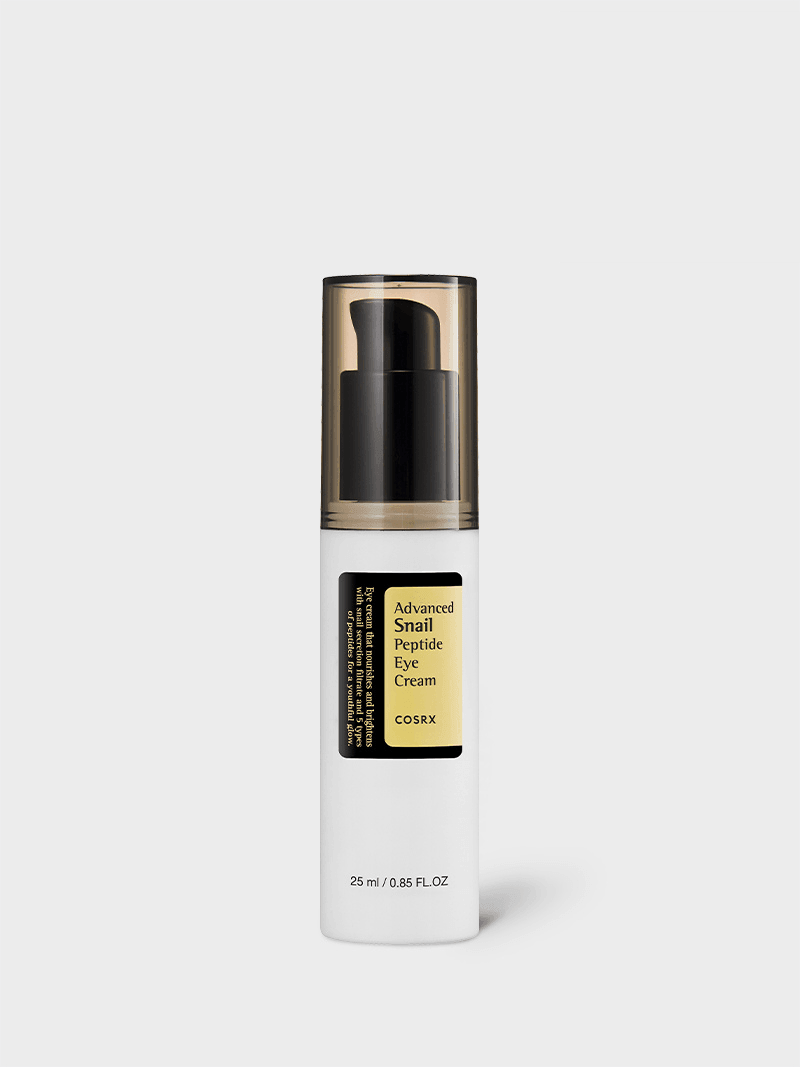
COSRX layers 72% snail secretion filtrate with five peptides (palmitoyl tripeptide-1, palmitoyl tetrapeptide-7, copper tripeptide-1, acetyl hexapeptide-8, and palmitoyl pentapeptide-4) plus 2% niacinamide and adenosine. The texture is a lightweight gel-cream that absorbs in under sixty seconds, making it the rare formula you can layer under sunscreen and concealer. It is the most evidence-backed entry-level eye cream from K-beauty and the one I recommend to anyone new to Korean eye care. Best for: pigmented dark circles, early fine lines, sensitive skin.
2. Sulwhasoo Concentrated Ginseng Renewing Eye Cream EX — Best Luxury Anti-Aging
Sulwhasoo's flagship eye cream uses Compound K — a ginseng saponin metabolite that the brand has clinically associated with collagen-density gains over twelve weeks — together with sanchainoside and red pine extract. The texture is a rich balm that suits dry, mature skin (40s and above) and pairs especially well with the routines covered in our Anti-Aging Korean Skincare Routine guide. Best for: deep crepey lines, structural firmness, hanbang skincare devotees.
3. Beauty of Joseon Revive Eye Serum: Ginseng + Retinal — Best for Beginners to Retinoids
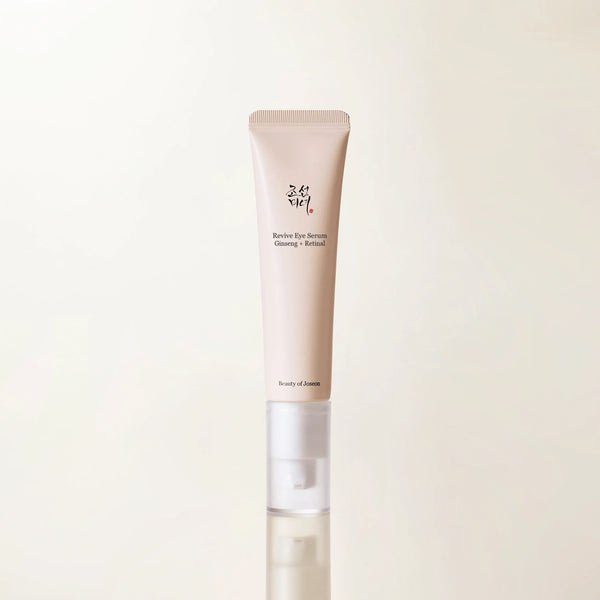
Beauty of Joseon paired retinal (the more potent retinaldehyde form of vitamin A) at a periorbital-friendly 0.05% with ginseng root extract and niacinamide. Retinal is the closest non-prescription analog to retinoic acid because it requires only one biological conversion step rather than two — but the under-eye concentration here is calibrated to stay below the irritation threshold even for first-time users. The serum-textured formula sinks in cleanly. Best for: crepey lids, photoaging, retinoid newcomers.
4. LANEIGE Water Bank Blue Hyaluronic Acid Eye Cream — Best for Dehydrated Eyes
Built around five molecular weights of blue hyaluronic acid plus a proprietary "Mineral Water" complex, the Water Bank eye cream depuffs and floods thirsty under-eyes with multi-depth hydration. Dermatologist- and ophthalmologist-tested, fragrance-free, and finished with a metal applicator that adds an instant cooling massage on application — the kind of detail K-beauty does better than anyone. Best for: travelers, contact-lens wearers, dry climate dwellers. See our Hyaluronic Acid Skincare Guide for why molecular weight matters.
5. Numbuzin No. 9 Multi-Peptide Eye Cream — Best Peptide Stack
Numbuzin's No. 9 stacks fifty different peptides with NAD+, ceramides, encapsulated retinol, and niacinamide for a clinically dense formula that nevertheless feels like a featherweight emulsion. The brand's house testing reports a measurable reduction in wrinkle depth at eight weeks. The big peptide count is partly marketing — most peptides cluster into a handful of mechanism families — but the formulation is genuinely well-built and the price is moderate. Best for: maximalists, 30s and 40s, multitasking concerns.
6. VT Reedle Shot Lifting Eye Cream — Best Firming Effect
Korea's "spicule" trend (microscopic sponge spicules that create surface micro-channels) lands in eye cream form here. The cream pairs the spicule complex with CICAHYALON, peptides, and collagen for a same-day tightening effect plus longer-term firmness. Apply only at night, and avoid layering with other actives the same evening. Not for sensitive skin or active eczema. Best for: visible loss of upper-lid elasticity, ages 35+.
7. Mizon Snail Repair Intensive Eye Cream — Best Budget Snail Mucin
Mizon is the OG snail mucin Korean brand and its eye-area version delivers 80% snail secretion filtrate plus adenosine and EGF-mimicking peptides at well under twenty dollars. Texture is denser than COSRX, which works better for very dry under-eyes but feels heavier under makeup. Best for: dry skin, budget-conscious shoppers, repairing a compromised barrier.
8. Innisfree Green Tea Caffeine Bright-Eye Serum — Best for Morning Depuffing
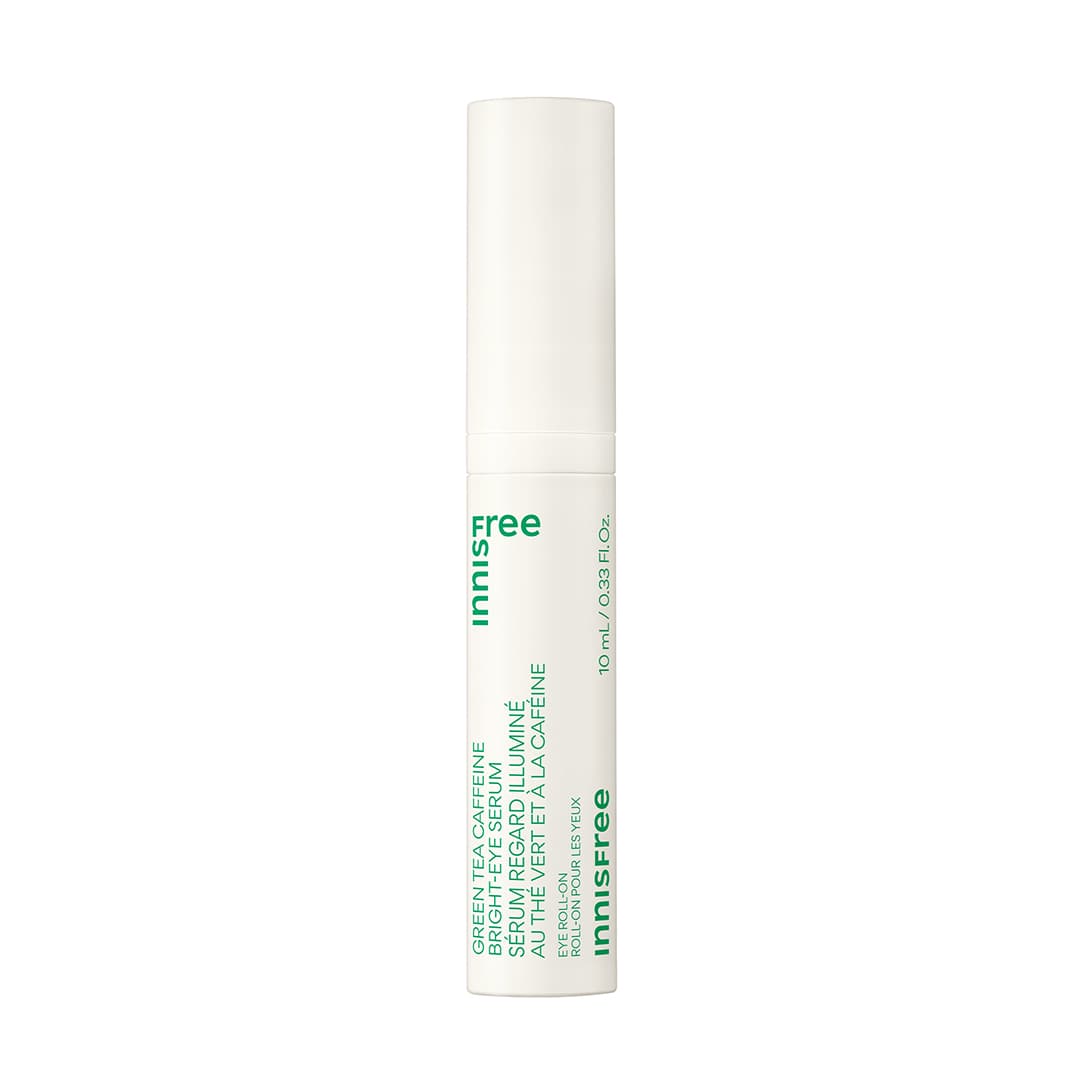
The serum-light Bright-Eye builds on Innisfree's signature Jeju green tea polyphenols and adds caffeine plus 2% niacinamide. The lightweight, slightly cooling texture is ideal as the under-eye step right before sunscreen and makeup — and it visibly reduces morning puffiness within twenty minutes. Best for: oily lids, layering under makeup, early-morning meetings.
9. Anua Heartleaf 77% Soothing Eye Cream — Best for Sensitive Skin
Anua's heartleaf (Houttuynia cordata) extract is a powerful antioxidant and soothing botanical that has driven the brand's rise in the past two years. The eye cream is fragrance-free, denatured-alcohol-free, panthenol-rich, and pH-balanced to 5.5. Layer it after acid toners or retinoid serums when your skin needs a calming buffer. Best for: rosacea-prone lids, post-procedure recovery, reactive skin.
10. Round Lab Birch Juice Moisturizing Eye Cream — Best Daily Hydrator
Round Lab uses 85% birch sap (pH-balanced, mineral-rich) instead of water as the base solvent and adds beta-glucan, panthenol, and ceramides. The result is a quietly excellent everyday eye cream that does not chase trend ingredients but executes hydration extremely well. We covered why beta-glucan often outperforms hyaluronic acid in our Beta-Glucan Guide. Best for: combination skin, daily use, minimalists.
11. Medicube Collagen Eye Cream — Best Bouncy Texture
Medicube's signature jelly-cream texture wraps collagen, peptides, and adenosine into a soufflé-light formula that bounces back when you press the surface. The brand pairs this product with its viral AGE-R Booster Pro device for synergistic anti-aging — a routine increasingly common among Korean dermatology clinics. Best for: bouncy-skin enthusiasts, device users, the under-30 anti-aging cohort.
12. Goodal Green Tangerine Vita C Eye Cream — Best Vitamin C Brightener
Stable vitamin C derivatives in eye creams are rare because they are so reactive. Goodal solves this with green tangerine extract — naturally five times higher in vitamin C than mature mandarin — encapsulated with ascorbyl glucoside. The result is a brightening eye cream that does not sting or destabilize on contact with water. Best for: pigmented dark circles, dull mornings, sun-damaged eye areas.
How to Apply Korean Eye Cream: The 4-Finger Technique
Application matters as much as formulation. The Korean technique uses the ring finger because it applies the gentlest natural pressure of any finger — important when you are working with skin half a millimeter thick.
- Dispense a rice-grain-sized amount on the back of your hand and warm it for three seconds.
- Use your ring finger to dot four points: inner corner, mid-orbital bone, outer corner, and just below the brow.
- Tap — never rub — outward from the inner corner along the orbital bone.
- Finish with a gentle press-and-hold at the temple for three seconds to encourage lymphatic drainage.
Apply roughly one centimeter outside the lash line. The product migrates inward from body heat, so applying too close risks getting it into the lash line and triggering milia.
Korean Eye Care Routine: Morning vs Night
Korean dermatologists structure morning and evening eye care differently because the skin's biological priorities differ across the circadian cycle.
Morning: after toner and essence, apply a lightweight, caffeine- or niacinamide-based eye serum (e.g., Innisfree Green Tea Caffeine, Goodal Green Tangerine) before moisturizer and SPF. The goal is depuffing, brightening, and creating a smooth canvas for concealer.
Night: after toner, essence, and any active serum, apply a richer, peptide- or retinal-based eye cream (e.g., COSRX Snail Peptide, Beauty of Joseon Revive, Sulwhasoo Concentrated Ginseng) before your night cream or sleeping mask. The goal is regeneration — overnight is when fibroblast activity peaks.
SPF is non-negotiable in the morning routine. Approximately 90% of visible eye-area aging is attributable to UV exposure, and no eye cream can outperform daily broad-spectrum protection. See our Korean Sunscreen Guide for sunscreens safe for the orbital area.
Five Common Mistakes That Sabotage Eye Cream Results
- Applying too close to the lash line. Migration toward the eye triggers milia and stinging. Stay at least one centimeter out.
- Using too much product. A rice-grain-sized amount per eye is correct; more does not absorb and instead pills under makeup.
- Rubbing instead of tapping. Friction stretches periorbital skin and accelerates fine lines.
- Layering retinoid eye cream with acid serums or vitamin C in the same step. Stagger them — retinoid at night, acids in a different evening or in the morning.
- Quitting at four weeks. Pigmentation and collagen-driven changes need eight to twelve weeks of consistent use to register visibly. Photograph at week 0 and week 12 for honest comparison.
What Dermatologists Say About Korean Eye Creams
Korean and Western dermatologists generally agree that the K-beauty approach to eye care — low-irritation actives stacked at modest concentrations — is better suited to the periorbital zone than aggressive single-active Western formulations. Board-certified dermatologists quoted in major beauty media in 2026 have specifically called out Sulwhasoo's Compound K, COSRX's snail peptide stack, and Beauty of Joseon's encapsulated retinal as evidence-supported choices for fine lines and pigmentation. The consensus caveat: no eye cream substitutes for sunscreen, sleep, hydration, and treatment of underlying causes such as allergies (which drive eye-rubbing and pigmentation) or thyroid imbalance (which drives puffiness).
You May Also Like
- Snail Mucin Skincare 2026: Science, Benefits, and Best K-Beauty Products
- Niacinamide Skincare Guide 2026: Benefits, Best K-Beauty Products, and How to Build Your Brightening Routine
- Retinol vs Bakuchiol 2026: Which Anti-Aging Ingredient Is Right for Your Skin?
- Copper Peptide Skincare 2026: The GHK-Cu Anti-Aging Guide
- Anti-Aging Korean Skincare Routine 2026: The Complete Guide for Your 30s, 40s, and 50s
- K-Beauty Complete Guide 2026: Your Ultimate Korean Skincare Handbook
- K-Beauty Ingredients Encyclopedia 2026: Every Trending Skincare Active Explained
FAQ
Q: At what age should I start using Korean eye cream?
A: Korean dermatologists typically recommend starting a hydration-focused eye cream in the mid-20s — when transepidermal water loss begins to accelerate — and adding peptides or low-strength retinal in the late 20s to early 30s. Earlier is fine if there is a specific concern (genetic dark circles, allergic puffiness, sun damage). Eye cream is fundamentally preventive: starting earlier with a gentle formula is more effective than starting late with an aggressive one.
Q: Can I use my regular face moisturizer instead of a dedicated eye cream?
A: For most people, no. Face moisturizers are formulated for sebum-rich zones and frequently contain fragrance, denatured alcohol, or essential oils that the eye area cannot tolerate. They also tend to be too occlusive, which can clog meibomian gland openings and trigger milia. The exception is a fragrance-free, simple barrier cream like a ceramide-only formula, which can serve double duty in a pinch.
Q: How long until I see results from a Korean eye cream?
A: Hydration and brightness typically improve within two to four weeks. Pigmented dark circles need eight to twelve weeks of consistent twice-daily use to show measurable change. Fine line softening from peptides and retinal usually registers at week eight at the earliest, with continued gains through week sixteen.
Q: Is snail mucin or peptides better for under-eye fine lines?
A: Both work, but through different mechanisms — and the best Korean eye creams combine them. Snail secretion filtrate provides allantoin, growth-factor-like glycoproteins, and a small amount of natural copper peptides; synthetic peptides (palmitoyl pentapeptide-4, acetyl hexapeptide-8) signal collagen synthesis or relax expression-line muscles more directly. For mild fine lines, snail mucin alone is often enough. For deeper lines, choose a formula that stacks both.
Q: Are Korean eye creams safe during pregnancy?
A: Most are, but check the ingredient list. Avoid retinol, retinal, retinyl palmitate, and high-dose salicylic acid during pregnancy. Snail mucin, niacinamide, peptides, ceramides, hyaluronic acid, centella asiatica, and ginseng saponins are generally considered safe. Always confirm with your obstetrician.
Q: Can Korean eye cream replace concealer?
A: It will not erase a dark circle on application the way concealer does, but consistent use of a niacinamide- and tranexamic-acid-based formula can reduce the underlying pigmentation enough that you need less concealer or none on most days. Realistic expectation: a 30–50% reduction in visible darkness over twelve weeks, not a complete erasure.
Q: Should I refrigerate my Korean eye cream?
A: It is not strictly necessary, but a chilled eye cream amplifies the depuffing effect — cold induces vasoconstriction and reduces lymphatic stasis. The Korean "beauty fridge" (mini cosmetic refrigerator) is an established trend for exactly this reason. If you only refrigerate one product, make it your morning eye cream or eye serum.
The Bottom Line
The best Korean eye creams in 2026 share three traits: a low-irritation pH near the natural acid mantle, an ingredient stack that targets at least two distinct under-eye concerns, and a texture appropriate to the application zone. For most people, the right starting point is COSRX Advanced Snail Peptide Eye Cream — affordable, evidence-backed, and tolerated by sensitive skin. Build outward from there based on whether your dominant concern is pigmentation (add niacinamide and tranexamic acid), puffiness (add caffeine), or fine lines (add retinal or copper peptides). Pair the right product with the 4-finger application technique, daily SPF, and twelve weeks of patience, and the results will be visible in your photo comparisons. K-beauty has redefined what an eye cream can do — and 2026 is the best year yet to try one.
For a complete K-beauty routine framework, see our K-Beauty for Beginners Starter Guide.


댓글
댓글 쓰기