Sirtuin Skincare 2026: Science-Backed Age Reversal Explained
Sirtuin Skincare 2026: How Longevity Proteins Are Rewriting the Rules of Age Reversal
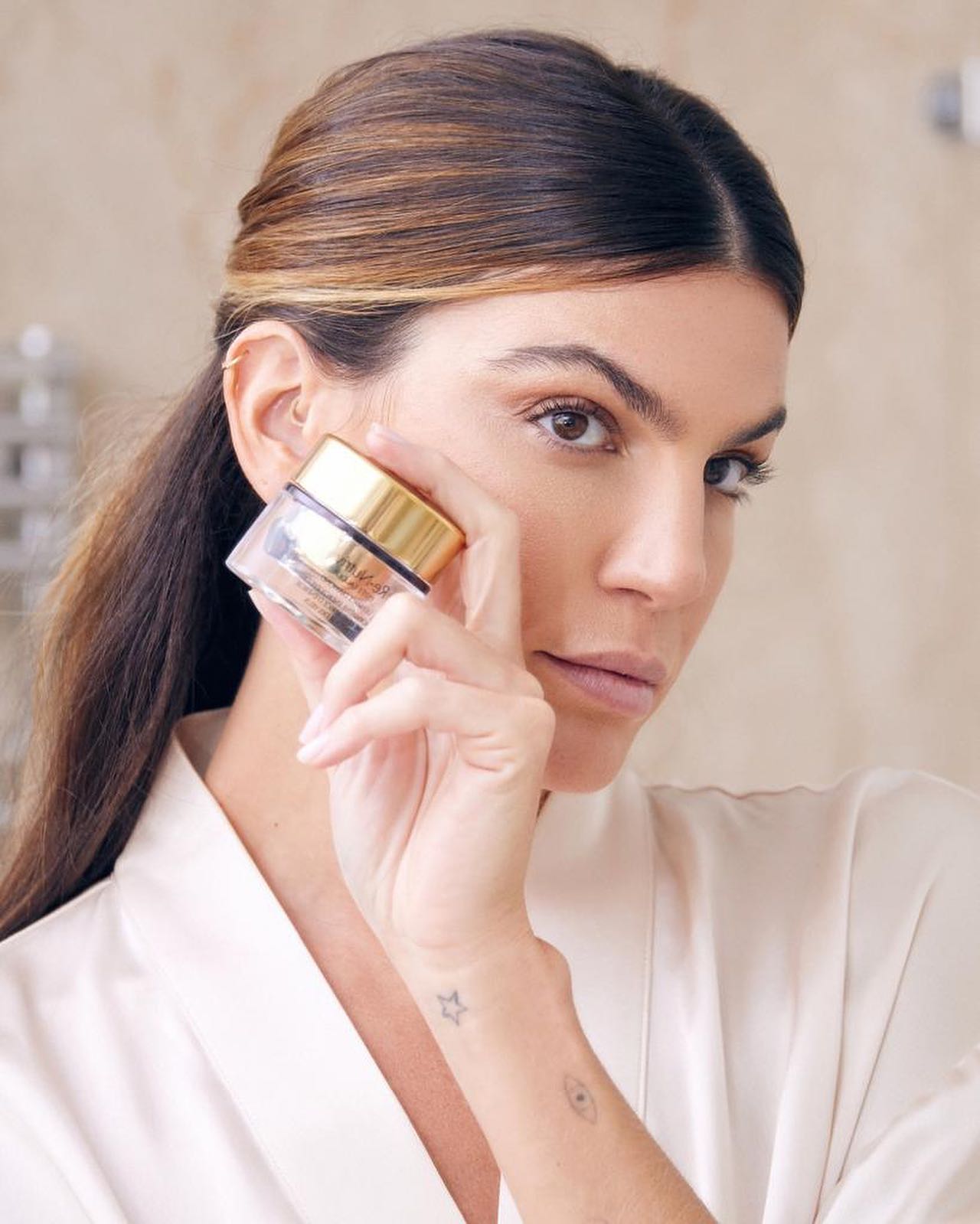
Sirtuin skincare has officially crossed the threshold from laboratory curiosity to peer-reviewed clinical reality. On April 22, 2026, a landmark study published in the Journal of Clinical and Aesthetic Dermatology (JCAD) demonstrated that a sirtuin-targeting skincare regimen reversed perceived facial age by an average of 4.0 years over just 12 weeks. This is not marketing hyperbole or an in-house white paper. It is a multi-ethnic, assessor-blinded clinical trial authored by seven board-certified dermatologists from Georgetown, Tulane, and other leading institutions. For anyone tracking the skin longevity movement, sirtuins have just become the most evidence-backed class of anti-aging actives in the topical skincare category.
What Are Sirtuins and Why Do They Matter for Skin?
Sirtuins are a family of NAD+-dependent proteins sometimes called "longevity enzymes" because of their central role in cellular repair, energy metabolism, and lifespan regulation. Four sirtuins are directly relevant to skin health:
- SIRT 1 — enables cell repair and DNA damage response
- SIRT 2 — maintains skin structural integrity and cytoskeletal organization
- SIRT 3 — boosts mitochondrial energy production (the "powerhouse" sirtuin)
- SIRT 6 — extends cell lifespan by stabilizing telomeres and regulating inflammation
As we explored in our Skin Longevity Revolution guide, the beauty industry is shifting from surface-level "anti-aging" toward cellular-level interventions. Sirtuins sit at the very heart of this transition. Their activity naturally declines with age, UV exposure, pollution, and poor sleep. When sirtuin levels drop, cells lose their ability to self-repair. Collagen synthesis slows. Inflammation increases. Pigmentation becomes uneven. The visible result is what we call aging.
The breakthrough insight: if you can reactivate sirtuins in skin cells, you do not merely slow aging. You reverse the visible consequences of their decline.
The JCAD Clinical Trial: 4 Years Younger in 12 Weeks
The study enrolled 72 women aged 35 to 69 (mean age 54.8) across four ethnic backgrounds: European American, African American, East Asian, and Hispanic/Latina. Skin types ranged from Fitzpatrick II to VI. Participants used a three-product regimen built on SIRTIVITY-LP technology — a proprietary complex that simultaneously activates SIRT 1, 2, 3, and 6 using botanical flower extracts, marine algae, and patented ferment filtrates.
The results were unambiguous:
- 4.0-year average reduction in calculated perceived age by week 12
- Statistically significant improvement visible as early as week 2
- Greatest improvement in under-eye lines and forehead lines
- Only two mild adverse events (temporary redness and itching), both resolved within 5 to 6 days
What makes this trial noteworthy beyond the numbers is the methodology. Perceived age was measured using a validated Predicted Age algorithm developed from a database of 2,825 multiethnic women spanning six decades. This is the first standardized, quantitative framework for measuring "visible age reversal" rather than relying on subjective self-assessment questionnaires. The assessors were blinded. The population was diverse. The journal is peer-reviewed. By the standards of skincare clinical research, this is as rigorous as it gets.
How SIRTIVITY-LP Technology Works
Traditional anti-aging ingredients target downstream symptoms: retinol accelerates cell turnover, peptides signal collagen production, hyaluronic acid fills hydration gaps. Sirtuin-targeting formulations aim upstream — at the regulatory proteins that control these processes in the first place.
SIRTIVITY-LP uses three key ingredient classes:
- Flower extracts (activate SIRT 1) — promote DNA repair and cellular resilience
- Algae-derived compounds (activate SIRT 3) — restore mitochondrial energy production, which fuels collagen synthesis
- Patented ferment filtrates (activate SIRT 6) — stabilize telomeres and extend cell replication capacity
In laboratory testing, the technology produced +174% collagen increase within 72 hours and a 43% reduction in melanin production after 7 days. These in vitro numbers align with the clinical findings: improved skin firmness, more even tone, and visible reduction in lines.
The approach is grounded in over 17 years of collaborative research with scientists from Harvard and MIT, supported by more than 40 patents. This distinguishes sirtuin skincare from trendy ingredients that arrive with hype but limited longitudinal data. As we documented in our K-Beauty Ingredients Encyclopedia, the most impactful skincare actives are those backed by both mechanistic understanding and controlled clinical outcomes.
What Dermatologists and Researchers Are Saying
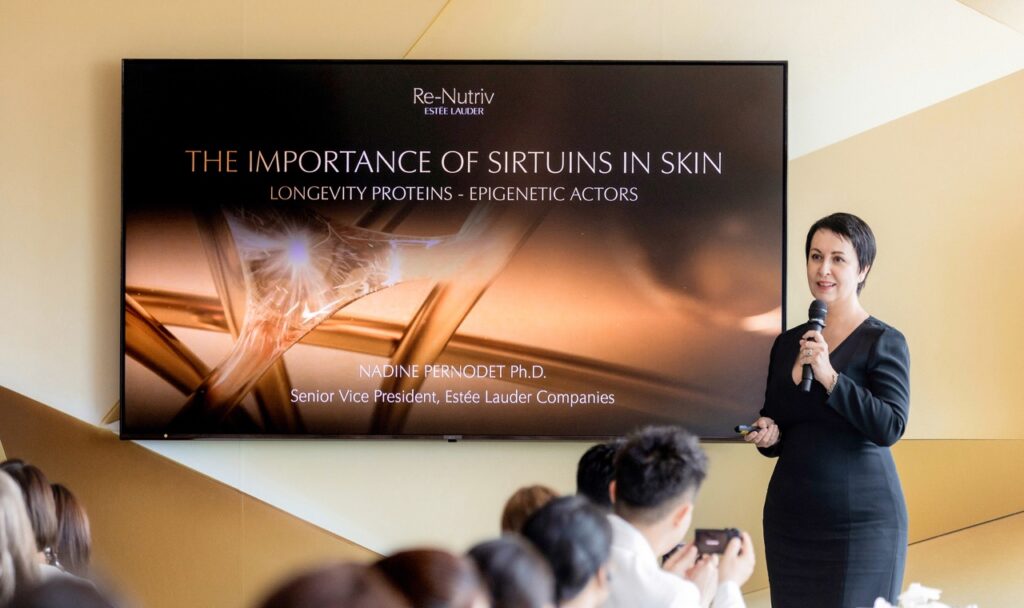
Dr. Nadine Pernodet, Senior Vice President of Bioscience Research, framed the paradigm shift directly: "We are moving away from anti-ageing and we are moving to age reversal." This distinction matters. Anti-aging implies slowing a process. Age reversal implies measurably undoing visible damage that has already occurred.
Dr. Danica Chen, a sirtuin researcher at UC Berkeley, provided broader scientific context: "I have devoted my career to Sirtuin research because of its potential in slowing and reversing aging." Her work on NAD+ metabolism and mitochondrial function has been foundational to understanding how sirtuin decline drives cellular aging.
Claude Saliou, SVP of Advanced Technologies, emphasized the evidentiary bar: "These peer-reviewed publications demonstrate our leadership in skin longevity and clinical science." The emphasis on peer review is deliberate. Most skincare claims rely on brand-funded studies published only as press releases. Submitting data to an independent, peer-reviewed dermatology journal invites scrutiny from the broader scientific community.
For context, ingredients like copper peptides (GHK-Cu) and exosomes also operate through regenerative mechanisms, but sirtuin activators now hold a unique position: they have the strongest clinical age-reversal data of any topical active published in 2026.
Sirtuins vs. Other Anti-Aging Actives: How Do They Compare?
The skincare ingredient landscape is increasingly crowded. How does sirtuin-targeting technology stack up against established and emerging alternatives?
| Ingredient Class | Mechanism | Clinical Evidence Level | Irritation Risk |
|---|---|---|---|
| Sirtuins (SIRTIVITY-LP) | Upstream longevity protein activation | Peer-reviewed RCT (2026) | Very Low |
| Retinol / Retinoids | Cell turnover acceleration | Extensive (decades of RCTs) | Moderate to High |
| Peptides (Matrixyl, GHK-Cu) | Collagen signaling | Moderate (small trials) | Low |
| Exosomes | Cell-to-cell regenerative signaling | Emerging (mostly in vitro) | Low |
| PDRN (Salmon DNA) | A2A receptor activation | Strong for injectable; moderate for topical | Low |
The key differentiator is the "upstream" positioning. While retinol and peptides address specific downstream pathways, sirtuins regulate the master control proteins that govern multiple pathways simultaneously. This is analogous to the difference between treating individual symptoms and resetting the system that produces them.
Practical Considerations: Who Should Pay Attention?
Sirtuin-targeting products currently sit in the luxury tier. The clinical trial used the Re-Nutriv line, which positions these formulations at a premium price point. However, the broader implications extend beyond any single brand:
- If sirtuin activation becomes a validated mechanism, expect K-beauty and indie brands to develop more accessible formulations using similar botanical and ferment-based approaches
- The multi-ethnic trial design means the results are relevant across diverse skin types — not limited to one demographic
- The low adverse event profile (2 mild cases out of 72 participants) suggests excellent tolerability, making sirtuins a compelling option for sensitive skin types who cannot tolerate retinol
- As discussed in our Collagen Banking guide, preventive approaches starting in the 30s may benefit most from upstream regulators like sirtuins
The ingredient is also being positioned within the growing "skin longevity" category — a shift we have been tracking closely as detailed in our Anti-Aging Skincare Guide 2026. This category treats skin health as a long-term biological investment rather than a cosmetic repair operation.
You May Also Like
- Skin Longevity Revolution 2026: Urolithin-A, PDRN, and the Science Redefining Anti-Aging
- Copper Peptides Skincare 2026: Why GHK-Cu Is the Anti-Aging Ingredient Dermatologists Recommend
- Exosome Skincare 2026: K-Beauty's Hottest New Anti-Aging Ingredient
- Collagen Banking 2026: The Preventive Skincare Trend You Need to Start Now
FAQ
Q: What are sirtuins in skincare?
A: Sirtuins are a family of NAD+-dependent longevity proteins (SIRT 1, 2, 3, and 6) that regulate cellular repair, energy production, and aging. In skincare, sirtuin-activating ingredients aim to restore these proteins' activity, which naturally declines with age and environmental stress. A 2026 peer-reviewed clinical trial showed that a sirtuin-targeting regimen reversed perceived skin age by 4 years in 12 weeks.
Q: Is sirtuin skincare better than retinol?
A: They work differently. Retinol accelerates cell turnover (a downstream effect), while sirtuins activate upstream master regulatory proteins that control multiple anti-aging pathways simultaneously. Retinol has decades of evidence but causes significant irritation in many users. Sirtuin skincare showed very low irritation rates in clinical trials, making it a potential alternative for sensitive skin types. Both can be part of a comprehensive anti-aging routine.
Q: Are there affordable sirtuin skincare products?
A: Currently, the most clinically validated sirtuin products (the Re-Nutriv line) are luxury-priced. However, several ingredients that activate sirtuins — including resveratrol, niacinamide (vitamin B3), and certain fermented botanical extracts — are available in more accessible products. As the science matures, expect K-beauty and mass-market brands to incorporate sirtuin-targeting formulations at lower price points.
Q: Can sirtuin skincare really reverse aging?
A: The JCAD clinical trial demonstrated a measurable 4.0-year reduction in perceived facial age over 12 weeks, using a validated algorithm based on 2,825 women's data. "Visible age reversal" means undoing existing signs of aging (lines, uneven tone, loss of firmness), not stopping the biological clock entirely. The results were statistically significant and observed across multiple ethnicities.
Q: How do I add sirtuins to my skincare routine?
A: Look for products containing sirtuin-activating ingredients such as resveratrol, bakuchiol, niacinamide, or dedicated sirtuin complexes. Apply after cleansing and before heavier creams. Sirtuin skincare pairs well with sunscreen (UV damage depletes sirtuins) and can complement existing peptide or hyaluronic acid products. Avoid combining with high-concentration exfoliating acids during the same routine step.
The Bottom Line
The April 2026 JCAD publication marks a turning point for sirtuin skincare. For the first time, a topical skincare regimen has demonstrated measurable age reversal — not just age prevention — in a peer-reviewed, multi-ethnic clinical trial. The 4-year perceived age reduction across 12 weeks sets a new evidentiary benchmark for the entire anti-aging category. Whether this specific technology remains exclusive to luxury lines or catalyzes a broader wave of sirtuin-targeting formulations across price tiers, the scientific foundation is now established. Sirtuins are no longer theoretical. They are clinically validated. And they are redefining what "results-driven skincare" actually means in 2026.
Sources:


댓글
댓글 쓰기