Skin Longevity Revolution 2026: Urolithin-A, PDRN, and the Science Redefining Anti-Aging
Skin Longevity Revolution 2026: Urolithin-A, PDRN, and the Science Redefining Anti-Aging
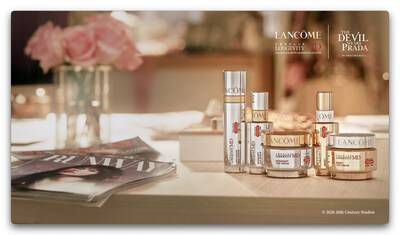
The beauty industry's biggest shift of 2026 is not about a new color trend or a viral makeup technique — it is about fundamentally changing how skin ages at the cellular level. Skin longevity has emerged as the defining theme of April 2026, driven by landmark product launches, groundbreaking ingredient science, and a collective pivot away from surface-level fixes toward genuine biological repair. From Lancome's debut of Urolithin-A in luxury skincare to the rapid rise of PDRN and exosomes in K-beauty, this skin longevity revolution is reshaping what consumers expect from their routines and what brands are able to deliver.
What Is Skin Longevity and Why Is 2026 Its Breakout Year?
Skin longevity refers to maintaining and extending the functional health of skin at the cellular and molecular level — not merely concealing signs of aging, but actively slowing or reversing the biological processes that cause them. The concept draws directly from longevity medicine, which studies how organisms maintain peak cellular function over time, and applies those principles to cosmetic science.
Several converging forces have made skin longevity the dominant beauty narrative of 2026. First, science has finally caught up: researchers now understand that mitochondrial dysfunction, NAD+ depletion, telomere shortening, and accumulation of senescent cells are root causes of visible skin aging. Second, biotech companies have developed stable, topically deliverable ingredients that target these mechanisms. Third, prestige brands with the resources to partner with longevity science firms — such as L'Oreal's alliance with Timeline and Korean startup NanoEntek — are now bringing these innovations to market at scale.
The result is a category that is outpacing traditional anti-aging. According to Cosmetics Business's 2026 trend report, the medical-based skincare segment is among the fastest-growing in the industry, with consumers actively seeking formulations that translate clinical and biochemical science into their bathroom shelves.
Lancome Absolue Longevity MD: The Most Significant Launch in Two Decades

The most talked-about skin longevity launch of 2026 is Lancome's Absolue Longevity MD, unveiled at the American Academy of Dermatology Annual Meeting in Denver on March 27 and available online from April 20. The line represents Lancome's most significant launch in over twenty years and marks the first time that Mitopure — the number-one selling Urolithin-A longevity supplement by Swiss biotech firm Timeline — has been incorporated into a mainstream skincare product.
Urolithin-A is a postbiotic compound produced when gut bacteria metabolize polyphenols from foods like pomegranates and walnuts. In supplement form, Mitopure has been extensively studied for its ability to promote mitophagy — the cellular process that clears out damaged mitochondria and allows healthy new ones to take their place. Lancome's Absolue Longevity MD translates this mitochondrial renewal mechanism into topical skincare, supported by dermatologist validation and 90 years of the brand's scientific heritage.
The range is structured around three precision intervention models aligned with different life stages of skin aging:
- ANTICIPATE (under 35): Prevents the early emergence of fine lines, with clinical data showing a 16% reduction in incoming fine lines.
- INTERCEPT (35 to 55): Addresses active aging, delivering a clinically measured 76% improvement in elasticity within four hours of application.
- RESET (55 and above): Targets established, visible signs of aging with a demonstrated 55% increase in skin bounce.
A further innovation in the line is the Cell BioPrint diagnostic technology, developed in partnership with NanoEntek in Korea. The system analyzes skin-surface biomarkers to assess each consumer's visible biological age, enabling personalized product recommendations within the range. Priced from $155 to $175, Absolue Longevity MD is positioned at the top of Lancome's prestige portfolio and represents a meaningful bridge between clinical longevity science and luxury cosmetics.
Source: Lancome via PR Newswire
PDRN and Exosomes: K-Beauty's Regenerative Ingredient Revolution
While Western prestige brands focus on Urolithin-A and mitochondrial health, K-beauty is leading a parallel revolution with two other categories: PDRN (polydeoxyribonucleotide) and exosomes. Both were originally confined to clinical medicine and aesthetic procedures, but 2026 has seen their rapid migration into mainstream topical skincare products sold direct-to-consumer.
PDRN is derived from salmon DNA — which shares approximately 95% compatibility with human DNA at the structural level — and works by providing nucleotide building blocks that cells use to repair damaged DNA strands and accelerate tissue regeneration. Originally used in wound-healing injections and clinical skin treatments in South Korea, PDRN is now appearing in serums, ampoules, and essences sold at accessible price points. According to Forena Clinic's 2026 analysis, PDRN has become one of the three most searched skincare ingredients in Korea's domestic market, alongside exosomes and stem cell actives.
Exosomes are nanoscale extracellular vesicles — essentially messenger packets — that cells use to communicate. When applied topically, cosmetic-grade exosome preparations deliver growth factors, proteins, and signaling molecules directly to skin cells, instructing them to increase collagen and elastin synthesis. The ingredient has become a cornerstone of what industry analysts call the procedural skincare movement: formulations that deliver results comparable to aesthetic procedures without requiring a clinical visit.
For readers already building a science-backed routine, these regenerative actives pair powerfully with the multi-peptide skincare strategies covered in our recent guide, as peptides and PDRN operate through complementary cellular pathways.
NAD+ and the Mitochondrial Pathway: The Science Behind the Trend
To understand why Urolithin-A, PDRN, and exosomes are converging into a single skin longevity narrative, it helps to understand the shared scientific foundation: mitochondrial health and cellular energy metabolism.
NAD+ (nicotinamide adenine dinucleotide) is a coenzyme present in every living cell that plays a central role in energy production, DNA repair, and the regulation of sirtuins — proteins that govern cellular aging. NAD+ levels in skin decline measurably starting in a person's 30s, and this decline is now understood to be a key driver of the reduced cell turnover, diminished barrier function, and loss of elasticity that characterize aging skin.
Urolithin-A targets this pathway by clearing dysfunctional mitochondria through mitophagy, allowing the cell to replace them with healthy, energy-efficient organelles. NMN (nicotinamide mononucleotide) and NMN-PDRN combination formulas aim at the same endpoint through a different mechanism: directly boosting the precursors that cells use to synthesize NAD+. The 2026 cosmetic ingredient market has responded to this science with a wave of biotox formulations — a term coined by Korean formulators to describe high-potency blends of PDRN and NMN designed for intensive cellular repair.
This trend also connects to the broader shift in skincare philosophy identified at in-cosmetics Global 2026 in Paris (April 14 to 16), where exhibitors including Lubrizol, Lucas Meyer Cosmetics by Clariant, and Provital showcased AI-designed peptides, blue-biotech hyaluronic acid alternatives, and caloric-restriction-mimicking actives — all targeting the same fundamental goal of extending the functional lifespan of skin cells.
If barrier repair is a current priority in your routine, our guide to K-beauty ceramide and postbiotic products for skin barrier repair provides complementary context, as a healthy barrier is prerequisite for longevity actives to function optimally.
From Glass Skin to Bloom Skin: How the Aesthetic Ideal Is Shifting
The skin longevity revolution is not only scientific — it is reshaping the aesthetic goals that consumers set for their skin. The viral glass skin ideal that dominated K-beauty from 2018 through 2024 prioritized a near-poreless, mirror-smooth, hyper-reflective complexion. In 2026, that standard is giving way to bloom skin: an even-toned, resilient, and naturally luminous appearance that communicates health and vitality rather than engineered perfection.
The distinction matters because the products and routines that produce bloom skin are fundamentally different from those optimized for glass skin. Where glass skin relied heavily on layered hydration, pore-minimizing toners, and dewy occlusives, bloom skin is achieved through cellular repair: strengthening the extracellular matrix, supporting stem cell renewal, and restoring the skin's intrinsic radiance rather than adding reflective agents on top. PDRN, exosomes, Urolithin-A, and beta-glucan — one of the fastest-growing barrier-support ingredients of 2026, with a 51% annual increase in consumer searches — are the building blocks of this new aesthetic standard.
The shift also intersects with a broader movement toward simplified, intelligently targeted routines. Korea's skip-care philosophy, which reached mainstream adoption in 2026, holds that a single high-performance product formulated with the right regenerative actives can deliver what three or four separate products achieved five years ago. The skin longevity trend accelerates this consolidation: when a serum is engineered to restore mitochondrial function and stimulate collagen production simultaneously, fewer steps are needed to achieve visible results.
What This Means for Your Skincare Routine in 2026
The practical implication of the skin longevity revolution for everyday consumers is a shift in how to evaluate product efficacy. Rather than asking whether a product hydrates or brightens — qualities that can be achieved through surface-level formulations — the more meaningful questions are: Does this product support cellular energy production? Does it provide the raw materials cells need for DNA repair? Does it signal skin cells to increase their own collagen and elastin synthesis?
For those in their 20s and early 30s, longevity-focused prevention is increasingly available through accessible price points, with Korean brands launching PDRN ampoules and NMN serums well below the $100 threshold. For those in midlife, the Lancome Absolue Longevity MD INTERCEPT range and comparable formulations from other prestige brands represent the state-of-the-art in topical intervention. For mature skin, the RESET category — combining mitophagy promotion with exosome-mediated growth factor delivery — offers a genuinely new approach to visible age reversal.
Anti-aging staples retain their value within this framework. Retinol continues to be among the most evidence-backed topical actives for collagen stimulation and cell turnover, and the case for peptides as structural building blocks remains strong, as detailed in our complete multi-peptide skincare guide. The skin longevity revolution does not replace these foundations — it builds on them with a deeper understanding of why they work and what additional mechanisms can be recruited to achieve more durable results.
You May Also Like:
- Multi-Peptide Skincare 2026: The Complete Guide to Firmer, Younger-Looking Skin
- Skin Barrier Repair 2026: K-Beauty's Best Ceramide and Postbiotic Products
- Anti-Aging Skincare Guide 2026: Science-Backed Ingredients, Routines, and Expert Strategies
Frequently Asked Questions
What is Urolithin-A and how does it work in skincare?
Urolithin-A is a postbiotic compound derived from the fermentation of polyphenols by gut bacteria. In skincare, it promotes mitophagy — the cellular cleanup process that removes damaged mitochondria and replaces them with healthy ones. Lancome's Absolue Longevity MD is the first mainstream prestige skincare line to formulate with Mitopure, the clinically validated form of Urolithin-A developed by Swiss biotech company Timeline.
What is PDRN in skincare and is it safe?
PDRN (polydeoxyribonucleotide) is a DNA-derived ingredient extracted from salmon. It shares approximately 95% structural compatibility with human DNA and supplies nucleotide building blocks that support cellular DNA repair and tissue regeneration. Originally used in clinical injectables for wound healing and aesthetic treatments in South Korea, PDRN is now available in topical serums and essences. It is considered safe for topical use and is well-tolerated by most skin types.
What is the difference between glass skin and bloom skin?
Glass skin refers to a flawlessly smooth, hyper-reflective complexion achieved largely through intense hydration and layered Korean skincare routines. Bloom skin, the 2026 evolution of this ideal, emphasizes even-toned, resilient, and naturally luminous skin achieved through cellular health — using ingredients like PDRN, exosomes, and beta-glucan to strengthen the skin at a biological level rather than adding surface-level glow.
What are exosomes in skincare?
Exosomes are nanoscale vesicles secreted by cells to carry proteins, growth factors, and genetic signals to neighboring cells. Cosmetic-grade exosome preparations are designed to deliver these bioactive signals topically, stimulating collagen and elastin production. They are a key component of what the industry calls procedural skincare — formulations that approach the efficacy of aesthetic procedures without requiring clinical treatment.
Which skin longevity ingredients should I start with in 2026?
For those new to skin longevity science, beta-glucan is the most accessible entry point: widely available, well-tolerated, and clinically supported for barrier repair and anti-inflammatory activity. PDRN serums at accessible price points from Korean brands are a strong second step. For a prestige, comprehensive approach, Lancome's Absolue Longevity MD ANTICIPATE or INTERCEPT products — depending on age group — represent the current state-of-the-art in topical skin longevity.
Sources: Lancome PR Newswire | Cosmetics Business 2026 Trends Report | Forena Clinic K-Beauty Trends 2026 | in-cosmetics Global 2026


댓글
댓글 쓰기