Copper Peptide Skincare 2026: Why GHK-Cu Is the Anti-Aging Ingredient Dermatologists Trust
Copper Peptide Skincare 2026: Why GHK-Cu Is the Anti-Aging Ingredient Dermatologists Trust
Copper peptide skincare has officially moved from niche clinical circles into the mainstream beauty conversation. In 2026, GHK-Cu — the copper tripeptide complex naturally produced by the human body — is being hailed as one of the most scientifically validated anti-aging ingredients available in topical formulations. Unlike fleeting trend ingredients that fade after a single season, copper peptides carry over five decades of peer-reviewed research and dermatologist endorsement. If you are serious about skin longevity, collagen regeneration, and evidence-based anti-aging, copper peptide skincare deserves a permanent place in your routine.
What Are Copper Peptides and How Does GHK-Cu Work?
Copper peptides are short chains of amino acids bonded to a copper ion. The most studied form is GHK-Cu (Copper Tripeptide-1), a compound first identified in 1973 by biochemist Loren Pickart. GHK-Cu occurs naturally in human blood plasma, saliva, and urine, but its concentration declines significantly with age — dropping by roughly 60 percent between the ages of 20 and 60.
What makes copper peptides exceptional is their dual classification as both signal peptides and carrier peptides. As signal peptides, they communicate directly with skin cells, instructing them to ramp up collagen and elastin synthesis. As carrier peptides, they deliver copper ions — an essential trace mineral — deep into the skin matrix, where copper activates superoxide dismutase (SOD) and other enzymes critical for tissue repair and antioxidant defense.
According to Dr. Annetta Reszko, a board-certified dermatologist specializing in regenerative skin science, copper peptides have "some of the best data we have for collagen and elastin regrowth from within." This is not marketing language — it reflects decades of controlled studies demonstrating measurable improvements in skin firmness, elasticity, and wound healing.
The Science Behind Copper Peptides: What the Research Shows
The evidence base for copper peptide skincare is remarkably robust. In a landmark comparative study, 70 percent of women using a GHK-Cu cream showed clinically significant improvement in collagen density after 12 weeks, compared to 50 percent using vitamin C serum and just 40 percent using retinoic acid cream. This positions copper peptides not merely as an alternative to retinol, but as a potentially superior collagen-boosting active for certain skin profiles.
Research published in academic dermatology journals has documented the following benefits of GHK-Cu:
- COLLAGEN AND ELASTIN STIMULATION: GHK-Cu upregulates the genes responsible for producing collagen types I, III, and IV, as well as elastin fibers, directly improving skin structure and firmness.
- WOUND HEALING ACCELERATION: Originally studied for its tissue-repair capabilities, copper peptides enhance the wound-healing cascade by stimulating blood vessel growth and supporting fibroblast migration.
- ANTIOXIDANT DEFENSE: By activating superoxide dismutase and catalase, copper peptides neutralize free radicals and reduce oxidative stress — a primary driver of premature aging.
- ANTI-INFLAMMATORY PROPERTIES: GHK-Cu suppresses pro-inflammatory cytokines including TGF-beta and TNF-alpha, making it effective for calming reactive and sensitized skin.
- GLYCOSAMINOGLYCAN SYNTHESIS: Copper peptides promote the production of hyaluronic acid and other glycosaminoglycans within the dermis, boosting intrinsic hydration at the cellular level.
As researchers Ahmed Elbediwy and Nadine Wehida from Kingston University noted in The Conversation, copper peptides "do the work of multiple peptides in one," combining collagen-boosting, healing support, and oxidative stress protection in a single molecular complex. This multifunctional profile is precisely why dermatologists increasingly recommend copper peptide skincare as a cornerstone of anti-aging protocols.
Why Copper Peptides Are Trending in 2026
Several converging factors explain why copper peptide skincare has reached peak momentum in 2026:
SKIN LONGEVITY MOVEMENT: The beauty industry has pivoted decisively toward "skin longevity" — the concept that preventive, regenerative skincare produces better long-term outcomes than reactive damage repair. Copper peptides, with their ability to stimulate the skin's own repair machinery, align perfectly with this philosophy. As covered in our Metabolic Beauty 2026 guide, cellular-level interventions are defining the new frontier of skincare science.
BIOTECH-DRIVEN FORMULATION: Advances in peptide encapsulation and delivery technology have dramatically improved the bioavailability of topical copper peptides. Brands are now using liposomal delivery, nano-encapsulation, and pH-optimized vehicles to ensure GHK-Cu penetrates the stratum corneum effectively rather than degrading on the skin surface.
RETINOL-FREE DEMAND: With growing consumer awareness of retinol side effects — irritation, photosensitivity, contraindication during pregnancy — copper peptides offer a compelling alternative that delivers comparable anti-aging results without the harsh adaptation period. This makes copper peptide skincare particularly attractive for sensitive skin types, rosacea-prone individuals, and anyone seeking gentle yet effective anti-aging actives.
K-BEAUTY INTEGRATION: Korean beauty brands have been early adopters of advanced peptide technology, incorporating copper peptides into multi-step routines alongside complementary ingredients like PDRN (salmon DNA), exosomes, and niacinamide. This cross-pollination of biotech actives represents the cutting edge of K-beauty formulation in 2026.
Best Copper Peptide Products in 2026
The copper peptide market has matured significantly, offering options across every price point. Here are the standout formulations dermatologists and beauty editors recommend in 2026:
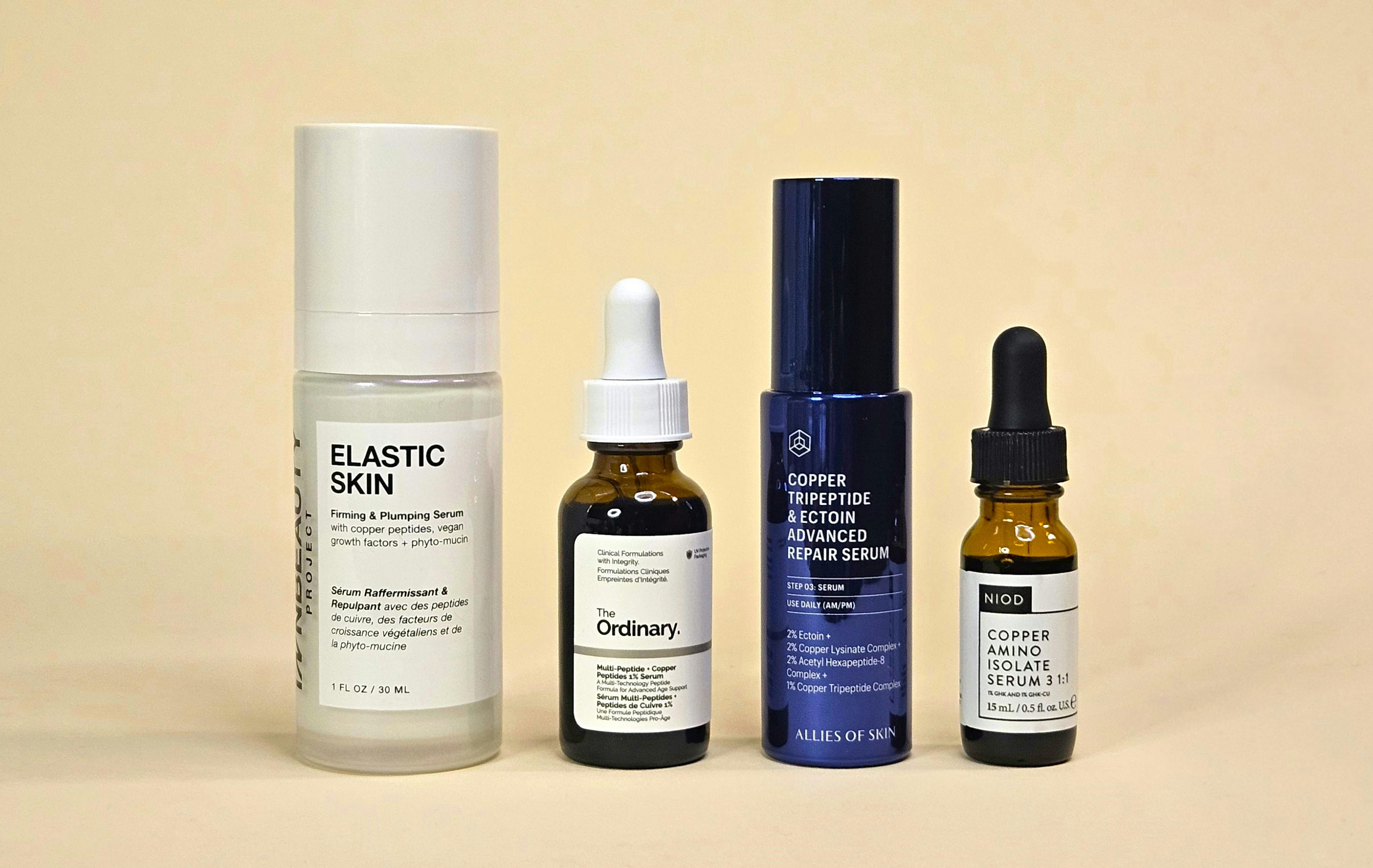
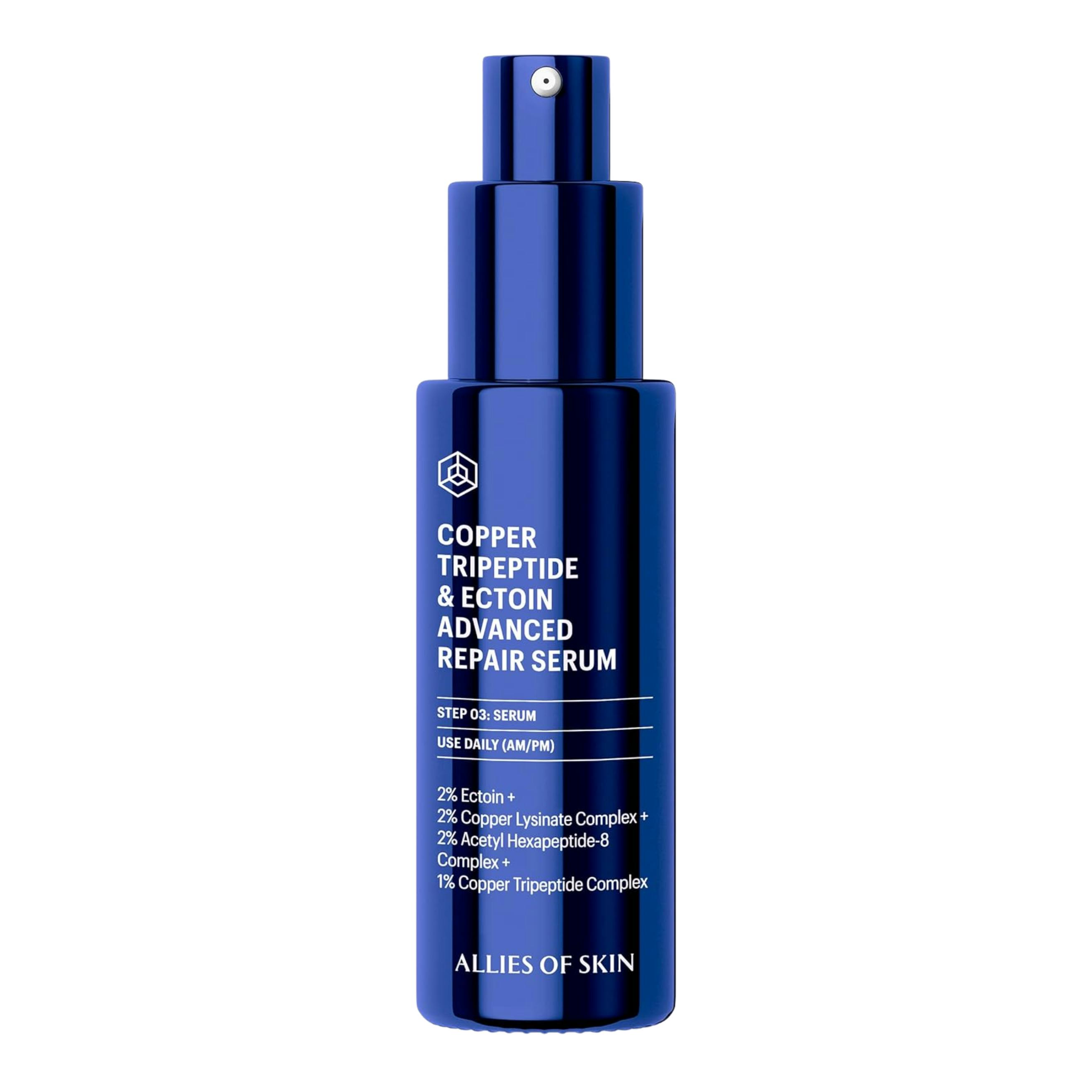
ALLIES OF SKIN COPPER TRIPEPTIDE AND ECTOIN ADVANCED REPAIR SERUM
This premium formulation pairs GHK-Cu with ectoin — the extremophile-derived ingredient that enhances copper peptide stability and efficacy. Approved by the National Eczema Association, it is suitable for even the most reactive skin types. The dual-action approach of regeneration (copper peptides) plus protection (ectoin) makes this the top-rated copper peptide serum in independent testing.
THE ORDINARY MULTI-PEPTIDE PLUS COPPER PEPTIDES 1% SERUM
The most accessible entry point into copper peptide skincare. This budget-friendly formula delivers GHK-Cu alongside hyaluronic acid for hydration support. At under $30, it removes the financial barrier for consumers looking to experiment with copper peptide benefits before investing in premium alternatives.
NIOD COPPER AMINO ISOLATE SERUM 3 (CAIS3)
NIOD's flagship copper peptide product represents the premium end of The Ordinary's parent company, DECIEM. The CAIS3 formula isolates GHK-Cu and GHK in a mildly acidic vehicle (pH 5.7-6.7) optimized for peptide stability. This is the product of choice for skincare enthusiasts who want maximum copper peptide concentration without compromising formula integrity.
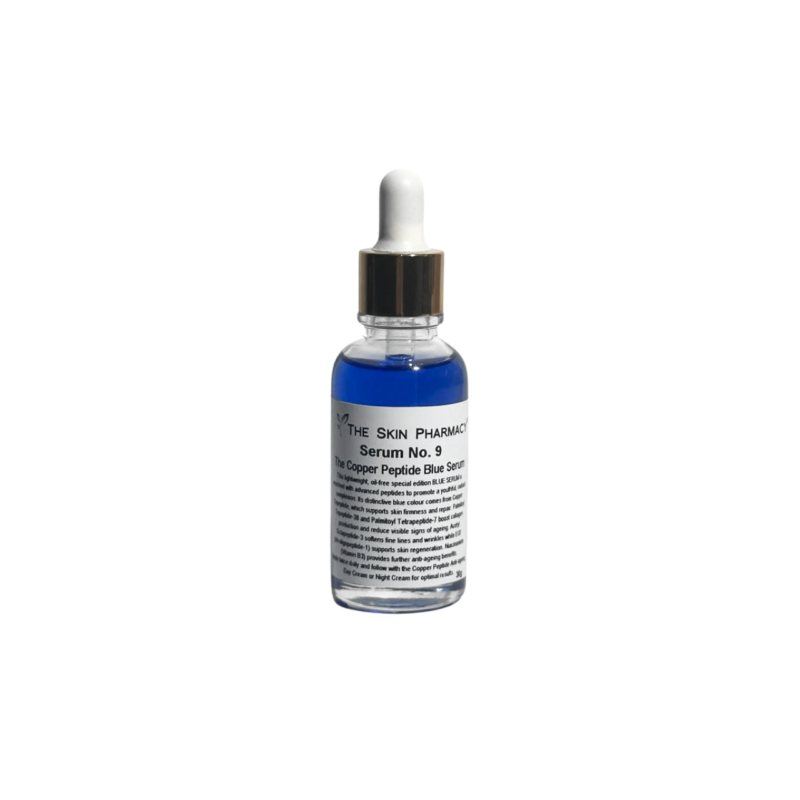
THE SKIN PHARMACY SERUM NO. 9 — THE BLUE SERUM
Launched in March 2026, this new copper peptide serum gets its distinctive blue color naturally from the copper-peptide complex itself — no added dyes. The collection includes a complementary day cream and night cream, offering a complete copper peptide-centered routine. The first 100 customers received a bundle discount, reflecting the strong launch demand for dedicated copper peptide formulations.
How to Use Copper Peptides in Your Skincare Routine
Integrating copper peptide skincare into an existing routine requires attention to ingredient compatibility and application sequence. Here is the dermatologist-recommended approach:
STEP 1 — CLEANSE: Start with a gentle, pH-balanced cleanser. Avoid harsh surfactants that strip the skin barrier, as copper peptides work best on an intact barrier.
STEP 2 — APPLY COPPER PEPTIDE SERUM: Apply your GHK-Cu serum to clean, slightly damp skin. The aqueous environment helps peptide absorption. Use 3-5 drops and press gently — do not rub vigorously.
STEP 3 — MOISTURIZE: Follow with a ceramide-rich or hyaluronic acid moisturizer to lock in the copper peptide complex and support the skin barrier.
STEP 4 — SPF (MORNING): Always finish your morning routine with broad-spectrum SPF 30 or higher. While copper peptides are not photosensitizing like retinol, sun protection remains essential for any anti-aging protocol.
IMPORTANT COMPATIBILITY NOTES:
- DO NOT mix copper peptides with direct acids (AHA/BHA) in the same routine step — low pH environments can destabilize the peptide-copper bond.
- AVOID layering with high-concentration vitamin C (L-ascorbic acid) — the ascorbic acid can reduce the copper ion, diminishing efficacy.
- COPPER PEPTIDES AND RETINOL should be used in alternating routines (e.g., copper peptides in the morning, retinol at night) rather than simultaneously.
- SAFE TO COMBINE WITH: Hyaluronic acid, niacinamide, ceramides, peptide blends, ectoin, and centella asiatica.
Copper Peptide Side Effects: What Dermatologists Want You to Know
Copper peptide skincare is generally well-tolerated, but dermatologists flag two important considerations:
THE "COPPER PEPTIDE UGLIES": Some users experience a temporary phase of skin purging or accelerated aging appearance when first introducing copper peptides. This phenomenon, commonly called "copper peptide uglies," occurs because GHK-Cu stimulates both collagen synthesis AND collagen breakdown (remodeling). During the initial 2-4 weeks, breakdown may temporarily outpace new production, resulting in skin that looks slightly worse before improving. Dermatologists advise patience — the remodeling phase typically resolves within 4-6 weeks as net collagen production catches up.
CONCENTRATION MATTERS: For beginners, a copper peptide concentration of 0.1-1% is recommended. Jumping to higher concentrations without skin adaptation increases the risk of irritation. Products like The Ordinary's 1% formula represent the upper range for most home-use applications.
Copper Peptides vs. Retinol vs. Vitamin C: How They Compare
Understanding where copper peptides fit relative to other proven anti-aging actives helps build an effective, non-redundant routine:
| CRITERIA | COPPER PEPTIDES | RETINOL | VITAMIN C |
|---|---|---|---|
| Primary Mechanism | Collagen/elastin signal + repair | Cell turnover acceleration | Antioxidant + brightening |
| Irritation Risk | Low | Moderate to High | Low to Moderate |
| Pregnancy Safe | Generally Yes | No | Yes |
| Photosensitizing | No | Yes | No |
| Wound Healing | Strong | Minimal | Moderate |
| Results Timeline | 4-12 weeks | 8-24 weeks | 4-12 weeks |
For a deeper dive into building an age-appropriate routine with these actives, check our comprehensive Anti-Aging Korean Skincare Routine for Your 30s, 40s, and 50s.
FAQ
Q: Can I use copper peptides every day?
A: Yes. Unlike retinol, copper peptide skincare does not require cycling or rest days. Most dermatologists recommend daily application, ideally in the morning when the skin's repair signaling is naturally active. Start with every other day for the first two weeks if you have sensitive skin, then increase to daily use.
Q: Are copper peptides safe during pregnancy?
A: Copper peptides are generally considered safe for topical use during pregnancy, as GHK-Cu is a naturally occurring compound in the human body. However, clinical studies specifically on pregnant populations are limited. Consult your dermatologist or OB-GYN before introducing any new active into your pregnancy skincare routine.
Q: What skin types benefit most from copper peptides?
A: All skin types can benefit from copper peptide skincare. However, they are particularly valuable for mature skin (40+) showing collagen loss, post-procedure skin requiring accelerated healing, sensitive skin that cannot tolerate retinol, and skin recovering from barrier damage or inflammation.
Q: Can copper peptides replace retinol entirely?
A: They can serve as a retinol alternative for those who cannot tolerate vitamin A derivatives. However, dermatologists note that copper peptides and retinol work through different mechanisms — combining them in an alternating schedule often yields superior results to using either alone. The key is not using them simultaneously in the same routine step.
Q: How do copper peptides compare to PDRN and exosome skincare?
A: These are complementary rather than competing technologies. Copper peptides signal repair and deliver copper for enzymatic function. PDRN provides DNA fragments that fuel cellular regeneration. Exosomes deliver growth factors and signaling molecules between cells. Many advanced K-beauty routines in 2026 layer all three for synergistic anti-aging effects.
You May Also Like
- Anti-Aging Korean Skincare Routine for Your 30s, 40s, and 50s (2026 Expert Guide)
- Ectoin Skincare 2026: The Extremophile Ingredient Your Skin Barrier Needs
- PDRN Skincare 2026: The Salmon DNA Ingredient Taking Over K-Beauty
- K-Beauty Ingredients Encyclopedia 2026: Every Trending Skincare Active Explained
- Anti-Aging Skincare Guide 2026: Science-Backed Ingredients and Strategies
The Bottom Line
Copper peptide skincare in 2026 represents the convergence of five decades of scientific research with modern formulation technology. GHK-Cu is not a hype ingredient — it is one of the most extensively studied peptide complexes in dermatology, with demonstrated efficacy in collagen stimulation, wound healing, antioxidant defense, and inflammation reduction. Whether you choose a budget-friendly option from The Ordinary or a premium formulation from Allies of Skin or NIOD, incorporating copper peptides into your anti-aging routine is one of the most evidence-based decisions you can make for long-term skin health.
The key to success with copper peptide skincare is consistency, proper layering, and patience through the initial adaptation phase. Start low (0.1-1%), build gradually, and pair with compatible actives like hyaluronic acid, ceramides, and niacinamide for maximum synergy.
Sources: The Conversation | Innerbody Research | The Skin Pharmacy | Our Healtho


댓글
댓글 쓰기