Spicules Skincare 2026: Inside K-Beauty's Viral Microneedling-In-A-Bottle Trend (Up 119%)
Spicules Skincare 2026: Inside K-Beauty's Viral Microneedling-In-A-Bottle Trend

Spicules skincare has exploded into the global beauty conversation in 2026, with Google searches for "spicule skincare" climbing 119% year-over-year and brands like Medicube and VT Cosmetics turning the once-niche K-beauty actives into mainstream bestsellers. Marketed as "microneedling in a bottle" or "liquid microneedling," spicules are microscopic needle-shaped particles derived from freshwater and marine sponges that promise the texture-refining, glow-boosting effects of an in-clinic facial without the downtime, the price tag, or the dermatologist's appointment. Following the breakout success of NAD+ skincare and PDRN, spicules represent the next regenerative wave coming out of Seoul's labs.
What Are Spicules? The Science Behind Sponge-Derived Skincare
Spicules are very fine, needle-shaped structural particles harvested primarily from freshwater sponges of the Spongilla genus, with some formulas drawing from marine sponge species. They form part of the sponge's exoskeleton and are composed of natural minerals such as silica and calcium carbonate. Once purified, the spicules are milled to a microscopic scale and suspended in water-based serums, ampoules, or rinse-off treatments.
"Microspicules are tiny, highly purified, microscopic needle-like structures that come from sea sponge," explains Dr. Christine Hall, an aesthetics doctor specializing in Korean skincare. "They allow ingredients like peptides or soothing cica to absorb far more effectively, in some cases up to 60 times more than if you simply applied the product alone."
When massaged onto the skin, the spicules embed into the upper layers of the stratum corneum, creating thousands of temporary microchannels in the epidermis. Dr. Jennifer Owens of The Glow Clinic describes the process as "a mild, controlled mechanical stimulus that can increase epidermal permeability, encourage exfoliation, and support cellular renewal." The transient micro-injuries trigger a low-grade wound-healing cascade, similar in concept (though far gentler in degree) to professional microneedling devices.
Why Spicules Are Trending Now: The 2026 Surge
Spicules have been quietly used in Korean dermatology clinics and cosmetic counters for over a decade, but two forces have pushed them into global virality this year. First, the rise of in-home alternatives to clinical procedures has pushed shoppers toward at-home actives that mimic professional results. Second, K-beauty distribution into Western markets, accelerated by Olive Young's US expansion and TikTok's relentless ingredient cycle, has put Korean spicule serums directly in front of American and European consumers.
Chelsey Saunders, Director of Skincare, Haircare and Fragrance at Boots, described the shift from "niche to mainstream in South Korea" as signaling "the next evolution of results-driven skincare." Search interest tells the same story: a 119% year-over-year jump in queries, with viral TikTok videos under hashtags like #liquidmicroneedling and #reedleshot accumulating tens of millions of views.
How to Read Spicule Strength Labels (50, 100, 300, 700, 1000)
One of the most confusing aspects of shopping spicule skincare is the strength labeling. Korean brands typically use a numeric system, often referencing the percentage or relative count of spicules per formula. Here is the practical decoder:
Beginner (50–100): Around 0.1–1% spicule concentration. Suitable for daily or every-other-day use. Mild tingling on application; minimal visible flaking. Ideal for first-time users and those with normal-to-combination skin.
Intermediate (300): A noticeable mid-strength step. Recommended 2–3 times per week. Expect a stronger prickling sensation and a brief flushed appearance. Suited for users who have built tolerance over 4–6 weeks.
Advanced (700–1000): Approaches ~10% spicule concentration. Best used weekly, almost as an at-home professional treatment. Strong tingling, transient redness, and visible micro-exfoliation are normal. Always follow with a barrier-supporting moisturizer and SPF the next morning.
Best Spicule Products on the Market in 2026
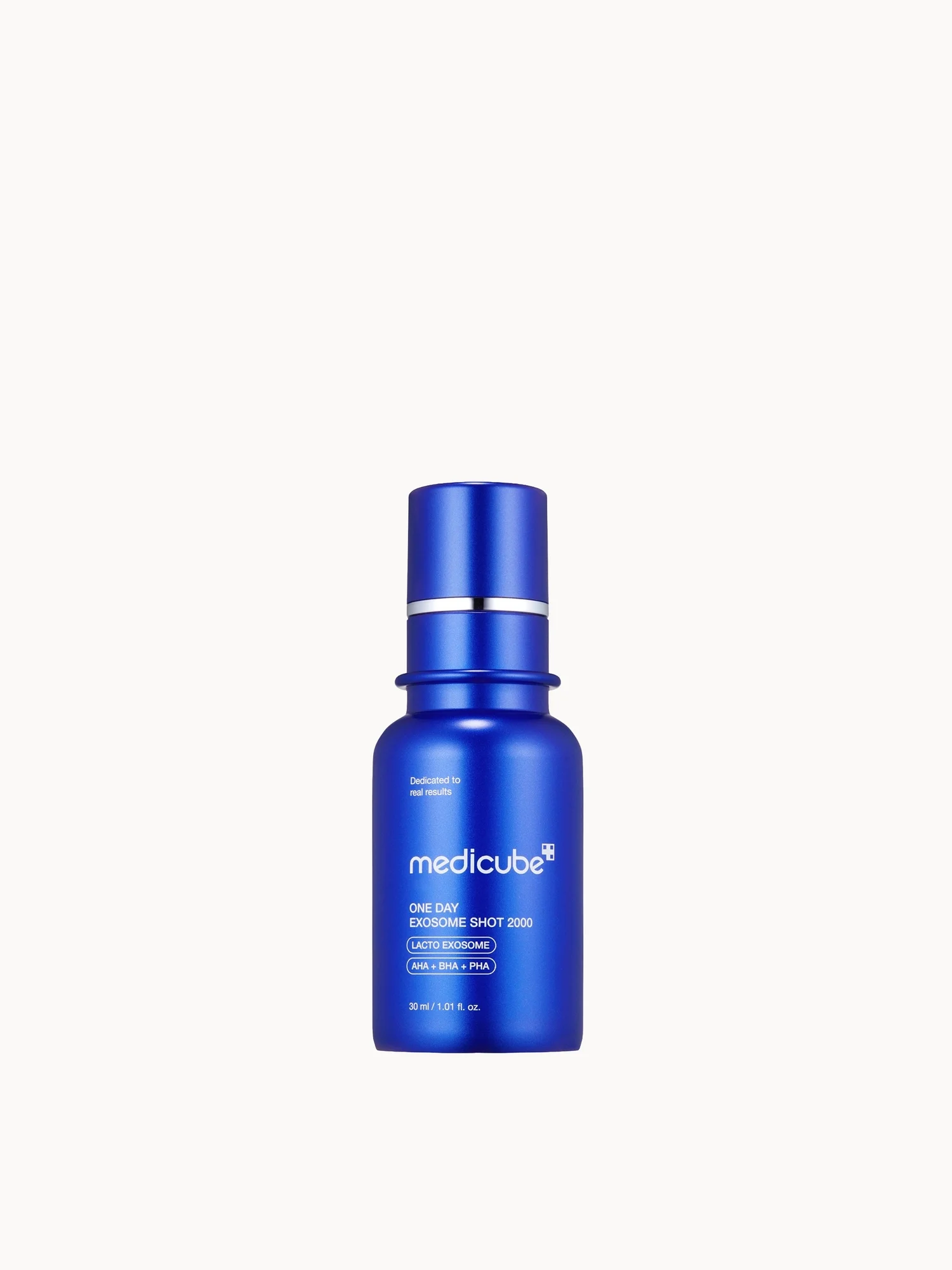
Several flagship products are driving the category. Medicube's One Day Exosome Shot Pore Ampoule combines spicules with exosomes and is sold in two strengths (2000 and 7500), with the brand citing internal data showing improved skin texture and up to 242% better absorption of subsequent skincare. VT Cosmetics Reedle Shot, available in 50, 100, 300, and 700 strengths, coats its spicules in cica (centella asiatica) to buffer the barrier as the needles work. Genabelle's Glutathione Vita Glow Spicule Shot pairs spicules with glutathione for a brightening angle, while TIAM AC Fighting Spot Rx Cream and Celimax Retinol Shot Tightening Serum represent more targeted spicule applications for blemishes and firmness, respectively.
How to Use Spicule Skincare Safely
Application matters more with spicules than with almost any other K-beauty active. Apply to clean, dry skin (damp skin softens the spicules and reduces efficacy). Massage in a circular motion for 30–60 seconds until you feel a distinct tingling. Avoid the eye area, lips, and any active acne lesions. Do not layer with other exfoliants or retinoids on the same night during the first month of use, since the combined irritation can compromise the barrier.
Pair spicules with hydrating, barrier-supporting actives that benefit from enhanced penetration. The smartest stacking partners include hyaluronic acid for plumping, niacinamide for tone, peptides for firming, and panthenol or beta-glucan for soothing. As we explored in our copper peptide deep dive, peptide molecules historically struggle to cross the stratum corneum, so spicules can meaningfully amplify peptide-driven anti-aging routines.
Who Should Avoid Spicules
Despite generally good tolerance, spicules are emphatically not for every skin type. Anyone with rosacea, active eczema, psoriasis, perioral dermatitis, or a clinically compromised skin barrier should avoid them entirely; the mechanical stimulus that exfoliates normal skin will inflame already-reactive skin. Those on prescription tretinoin, oral isotretinoin, or undergoing in-office laser or microneedling treatments should pause spicule use and consult their dermatologist.
There is also a growing professional concern about overuse. Repeated daily application of high-strength spicule products can drive what some Korean dermatologists call "chronic low-grade inflammation," presenting as new sensitivity, persistent dryness, and reduced tolerance to products that were previously fine. The fix is restraint: use the lowest effective strength, cycle on and off, and prioritize barrier repair on rest days. Readers with reactive skin may prefer the gentler protocol outlined in our K-beauty routine for sensitive skin.
Spicules vs. Microneedling vs. Chemical Exfoliants
The "microneedling in a bottle" framing oversells the comparison. True clinical microneedling penetrates 0.5–2.5 mm into the dermis, triggering deep collagen remodeling. Spicules work only in the upper epidermis (roughly the outer 0.1 mm), so the mechanism is closer to enhanced delivery and gentle physical exfoliation than to dermal collagen induction. Compared with chemical exfoliants like AHA, BHA, or PHA acids, spicules offer a more targeted "channel-opening" effect without altering skin pH and without sun-sensitizing the skin to the same degree, though daily SPF remains non-negotiable.
Expert Insights: What Dermatologists Say About Spicules
The dermatology community is cautiously enthusiastic. Most experts agree that spicules deliver real, measurable improvements in surface texture, radiance, and active-ingredient absorption when used appropriately. The consensus caveats: spicules are not a substitute for professional procedures, they are not appropriate for inflammatory skin conditions, and the visible "glow" some users report is partly the result of mild inflammation that should not be chased. Marketing claims around collagen stimulation should be read with skepticism, as the depth of action does not support deep dermal remodeling claims.
You May Also Like
- PDRN Skincare 2026: Inside the K-Beauty Salmon DNA Trend
- Snail Mucin Skincare 2026: Science, Benefits, and Best K-Beauty Products
- K-Beauty Ingredients Encyclopedia 2026: Every Trending Skincare Active Explained
- K-Beauty Complete Guide 2026: Your Ultimate Korean Skincare Handbook
FAQ
Q: Are spicule skincare products safe for sensitive skin?
A: They can be tolerated by some sensitive skin types if a low strength (50–100) is used and the routine is built up gradually. However, anyone with rosacea, eczema, active acne flares, or a damaged barrier should avoid spicules entirely until cleared by a dermatologist.
Q: How often should I use spicule serums or ampoules?
A: Beginners should start with 1–2 times per week and increase only if the skin tolerates it well. Intermediate strengths cap at 2–3 times per week; high-strength formulas (700+) are best used weekly. Daily use of strong spicules is associated with chronic micro-irritation.
Q: Can I use spicules with retinol or vitamin C?
A: Not in the same routine, especially during the first month. Layering spicules with retinol, vitamin C (L-ascorbic acid), or chemical exfoliants compounds barrier stress. Alternate them on different nights.
Q: How are spicules different from microneedling at a clinic?
A: Clinical microneedling reaches the dermis (0.5–2.5 mm) and stimulates deep collagen remodeling. Spicules act only in the epidermis (under 0.1 mm) and primarily enhance ingredient delivery and surface exfoliation. Spicules complement, but do not replace, professional procedures.
Q: Is the tingling and redness from spicules a sign they are working?
A: A mild tingling sensation and brief flushing are normal and expected. However, persistent redness lasting more than 30 minutes, burning, or stinging is a sign of overuse or an unsuitable formulation strength. Lower the concentration or pause use.
The Bottom Line
Spicules are one of the most genuinely innovative K-beauty actives to reach Western markets in years, offering measurable improvements in absorption, texture, and radiance for the right user. The category will only grow through 2026 as more brands enter and formulations become more sophisticated. Treat spicules as a targeted weekly or twice-weekly tool rather than a daily essential, build slowly, support the barrier, and they will reward you with smoother, more luminous skin. Skip them entirely if your skin is reactive, compromised, or in active treatment, and consult a dermatologist before introducing high-strength formulas alongside other actives.
Source: Marie Claire UK, Cosmetics Business
댓글
댓글 쓰기