Korean Sunscreen 2026: Why K-Beauty SPF Is Years Ahead of the Rest
Korean Sunscreen 2026: Why K-Beauty SPF Is Years Ahead of the Rest
Korean sunscreen technology in 2026 has officially left the rest of the world behind. While Western consumers are still debating whether chemical or mineral SPF is better, Korean formulators have already solved the problem by creating hybrid sunscreens that combine the best of both — and thrown in a full skincare routine for good measure. South Korea’s cosmetics industry, which surpassed France as the largest cosmetics exporter to the United States in 2025 with a record US$11.43 billion in global exports, continues to set the pace for sun protection innovation worldwide.
If you have ever tried a Korean sunscreen and wondered why it felt like a lightweight serum instead of a thick, chalky paste, the answer lies in a combination of advanced UV filter technology, regulatory flexibility, and a consumer culture that demands cosmetic elegance alongside protection. Here is why K-beauty SPF is years ahead — and which products deserve a spot in your routine right now.
The UV Filter Advantage: Why Korean Sunscreens Protect Better
The single biggest reason Korean sunscreens outperform their Western counterparts comes down to ingredient access. South Korea’s MFDS (Ministry of Food and Drug Safety) approves a wider range of UV filters than the US FDA, giving Korean formulators access to newer-generation ingredients that provide superior protection with far less irritation and a dramatically more elegant finish.
Two filters in particular have changed the game. Tinosorb S (Bis-Ethylhexyloxyphenol Methoxyphenyl Triazine) provides exceptionally broad and photostable UV protection, meaning it does not degrade as quickly under sun exposure the way older filters like avobenzone tend to. Uvinul A Plus (Diethylamino Hydroxybenzoyl Hexyl Benzoate) is renowned for its high UVA absorption, the wavelength most responsible for photoaging, wrinkles, and hyperpigmentation.
The result? Korean sunscreens using these advanced filters maintain SPF integrity for 80+ minutes of direct sun exposure — a meaningful real-world advantage over formulas built on older filter systems. They achieve broad-spectrum UVA/UVB coverage without the white cast, stickiness, or pilling that plague many FDA-approved-only formulations. As we covered in our K-Beauty Ingredients Encyclopedia, the science behind these actives is backed by rigorous clinical testing, not just marketing claims.
Hybrid Formulas: Skincare Meets Sun Protection
The most significant innovation in Korean sunscreen for 2026 is the rise of skincare-hybrid formulas. Korean labs have mastered the art of encapsulating UV filters in moisturizing bases, with products often containing up to 70% skincare ingredients — such as hyaluronic acid, niacinamide, probiotics, and birch sap — turning a protective measure into a nourishing treatment.
This is not incremental improvement. It represents a fundamental rethinking of what a sunscreen should do. Instead of a standalone protection step tacked onto the end of your morning routine, the 2026 generation of Korean SPF functions simultaneously as a serum, moisturizer, and sun shield in one elegant formula. For anyone pursuing the cloudglow skin look that has replaced the glass skin aesthetic, a well-chosen Korean sunscreen may be the only daytime product you need.
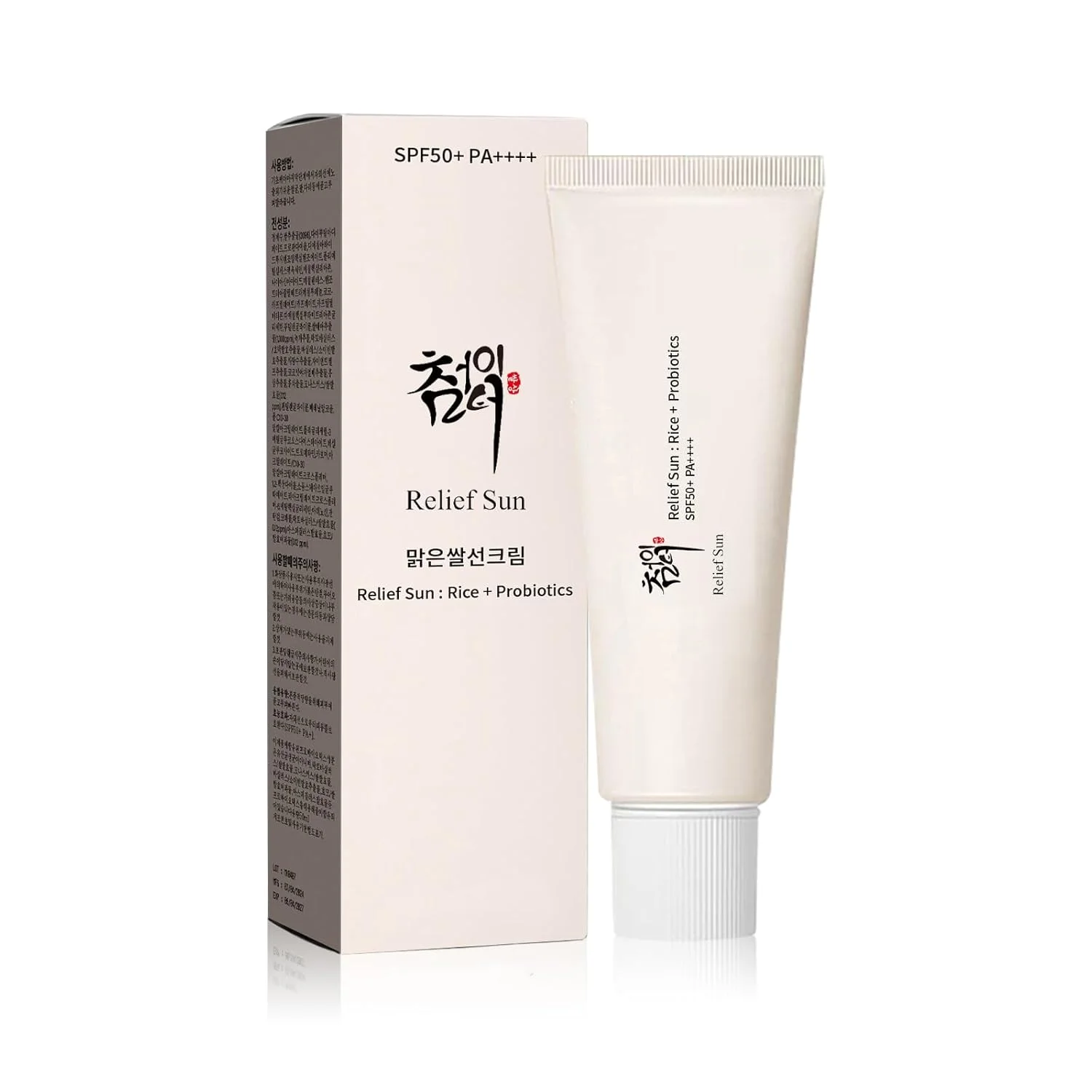
The Beauty of Joseon Relief Sun: Rice + Probiotics SPF50+ PA++++ is the gold standard of this approach. It combines rice bran extract and grain ferment filtrate with broad-spectrum UV protection and a weightless satin finish that works beautifully under makeup. A board-certified physician praised the formula for its antioxidant benefits, calling the rice extract a standout active for brightening and barrier support.
7 Best Korean Sunscreens for 2026: Expert-Tested Picks
After reviewing the latest formulations, clinical data, and real-world testing from beauty editors in Seoul, here are the top Korean sunscreens for every skin type and concern in 2026.
1. Beauty of Joseon Relief Sun (Rice + Probiotics) SPF50+ PA++++
BEST FOR: All skin types, daily wear
The reigning champion of K-beauty sunscreen. Zero white cast, a gorgeous satin finish, and proven durability through Seoul’s worst yellow dust season. The fermented rice and probiotic complex provides antioxidant protection and gentle brightening. This is the one dermatologists call “the best bang for your buck” in Korean sun care.
2. Skin1004 Centella Hyalu-Cica Water-Fit Sun Serum SPF50+ PA++++
BEST FOR: Sensitive and acne-prone skin
A true serum-sunscreen hybrid that delivers centella asiatica’s calming benefits alongside robust UV protection. The water-fit texture absorbs in seconds and layers effortlessly under makeup. Ideal for anyone whose skin reacts to traditional sunscreen formulas.
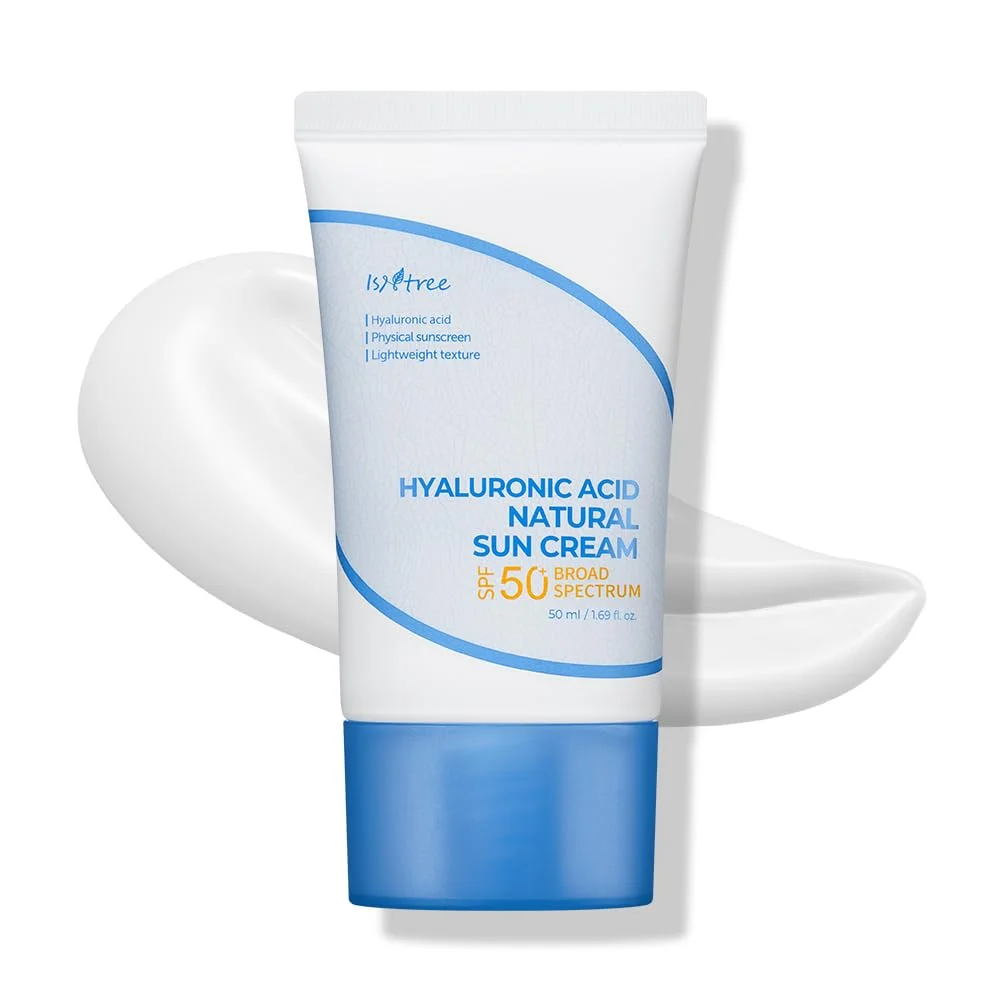
3. Isntree Hyaluronic Acid Watery Sun Gel SPF50+ PA++++
BEST FOR: Oily and combination skin
If you have oily skin and have given up on finding a sunscreen that does not turn your face into a disco ball by noon, this is your answer. The hyaluronic acid-based gel formula provides deep hydration without any greasy residue. It dries down matte and stays that way through humidity, sweat, and a full workday.
4. Round Lab Birch Juice Moisturizing Sunscreen SPF50+ PA++++
BEST FOR: Dry and dehydrated skin
Round Lab’s birch juice formula is designed for skin that needs moisture above all else. The birch sap base provides lasting hydration while the modern filter system ensures no compromise on protection. Perfect for winter sun care or air-conditioned office environments where skin dries out by midday.
5. Anua Zero-Cast Moisturizing Sunscreen SPF50+
BEST FOR: Darker skin tones
The “zero cast” claim is not just marketing — Anua specifically formulated this for complete transparency on all skin tones. With the K-beauty industry expanding its shade inclusivity following TirTir’s viral 40-shade cushion foundation, sunscreen transparency has become a priority. This formula delivers on that promise while maintaining solid moisture levels throughout the day.
6. COSRX Vitamin E Vitalizing Sunscreen SPF50+
BEST FOR: Mature and anti-aging focused skin
COSRX takes its signature minimalist approach and pairs it with vitamin E’s potent antioxidant protection. The formula neutralizes free radicals generated by UV exposure while providing broad-spectrum defense. A sensible, science-forward choice for anyone building a collagen banking routine.
7. Mary&May CICA Soothing Sun Cream SPF50+ PA++++
BEST FOR: Post-procedure and compromised skin barriers
When your skin barrier is already under stress — from retinol use, chemical peels, or environmental aggression — this cica-based formula provides gentle, non-irritating sun protection. The centella complex calms inflammation while the cream texture offers a comforting layer of protection without sensitizing already vulnerable skin. For more on barrier-first care, see our guide to postbiotic skincare and barrier repair.
Korean vs. Western Sunscreen: The Science Gap
The disparity between Korean and Western sunscreen technology is not about marketing or aesthetics alone. It is a regulatory and scientific gap that has real consequences for consumer protection.
The US FDA has not approved a new UV filter since the late 1990s. Meanwhile, South Korea’s MFDS, along with European and Australian regulatory bodies, have approved multiple next-generation filters including Tinosorb S, Tinosorb M, Uvinul A Plus, and Uvinul T 150. These newer filters provide broader spectrum coverage, greater photostability, and allow for more cosmetically elegant formulations at lower concentrations.
Korean sunscreens also benefit from a consumer culture that treats SPF as a daily essential, not an occasional beach product. “SPF is the one skincare step dermatologists universally agree on,” notes one Seoul-based skincare expert. “In Seoul, with UV Index regularly hitting 8–9 from March through October, daily SPF50+ is not a recommendation — it is damage control.”
This daily-use expectation drives Korean brands to prioritize wearability in a way Western brands simply have not. A sunscreen that pills under makeup, leaves white residue, or feels heavy is commercially dead in the Korean market. The result is an entire product category engineered for cosmetic elegance first, with protection performance treated as a non-negotiable baseline rather than a trade-off.
How to Apply Korean Sunscreen for Maximum Protection
Even the best Korean sunscreen will underperform if applied incorrectly. Dermatologists recommend the “two-finger rule” — squeeze a line of sunscreen along your index and middle fingers for one application on the face and neck. This provides approximately the standard 2mg per square centimeter needed for the labeled SPF rating.
Apply as the last step of your skincare routine, after moisturizer but before makeup. Wait two to three minutes for the formula to set before applying foundation or primer. Reapply every two hours during extended outdoor exposure, or immediately after sweating or swimming — even if the product claims water resistance.
For those following a comprehensive K-beauty routine, the sunscreen step replaces the need for a separate day moisturizer when using hybrid formulas. This is the practical beauty of Korean sunscreen innovation in 2026: fewer products, less complexity, better results. If you are still learning the basics, our K-Beauty for Beginners guide covers the full routine from first cleanse to final SPF step.
What to Look For (and Avoid) When Shopping Korean Sunscreen
LOOK FOR:
- SPF50+ PA++++ rating (the PA system measures UVA protection on a scale from + to ++++)
- Newer-generation UV filters like Tinosorb S, Uvinul A Plus, or Uvinul T 150
- Skincare actives such as niacinamide, centella asiatica, hyaluronic acid, or probiotics
- Lightweight textures labeled as “watery,” “sun serum,” or “sun gel”
- Products that have undergone independent testing for photostability
AVOID:
- Formulas containing fragrance or alcohol denat. high on the ingredient list (especially for sensitive skin)
- Products with only older UV filters (avobenzone, octinoxate) without stabilizers
- Suspiciously low prices from unauthorized sellers — counterfeit Korean skincare is a growing problem
- Any sunscreen that claims to last “all day” without reapplication — no formula does
FAQ
Q: Are Korean sunscreens safe for daily use?
A: Absolutely. Korean sunscreens are regulated by the MFDS under strict safety and efficacy standards. The UV filters approved in South Korea have decades of clinical data from use across Asia, Europe, and Australia. Many dermatologists consider the newer-generation filters used in Korean sunscreens to be safer and more stable than older FDA-approved alternatives.
Q: Why do Korean sunscreens feel so much lighter than American ones?
A: Korean formulators use advanced UV filters at lower concentrations (because they are more efficient) and encapsulate them in lightweight vehicle systems like water-gel or serum bases. Western sunscreens often rely on higher concentrations of older, less elegant filters to achieve the same SPF rating, resulting in heavier textures.
Q: What does PA++++ mean on Korean sunscreens?
A: PA stands for Protection Grade of UVA, a rating system used across Asia. PA++++ is the highest rating, indicating excellent UVA protection. While the US uses “broad spectrum” as a binary label, the PA system provides a more granular measurement of UVA defense — giving consumers better information about photoaging protection.
Q: Can I use Korean sunscreen under makeup?
A: Korean sunscreens are specifically designed for layering under makeup — this is one of their greatest advantages. Formulas labeled as “tone-up” or “watery” texture dry down smooth and serve as an excellent primer base. Some, like the Beauty of Joseon Relief Sun, double as a standalone base for light makeup days.
Q: How often should I reapply Korean sunscreen?
A: Every two hours during active sun exposure, regardless of SPF rating. For indoor or low-exposure days, a morning application followed by one midday touch-up is sufficient. Consider SPF setting sprays or cushion-format sunscreens for convenient reapplication over makeup.
You May Also Like
- Best K-Beauty Products 2026: Dermatologist-Approved Picks for Every Skin Type
- 10 Best Korean Moisturizers for Every Skin Type (2026 Updated)
- K-Beauty Complete Guide 2026: Your Ultimate Korean Skincare Handbook
The Bottom Line
Korean sunscreen in 2026 is not just about sun protection — it is about getting better skin while you protect it. With access to superior UV filters, a consumer market that demands daily wearability, and a formulation philosophy that treats sunscreen as skincare, K-beauty SPF has created a product category that the rest of the world is still trying to catch up to.
Whether you choose the cult-favorite Beauty of Joseon for its all-around excellence, the Isntree gel for oil control, or the Mary&May CICA cream for sensitive barrier repair, you are getting UV protection technology that is genuinely a generation ahead. The question is no longer whether Korean sunscreens are better. It is why the rest of the industry has been so slow to follow.
Sources: Clinic Advisor | Minji in Seoul | BeautyMatter | The Glow Pick


댓글
댓글 쓰기