Ectoin Skincare 2026: The Extremolyte Outperforming Hyaluronic Acid
Ectoin Skincare 2026: The Extremolyte Outperforming Hyaluronic Acid
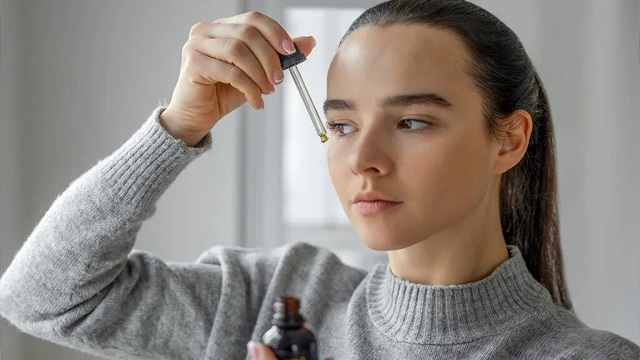
Ectoin skincare has quietly become one of the most talked-about ingredient categories of 2026, with searches for "ectoin skincare" surging 86 percent in the past year alone. Originally discovered in microorganisms that survive extreme desert heat, volcanic hot springs, and salt lakes, this natural amino acid derivative is now being called the "stress-proofing molecule" by dermatologists and cosmetic chemists alike. Unlike conventional hydrators that simply sit on the surface, ectoin creates a protective water shell around your cells that shields them from pollution, UV damage, and temperature fluctuations. If you are looking for the one ingredient that bridges the gap between hydration, barrier repair, and anti-aging in a single molecule, ectoin may be exactly what your routine has been missing.
What Is Ectoin? The Extremolyte Born in Hostile Environments
Ectoin (chemical name: 1,4,5,6-tetrahydro-2-methyl-4-pyrimidinecarboxylic acid) belongs to a class of molecules called extremolytes. These are compounds produced by extremophilic microorganisms, bacteria that have evolved to survive the most punishing environments on Earth. The bacterium Halomonas elongata, which thrives in salt concentrations that would destroy most living cells, produces ectoin as its primary defense mechanism against osmotic stress, desiccation, and extreme UV radiation.
What makes ectoin remarkable for skincare is its mechanism of action. Rather than being a simple humectant that attracts water molecules to the skin surface, ectoin organizes surrounding water molecules into a dense, ordered "hydration shell" known as the ectoine hydrocomplex. This structured water layer forms a physical buffer around proteins and cell membranes, essentially wrapping your skin cells in a protective cocoon that prevents damage at the molecular level.
Ectoin has been used in pharmaceutical applications for over two decades, particularly in nasal sprays and eye drops for allergy relief. Its migration into premium skincare, however, is a more recent development. Korean beauty laboratories, always at the forefront of ingredient innovation, have been incorporating ectoin into serums, creams, and essences since the early 2020s. The ingredient has now reached critical mass in the global market, with major Western brands like Paula's Choice, Biossance, and The INKEY List launching dedicated ectoin formulas throughout 2025 and 2026.
How Ectoin Works: Hydration Shell Technology Explained
Understanding why ectoin outperforms many conventional hydrators requires a closer look at how it interacts with water at the molecular level. Traditional humectants like hyaluronic acid and glycerin work by hydrogen bonding with water molecules, drawing moisture from the environment and the deeper layers of the skin. This is effective, but it is also passive. The water molecules remain loosely associated and can evaporate or be displaced by environmental stressors.
Ectoin takes a fundamentally different approach. When applied to the skin, it integrates into the water network surrounding cell membranes and proteins, creating what researchers describe as a "preferential exclusion" effect. The ectoin molecules organize water into a highly ordered shell that is thermodynamically stable. This means the water does not simply sit on the surface waiting to evaporate. Instead, it becomes part of a structured layer that actively resists disruption from heat, cold, pollution particles, and UV photons.
The practical implications for your skin are significant. Research published in the journal Skin Pharmacology and Physiology found that ectoin formulations reduced transepidermal water loss (TEWL) by up to 40 percent in compromised skin. This is not temporary hydration that fades within hours. It represents fundamental barrier repair that can persist for days after application. For anyone with chronically dehydrated, reactive, or environmentally stressed skin, this mechanism offers something that standard humectants cannot.
Ectoin vs Hyaluronic Acid: A Head-to-Head Comparison
The comparison between ectoin and hyaluronic acid is not about declaring a winner and discarding the loser. Both ingredients serve important roles. However, understanding their differences helps you build a more intelligent routine. As explored in our Hyaluronic Acid Skincare Guide 2026, HA remains an excellent volumizing hydrator. But ectoin offers capabilities that HA simply does not possess.
Hyaluronic acid is a large polysaccharide that holds up to 1,000 times its weight in water. Its primary function is hydration through water binding. It excels at plumping the skin and creating a moisture reservoir. However, HA does not protect against environmental damage, does not reduce inflammation, and in very dry climates with low humidity, low-molecular-weight HA can actually pull moisture from the deeper skin layers toward the surface where it evaporates.
Ectoin, by contrast, is a small molecule (molecular weight of just 142 Da compared to HA's 1-2 million Da) that penetrates more effectively into the upper epidermis. Beyond hydration, ectoin provides documented anti-inflammatory activity, UV protection enhancement, pollution defense, and protein stabilization. A clinical study with 24 participants using a 2% ectoin cream twice daily for four weeks showed improvements across every measured parameter: wrinkle volume decreased, skin scaling reduced, roughness diminished, and elasticity improved.
The bottom line: if your routine already includes hyaluronic acid, adding ectoin does not create redundancy. Instead, ectoin complements HA by providing the environmental defense and cellular protection layer that HA lacks. Many 2026 formulations now combine both ingredients for precisely this reason.
Clinical Evidence: What Dermatologists and Studies Confirm
One of the reasons dermatologists are increasingly recommending ectoin is the growing body of clinical evidence supporting its efficacy. Unlike many trendy ingredients that ride social media hype with minimal scientific backing, ectoin has a solid research foundation spanning pharmaceutical and dermatological applications.
A placebo-controlled study examining four weeks of treatment with 0.5% ectoin in the crow's feet area found a significant anti-wrinkle effect, with mean wrinkle depth decreasing by 19% in 100 percent of participants. A separate double-blind, placebo-controlled study with 24 participants using 2% ectoin cream demonstrated measurable improvement in wrinkle volume, scaling, roughness, and elasticity after just four weeks of twice-daily application.
Research into ectoin's barrier-strengthening properties has been equally compelling. A systematic review published in the journal Cosmetics analyzed studies on topical ectoin for inflammatory skin diseases and concluded that ectoin formulations at 5.5 to 7.0% concentrations positively influenced skin dryness, pruritus, and dermatitis scores in patients with atopic dermatitis. Collagen production increased by 23% in separate research, demonstrating ectoin's ability to stimulate regenerative processes without the irritation associated with retinoids or alpha hydroxy acids.
Board-certified dermatologist Dr. Dendy Engelman has stated that ectoin "binds water molecules to create a shield and ultimately helps protect cellular integrity and prevent transepidermal water loss." Dr. Corey Hartman adds that "none of its properties suggest that ectoin would harm the skin in any way," making it suitable for even the most sensitive skin types, a claim supported by its long history in pharmaceutical formulations for allergic conditions.
Best Ectoin Skincare Products to Try in 2026
The ectoin product landscape has expanded dramatically in 2026, with options ranging from K-beauty innovation to established Western clinical brands. As we covered in our K-Beauty Ingredients Encyclopedia 2026, Korean brands continue to lead in bringing cutting-edge actives to accessible, well-formulated products. Here are the standout ectoin formulations worth considering:
KAINE Green Calm Aqua Cream stands out as the top-rated K-beauty ectoin product in 2026. Containing 3% ectoin (30,000 ppm) in a minimal, water-based formula, this cream makes ectoin the clear central ingredient rather than burying it at the bottom of a long INCI list. It focuses on cellular stabilization and hydration support without added lipids or heavy occlusives, making it ideal for oily and combination skin types that still need barrier support.
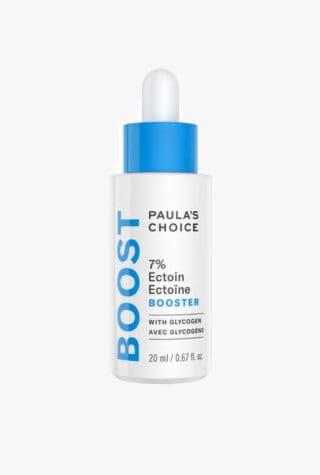
Paula's Choice 7% Ectoin + Hyaluronic Acid Milky Hydrating Serum delivers one of the highest ectoin concentrations on the market in a lightweight, milky texture. The combination of 7% ectoin with multi-weight hyaluronic acid exemplifies the synergistic approach discussed earlier: HA provides immediate volumizing hydration while ectoin creates the protective shield that makes that hydration last. This formula is particularly well-suited for those transitioning from retinol-heavy routines who need intensive barrier recovery.
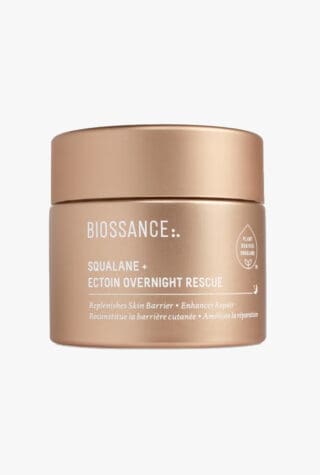
Biossance Squalane + Ectoin Overnight Rescue pairs ectoin with plant-derived squalane for a nighttime repair treatment that addresses both hydration and barrier integrity. The squalane provides the lipid component that skin barriers need for structural integrity, while ectoin stabilizes the aqueous phase. Together, they create what the brand describes as a "cellular rescue" effect that is most active during overnight skin repair cycles.
The INKEY List Ectoin Hydration Complex offers a budget-friendly entry point at under $15, making it accessible for those who want to test ectoin without committing to a premium product. While the concentration is lower than the KAINE or Paula's Choice options, it provides a meaningful dose in a simple, well-formulated vehicle.
For those already invested in K-beauty barrier repair, pairing ectoin products with the ceramide and postbiotic formulas discussed in our Postbiotic Skincare 2026 guide creates a comprehensive barrier-strengthening protocol that addresses hydration (ectoin), lipid structure (ceramides), and microbiome balance (postbiotics) simultaneously.
How to Add Ectoin to Your Skincare Routine
Integrating ectoin into an existing routine is straightforward because of its exceptional compatibility profile. Ectoin plays well with virtually every active ingredient: retinoids, vitamin C, niacinamide, AHAs, BHAs, and peptides. There are no known negative interactions, which makes it far easier to incorporate than ingredients like retinol or benzoyl peroxide that require careful sequencing and avoidance of certain combinations.
For morning routines, apply an ectoin serum after cleansing and toning, before your moisturizer and sunscreen. The environmental protection properties of ectoin make it particularly valuable during the day when your skin faces UV radiation, pollution, and temperature changes. Think of it as a cellular-level primer that prepares your skin to resist the stressors it will encounter.
For evening routines, ectoin works beautifully alongside retinoids. If retinol causes irritation or dryness, applying an ectoin product first creates a protective buffer that can reduce retinol-induced sensitivity without diminishing its efficacy. This "buffer" application method is gaining popularity among dermatologists who want their patients to continue using retinoids without the inflammation that often leads to discontinuation.
Start with products containing 0.5 to 2% ectoin if you are new to the ingredient. Most skin types can tolerate concentrations up to 7% without any issues, but a gradual introduction is always wise. Use your ectoin product one to three times per week initially, then increase to daily use as your skin acclimates. Unlike retinol, where purging and peeling are common during the adjustment period, ectoin rarely causes any transitional side effects.
Who Should Use Ectoin (and Who Should Be Cautious)
Ectoin is suitable for virtually all skin types, which is one of its greatest advantages over more aggressive actives. Those who stand to benefit most include people with sensitive or reactive skin, rosacea-prone skin, environmentally stressed urban skin, post-procedure skin recovering from laser treatments or chemical peels, and mature skin seeking anti-aging benefits without irritation. The anti-inflammatory and barrier-strengthening properties make ectoin especially valuable for the anti-aging skincare strategies that prioritize long-term skin health over aggressive short-term results.
Caution is warranted for those with active eczema flares or severely compromised barriers. While ectoin is generally well-tolerated, any new ingredient introduced to actively inflamed skin carries risk. Patch test on a small area first, and consult your dermatologist if you have a diagnosed inflammatory skin condition.
You May Also Like
- Hyaluronic Acid Skincare Guide 2026: Types, Benefits, and 10 Best K-Beauty Products
- Exosome Skincare 2026: K-Beauty's Hottest New Anti-Aging Ingredient
- Postbiotic Skincare 2026: Why Fermented K-Beauty Is the Science-Backed Secret
FAQ
Q: Is ectoin better than hyaluronic acid?
A: They serve different functions. Hyaluronic acid excels at volumizing hydration by holding up to 1,000 times its weight in water. Ectoin provides a protective hydration shell that also delivers anti-inflammatory, anti-aging, and environmental defense benefits. Combining both gives the best results, as they complement rather than compete with each other.
Q: Can I use ectoin with retinol?
A: Yes, and this is actually one of the most recommended pairings. Ectoin's barrier-protective properties can buffer the irritation that retinol often causes, allowing you to maintain your retinoid routine with less redness and peeling. Apply ectoin before retinol for optimal protection.
Q: What concentration of ectoin should I look for?
A: Clinical studies have shown benefits at concentrations as low as 0.5%, with most dermatologists recommending 2 to 7% for optimal results. Products like KAINE Green Calm Aqua Cream (3%) and Paula's Choice (7%) fall within this effective range. Beginners should start at lower concentrations and build up.
Q: Is ectoin safe for sensitive skin and rosacea?
A: Ectoin is considered one of the safest active ingredients available. Its pharmaceutical heritage, with decades of use in nasal sprays and eye drops, attests to its tolerability. Multiple clinical studies confirm it is well-tolerated with no significant side effects. However, those with active inflammatory flares should always patch test first.
Q: How long does it take to see results from ectoin?
A: Hydration and barrier improvement can be noticed within the first week. Anti-wrinkle effects were measured at the four-week mark in clinical studies, with a 19% reduction in wrinkle depth. For cumulative anti-aging benefits, consistent use over eight to twelve weeks is recommended.
The Bottom Line
Ectoin represents a genuine shift in how we think about skincare ingredients. Rather than attacking a single concern with a potent active that carries side effect risks, ectoin works by fundamentally strengthening the skin's own defense systems. It hydrates, protects, repairs, and reduces inflammation simultaneously, all without irritation. The 86% surge in search interest is not social media hype chasing a flashy before-and-after. It reflects a broader 2026 consumer movement toward skin longevity: simple, science-backed ingredients that make your skin more resilient over time rather than forcing dramatic but unsustainable transformations. If your routine includes hyaluronic acid but you still deal with reactive, stressed, or prematurely aging skin, ectoin is the upgrade your barrier has been waiting for.
Sources: PMC Systematic Review on Topical Ectoin | Luxury London | Chennaionline | SkinSort | Chemist Confessions


댓글
댓글 쓰기