KSECRET Seoul 1988 at Costco 2026: K-Beauty Retinal Serum Hits 227 Stores
KSECRET Seoul 1988 at Costco 2026: K-Beauty's Retinal Liposome Serum Goes Mainstream
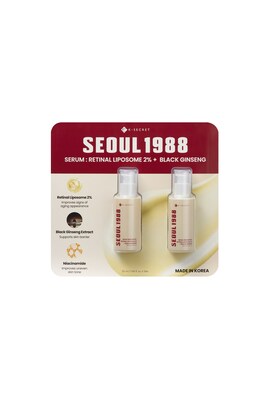
The KSECRET Seoul 1988 Retinal Liposome 2% + Black Ginseng serum officially landed in 227 Costco warehouses across the United States on April 20, 2026, marking one of the most aggressive U.S. retail moves by a viral K-beauty brand this year. With a 50ml double-pack priced at $35.99, the launch puts a clinical-grade retinal serum that has racked up more than 2 billion TikTok views since 2024 directly into the carts of mainstream American shoppers, and it lands at a moment when Korean cosmetics exports just surpassed France to become the largest source of beauty imports into the United States.
For dermatology-curious consumers who have been priced out of pure retinal at Sephora or hesitant about the irritation reputation of traditional retinol, this Costco rollout is more than a distribution headline. It is a bellwether for the medicosmetic shift that is redefining K-beauty in 2026: clinical actives delivered through advanced liposomal carriers, paired with hanbang botanicals like black ginseng, and sold at warehouse-club prices.
Why the KSECRET Seoul 1988 Costco Launch Matters
Costco's beauty aisle is a notoriously difficult shelf to win. The retailer demands tight margins, premium-feeling packaging, and a price-to-value ratio that justifies the membership fee. Landing in 227 stores nationwide signals that KSECRET cleared all three thresholds, and it positions the SEOUL 1988 line alongside legacy prestige brands that historically dominated the warehouse channel. According to the company's May 1, 2026 announcement, in-store and online availability went live simultaneously, giving the retinal serum near-instant national coverage.
The retail moment also dovetails with a broader migration of K-beauty into mass U.S. distribution. Olive Young opened its first American flagships earlier this year, Beauty of Joseon expanded into Target, and Medicube continues its rollout across mainstream chains. As we covered in our Olive Young US Store 2026 guide, Korean beauty is no longer a niche category accessed through specialty importers. It is becoming the default skincare aisle.
What Is Retinal? The Faster, Stronger Cousin of Retinol
The hero ingredient in KSECRET Seoul 1988 is retinaldehyde, often shortened to retinal. Retinal sits one metabolic step closer to retinoic acid than the retinol most over-the-counter serums use, which means it works faster on photoaging, fine lines, and uneven texture. In simplified terms, the skin must convert retinol through two enzymatic steps to become active retinoic acid, while retinal requires only one. Multiple peer-reviewed studies in journals like the British Journal of Dermatology have shown retinal can deliver clinical benefits comparable to prescription tretinoin with a more tolerable side-effect profile.
The KSECRET formulation uses a 2% concentration of retinal, which is significantly higher than most over-the-counter retinal serums on the market. To make that concentration usable on consumer skin without triggering the burning, peeling, and barrier disruption that derailed early retinoid adoption, the brand encapsulates the molecule inside liposomes. Liposomes are microscopic phospholipid bubbles that mimic the structure of cell membranes, allowing the active to be released gradually into the deeper layers of the epidermis instead of dumping all at once on the surface.
If you are weighing retinal against gentler alternatives, our companion guide on Retinol vs Bakuchiol 2026 walks through the full vitamin-A family tree, and the Anti-Aging Korean Skincare Routine 2026 explains how to layer retinal into a complete regimen.
Black Ginseng: The Hanbang Half of the Formula
The second pillar of the SEOUL 1988 serum is black ginseng, a hanbang (traditional Korean herbal medicine) ingredient produced by steaming and drying Panax ginseng roots up to nine times. The repeated heat processing increases the concentration of rare ginsenosides such as Rg3, Rg5, and Rk1, which research published in journals like the Journal of Ginseng Research has linked to enhanced antioxidant capacity, anti-inflammatory action, and improved fibroblast activity.
In skincare, those properties translate to two practical benefits. First, black ginseng helps neutralize the oxidative stress that retinal can transiently generate at the cellular level, smoothing the tolerability curve. Second, it supports collagen synthesis and microcirculation, complementing the cell-turnover work the retinal is already doing. The pairing reflects a bigger theme in 2026 K-beauty, which we explored in our Hanbang Skincare 2026 deep-dive: clinical actives married to time-tested Korean botanicals rather than positioned as alternatives to them.
How the Launch Fits the 2026 K-Beauty Export Boom
Korea's cosmetics industry exported a record $11.43 billion in 2025, up 12.3% year over year, and surpassed France as the largest source of beauty imports into the United States. The KSECRET Costco rollout is a direct beneficiary of that tailwind, but it is also a contributor: by securing nationwide warehouse-club distribution rather than depending solely on Amazon or specialty retailers, the brand normalizes K-beauty pricing and packaging conventions inside one of the most-trafficked retail channels in America.
Industry analysts at Circana and BeautyMatter have flagged 2026 as a transition year in which K-beauty stops being a sub-segment and starts becoming the dominant grammar of mainstream skincare. The medicosmetic pivot, in which clinically-styled actives like PDRN, exosomes, and now retinal liposomes move out of dermatologist offices and into consumer aisles, is at the center of that shift.
Expert Insights: What Dermatologists Say About 2% Retinal
Dermatologists generally regard retinal as one of the most evidence-backed over-the-counter actives for photoaging and texture, but they also caution that the 2% concentration in the KSECRET serum is at the upper end of consumer-grade retinal. Board-certified dermatologists interviewed for outlets such as NBC News and Vogue Scandinavia have offered a few consistent guardrails for high-strength retinal use:
Start slow. Even with liposomal encapsulation, a 2% retinal serum should be introduced two or three nights per week, gradually increasing as tolerance builds. Pair it with a ceramide-rich moisturizer to support barrier function, and never skip broad-spectrum SPF the morning after, because vitamin-A derivatives increase photosensitivity.
Watch for retinization. The first two to four weeks of any new retinoid often produce a phase of mild flaking, redness, and increased sensitivity called retinization. With retinal, this phase is usually shorter than with prescription tretinoin but can still be uncomfortable. If irritation persists beyond six weeks, the concentration is likely too aggressive for that user.
Mind the stack. Retinal does not play well with at-home AHAs, BHAs, benzoyl peroxide, or vitamin C used in the same routine. The KSECRET serum should be slotted into a streamlined nighttime regimen rather than layered into a 10-step routine.
How the SEOUL 1988 Serum Compares to Other K-Beauty Retinoids
The 2026 K-beauty retinoid market has stratified into three tiers. Encapsulated retinol serums from brands like Some By Mi and Beauty of Joseon sit at the entry level, typically using 0.1% to 0.5% retinol with a focus on minimizing irritation. Mid-tier offerings from Medicube and TIAM have moved to 0.5% to 1% retinal with various delivery technologies. KSECRET's 2% liposomal retinal occupies the high-strength end, comparable in active concentration to medi-aesthetic clinic dispensary products in Seoul but priced at warehouse-club levels.
The brand cites independent user testing showing visible improvements in tone, fine lines, and texture within 14 days. Those results align with what controlled clinical studies of 0.05% to 0.1% retinal have shown over four-week windows, suggesting the liposomal carrier is meaningfully accelerating delivery rather than just enabling a higher number on the label.
Who Should and Should Not Try It
The Seoul 1988 serum is best suited to users with normal-to-resilient skin who already tolerate over-the-counter retinol or low-strength retinal and want a stronger over-the-counter option without stepping up to prescription tretinoin. It is well aligned with photoaging concerns in the 30s, 40s, and 50s, particularly fine lines, uneven pigmentation, and dull texture.
It is not ideal for first-time retinoid users with sensitive skin, anyone in the active phase of rosacea or eczema, pregnant or breastfeeding individuals (vitamin-A derivatives are contraindicated during pregnancy), or users currently on isotretinoin or other systemic retinoids. Anyone with an active skin condition should clear the introduction with a board-certified dermatologist before purchase, regardless of how convenient the Costco price point feels.
You May Also Like
- Olive Young US Store 2026: K-Beauty Giant Opens First American Locations
- Retinol vs Bakuchiol 2026: Which Anti-Aging Ingredient Is Right for Your Skin?
- Anti-Aging Korean Skincare Routine 2026: The Complete Guide for Your 30s, 40s, and 50s
- Hanbang Skincare 2026: Why Modernized Korean Herbal Beauty Is K-Beauty's Biggest Trend
- K-Beauty Complete Guide 2026: Your Ultimate Korean Skincare Handbook
FAQ
Q: Is the KSECRET Seoul 1988 retinal serum available outside Costco?
A: Yes. The serum is also sold via the official KSECRET site, YesStyle, and select international K-beauty retailers, but the 50ml double-pack at $35.99 is the Costco-exclusive configuration. Standalone 30ml bottles run higher per milliliter at other retailers.
Q: How does retinal differ from retinol in K-beauty serums?
A: Retinal (retinaldehyde) is one enzymatic step closer to active retinoic acid than retinol, which makes it work faster but also more potent. Studies suggest 0.05% retinal is roughly comparable in efficacy to 0.5% to 1% retinol, with a typically shorter retinization period.
Q: Can I use the Seoul 1988 serum with vitamin C, AHAs, or exosome serums?
A: Not in the same routine. Pair retinal with hydrating, barrier-supporting layers like hyaluronic acid, ceramides, and centella, and reserve vitamin C, AHAs, and BHAs for separate days or your morning routine. Exosome serums can be layered on alternate evenings.
Q: Is 2% retinal safe for daily use?
A: For most experienced retinoid users, no. Most dermatologists recommend starting at two nights per week and ramping up only if the skin remains calm. Daily use of 2% retinal is reserved for highly tolerant users and is rarely necessary for clinical benefit.
Q: Does black ginseng make this serum better than a plain retinal?
A: Plausibly. Black ginseng's ginsenosides have antioxidant and anti-inflammatory data behind them, and pairing antioxidants with retinoids is a long-established strategy for reducing irritation. The combination is consistent with current K-beauty formulation science rather than purely marketing.
The Bottom Line
The KSECRET Seoul 1988 Costco launch is the rare K-beauty story that is equally interesting as a retail moment, a formulation case study, and a market signal. By placing a high-strength 2% retinal liposome serum in 227 warehouses at $35.99, the brand has compressed the price gap between consumer-grade and clinic-grade retinoids more aggressively than any major launch this year. For users ready to graduate from beginner retinol, it is a notable option. For the K-beauty industry, it is another data point that the medicosmetic era is no longer a forecast — it is the shelf.
Sources: PR Newswire, Yahoo Finance, Cosmetics Business, HELLO! Magazine, BeautyMatter.


댓글
댓글 쓰기