Korean Lash Lift 2026: The Glueless Trend Surging 3,695%
Korean Lash Lift 2026: The Glueless K-Beauty Technique Surging 3,695% in Search
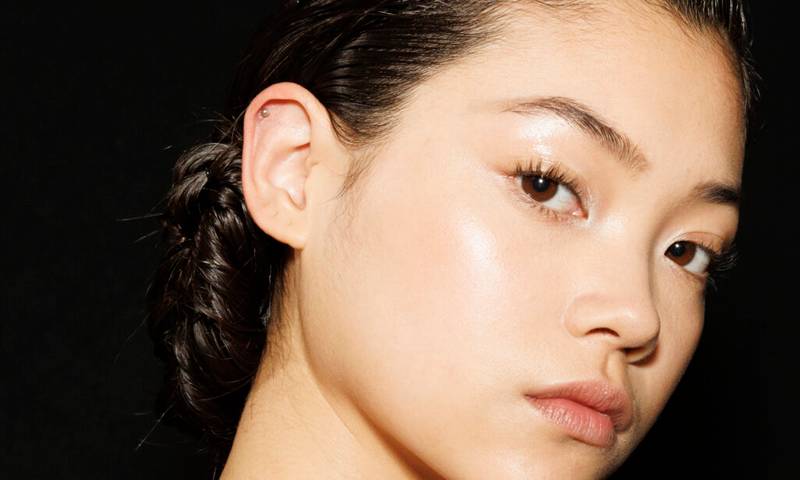
The Korean lash lift has emerged as 2026's most explosive beauty service, with appointment-booking platform Fresha reporting a staggering 3,695 percent year-over-year surge in U.S. searches for the treatment. Coming off a year dominated by ingredient-led K-beauty stories like PDRN, exosomes, and spicules, the Korean lash lift is the first service-side phenomenon to truly rival skincare for cultural attention. Unlike traditional Western lash lifts that rely on heavier chemistry and adhesive shields, the Korean lash lift uses a glueless, double-shield process and a gentler cysteamine-based formula designed originally for shorter, downward-pointing Asian lashes. The result is a more vertical, "glass-like" curl that flatters every eye shape while keeping the lashes themselves visibly healthier between appointments.
What Is a Korean Lash Lift?
A Korean lash lift is a semi-permanent treatment that curls the natural lash from the root upward, creating the illusion of length and volume without extensions, mascara, or a curling iron. The technique was developed in South Korea over the past decade specifically because traditional Western lift formulas were too aggressive for the typically straighter, shorter Asian lash, often producing harsh L-shaped bends rather than a soft, lifted curve. Korean technicians refined the process by introducing a flexible silicone shield system that holds each lash at a true vertical angle from the base, rather than draping the lashes over a single domed pad as Western methods do.
The shaping solution itself is also fundamentally different. Where conventional lash lifts typically use ammonium thioglycolate as the primary disulfide-bond breaker, Korean formulations favor cysteamine, a chemically gentler analog with a less alkaline pH. Cysteamine still relaxes the keratin bonds enough to reset the lash curl, but it tends to leave the cuticle layer of the lash less compromised. For consumers, the practical translation is fewer brittle, fried-feeling lashes after lifting and a softer, more natural-looking growth-out phase.
Why the 3,695% Surge Is Happening Now
The Korean lash lift trend did not appear out of nowhere; it is the convergence of three larger forces shaping 2026 beauty. First, the post-pandemic decline of lash extensions has left millions of clients searching for a lower-maintenance alternative that does not require fills every two to three weeks. Second, the broader migration from "more is more" makeup toward what skincare brands call care-first aesthetics has rewarded treatments that double as wellness rituals. Third, the global K-beauty boom has trained Western consumers to associate Korean techniques with precision, gentleness, and skin health, an association that maps cleanly onto a lift service marketed around lash integrity.
Industry analysts at Fresha point to a particularly sharp inflection in late 2025 and early 2026, when TikTok creators began posting side-by-side comparisons of traditional versus Korean lifts. The visual difference, especially on Asian and hooded eye shapes, was dramatic enough to push the search term into viral territory. As we covered in our Bloom Skin and Glass Skin 2.0 guide, the underlying aesthetic logic of 2026 K-beauty is the same across categories: visible health beats visible product, and translucency beats opacity. A Korean lash lift produces lashes that look reflective, hydrated, and uncovered, which is exactly the lash equivalent of glass skin.
How the Glueless, Double-Shield Process Works
A Korean lash lift appointment typically takes 60 to 75 minutes and follows a stricter protocol than its Western counterpart. After cleansing the lashes with an oil-free preparation, the technician selects two flexible silicone shields rather than a single rod. The lower shield positions the lash root vertically; the upper shield, which is the innovation that gives the technique its "double-shield" name, captures the mid-shaft and tip and holds them at a slightly forward angle. Because the lashes are pressed onto the shields with a glueless adhesive film instead of liquid eyelash glue, technicians can reposition strays without ripping out natural lashes, a common complaint with traditional methods.
Once positioning is complete, the cysteamine-based lifting lotion is applied for a controlled period, typically 8 to 12 minutes depending on lash thickness. A neutralizing solution is then applied for an equivalent time to reset the new disulfide bonds in the lifted shape. Most Korean protocols finish with a peptide-rich keratin or biotin treatment, sometimes augmented with a tinting step. Because brow lamination uses an almost identical chemistry workflow, many salons now bundle the two services. The combination is so popular that brands such as Iconic Duo and Lami Super Booster have built their entire product lines around back-to-back lash and brow appointments.
Expert Insights: What Dermatologists and Lash Artists Say
Jordan Feise, lead lash artist at Two of a Kind in Los Angeles, told NewBeauty that the Korean method is "a newer technique that focuses on lash health just as much as the final result." She noted that "the formulas tend to be less irritating, so clients tend to feel more relaxed" during the service, and that results typically last six to ten weeks depending on the client's natural lash growth cycle. That duration tracks closely with traditional lifts, but with a meaningful difference: the grow-out phase is far less obvious because the curl relaxes gradually rather than producing a sharp demarcation line at the lash root.
Oculoplastic surgeon David Schlessinger, MD, of Woodbury, New York, offered a measured medical perspective in the same article: "As long as you're going to an experienced, legitimate place, they seem safe." That qualification matters. Any chemical lift service places a depilatory-strength reducing agent within millimeters of the cornea, and improperly applied product can cause chemical conjunctivitis, contact dermatitis, or, in rare cases, lash follicle damage. Consumers should verify that their technician is certified specifically in the Korean method rather than adapting Western training, since the shield placement and timing protocols are not interchangeable. If you have reactive or rosacea-prone skin, request a patch test on the inner forearm 48 hours before the appointment.
Korean Lash Lift vs. Traditional Lash Lift: The Real Differences
The two services share a category, but the differences are substantial enough that many lash artists now consider them distinct treatments. Traditional Western lash lifts use ammonium thioglycolate, a single domed silicone pad, and liquid eyelash adhesive. They produce a uniform C-curve regardless of lash length and tend to demarcate sharply as the lashes grow out. Korean lash lifts use cysteamine, a flexible double-shield system, and glueless adhesive film. They produce a vertical lift at the base with a softer forward angle at the tip, and the grow-out phase blends seamlessly into the natural lash line.
Pricing reflects the labor difference. A traditional lash lift in the United States typically runs $75 to $125, while a Korean lash lift averages $120 to $200 depending on city and whether brow lamination is added. The premium is real but not extreme, particularly when compared to the cumulative cost of monthly lash extension fills, which can exceed $200 per visit. For clients tracking the broader 2026 beauty calendar, pairing a Korean lash lift with a complementary nail moment such as 2026's Glass Nails trend creates a head-to-toe glass aesthetic that has become its own social media subgenre.
The "Glass Lash" Aesthetic and the Brow Lamination Pairing
Within the Korean lash lift world, a specific finish called the "glass lash" has emerged as the signature look of 2026. Achieved by following the lift with a clear keratin sealant and a light layer of lash serum, the glass lash reads as wet, glossy, and reflective even without mascara. It is intentionally the lash equivalent of glass skin: the goal is not drama but visible health and dewy translucency. Pairing the glass lash with brow lamination, particularly the espresso-tinted version dominating European salons, produces a complete eye-frame makeover in a single appointment.
For makeup lovers, the glass lash works seamlessly with 2026's softer mouth aesthetic, which we explored in our Blurred Lips trend guide. The combination of lifted-but-bare lashes, brushed-up brows, and a soft-focus lip liner creates the editorial "skin-finished" look that has replaced the heavily defined makeup of the late 2010s and early 2020s. Several Korean salons in Seoul now market this combined package as the "Three K-Frames" service, referring to lashes, brows, and lips as the three architectural elements of the modern Korean face.
What to Know Before Booking
The Korean lash lift is best suited to clients with at least 4 to 5 millimeters of natural lash length and intact follicles. Lashes that have been chronically lash-extension-bonded or that show signs of traction damage should be allowed six to eight weeks to recover before any chemical lift service. Pregnant clients, those on isotretinoin, and anyone with active blepharitis or dry eye disease should defer the service or consult a dermatologist or oculoplastic surgeon before booking.
Aftercare is simpler than for extensions but still meaningful. For the first 24 hours, avoid water, steam, and oil-based products on the eye area, since the disulfide bonds need time to fully reset. After that window, a daily peptide-based lash serum extends the lifted curl by supporting the natural growth cycle. Reapplication should be spaced at least 8 weeks apart, and ideally closer to 10 weeks, to avoid cumulative chemical stress on the lash shaft. Sleeping on a silk pillowcase and avoiding waterproof mascara, which requires aggressive removal, will both extend the life of the lift.
You May Also Like
- Bloom Skin 2026: K-Beauty's Glass Skin 2.0 Trend Explained
- Glass Nails 2026: The Glossy Manicure Defining the Year
- Korean Skincare for Sensitive Skin 2026: The Complete K-Beauty Routine
- Blurred Lips 2026: The Soft-Focus Lip Liner Trend
FAQ
Q: How is a Korean lash lift different from a regular lash lift?
A: A Korean lash lift uses a glueless, double-shield system and a gentler cysteamine-based formula instead of the single-pad, liquid-glue, ammonium-thioglycolate setup used in traditional Western lifts. The result is a more vertical curl at the lash root, less chemical stress on the lash shaft, and a softer grow-out phase without a sharp demarcation line.
Q: How long does a Korean lash lift last?
A: Most clients see results that last six to ten weeks, which corresponds to a typical natural lash growth cycle. The curl relaxes gradually rather than dropping suddenly, so the transition between appointments is far less noticeable than with extensions or traditional lifts.
Q: Is the Korean lash lift safe for sensitive eyes?
A: The cysteamine-based formula is generally less irritating than ammonium thioglycolate, and oculoplastic surgeon David Schlessinger, MD, has stated that the procedure appears safe when performed by an experienced, certified technician. Anyone with active blepharitis, dry eye disease, recent ocular surgery, or known reactivity to lash-lift chemistry should consult a dermatologist or ophthalmologist first and request a patch test 48 hours before booking.
Q: How much does a Korean lash lift cost in 2026?
A: U.S. pricing typically ranges from $120 to $200 depending on city, technician experience, and whether brow lamination is included in the appointment. The premium over traditional lifts (which run $75 to $125) reflects the additional labor of the double-shield system and the higher-cost Korean-imported product lines.
Q: Can I wear mascara or get extensions over a Korean lash lift?
A: Standard mascara is fine after the initial 24-hour cure window, but waterproof formulas should be avoided because the aggressive removal compromises the lift. Lash extensions can technically be applied over a lift, but most Korean-method technicians discourage the combination because it negates the lift's natural-look intent and creates excessive cumulative weight on each lash follicle.
The Bottom Line
The 3,695 percent search surge for Korean lash lifts is not a flash trend; it is a structural shift in how Western consumers think about lash beauty. The technique offers a measurable improvement over traditional lifts in chemical gentleness, shape precision, and grow-out elegance, all while fitting cleanly into the broader 2026 K-beauty thesis that visible health is the new visible glamour. For anyone considering the service, the right move is to book with a technician certified specifically in the Korean method, confirm the use of cysteamine-based product, and treat the lift as part of an integrated eye-frame routine that includes brow lamination and a peptide lash serum. Done well, the result is the closest a 75-minute appointment can get to permanently better lashes.
Sources: NewBeauty, Brow.X Professionnel 2026 Trends Report, HELLO! Magazine K-Beauty 2026 Forecast.


댓글
댓글 쓰기