Bloom Skin 2026: K-Beauty's Glass Skin 2.0 Trend Explained
Bloom Skin 2026: The K-Beauty Trend Replacing Glass Skin
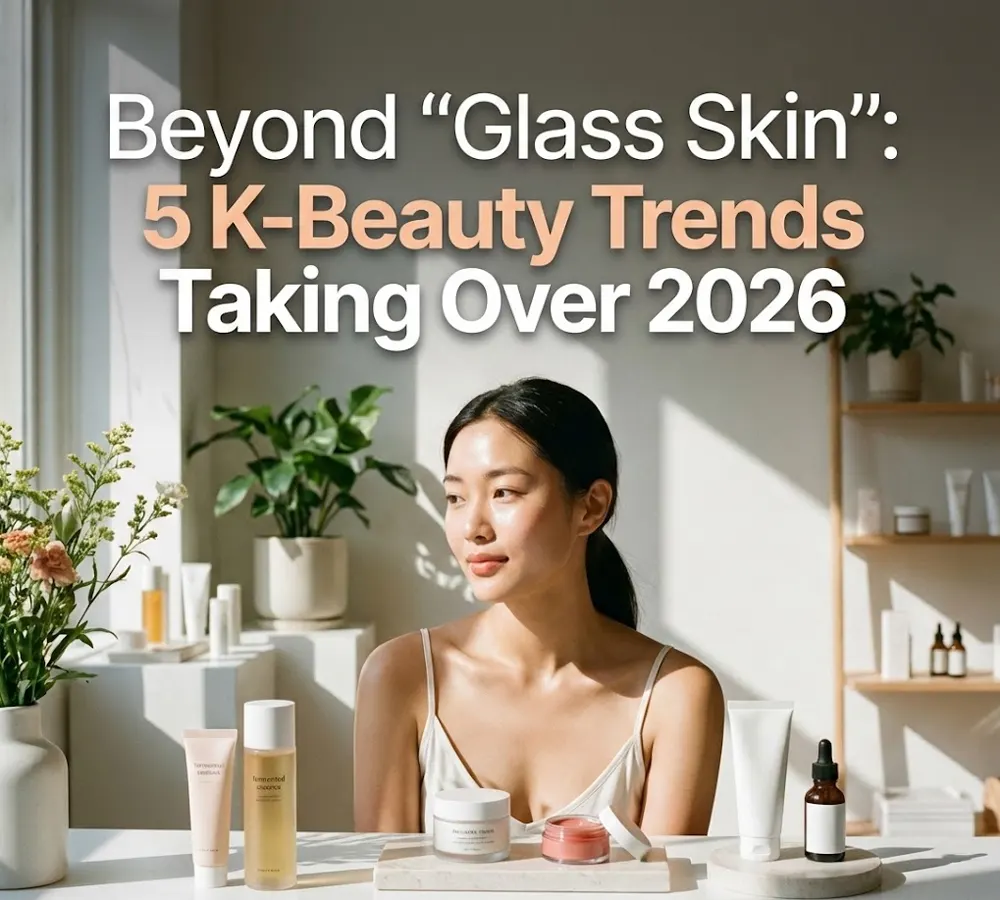
Bloom skin is the K-beauty trend rewriting the rules of Korean skincare in 2026, moving the global glow conversation past nearly a decade of glass-skin dominance. Where glass skin chased a mirror-like, almost wet sheen built on heavy oil layering, bloom skin pursues a softer, petal-like luminosity that reads as healthy resilience rather than surface gloss. Industry trend reports from Cosmetics Business and Refinery29 are calling it the post-glass-skin era, framing it as part of a broader shift toward repair, barrier strength, and longevity in Korean beauty routines.
The cultural pivot also reflects how K-beauty consumers are spending. South Korea's cosmetics exports hit a record US$11.43 billion in 2025, up 12.3% year over year, and Korea now outsells France as the largest beauty exporter to the United States. With that scale of distribution, the next dominant aesthetic doesn't just trend on TikTok — it reshapes shelves at Sephora, Ulta, Costco, and Olive Young.
What Exactly Is Bloom Skin?
Bloom skin describes a satin-finish complexion that looks dewy from within rather than glossy on top. Think of the difference between a glazed donut and a fresh peony petal: both are luminous, but only one stays luminous all day without melting. The aesthetic prioritizes hydration, even tone, and elasticity, with a soft-focus diffusion of light rather than the high-shine reflectivity that defined glass skin since 2017.
According to coverage in Refinery29 and BeautyMatter's 2026 K-Beauty Forecast, the bloom skin look is anchored in three measurable skin qualities: barrier integrity, microbiome balance, and dermal hydration. That makes it less of an Instagram filter and more of a clinical endpoint — closer to what dermatologists already mean when they say a patient's skin is "behaving."
How Bloom Skin Differs from Glass Skin
Glass skin's signature finish came from layering hydrating toners, essences, ampoules, and facial oils until the skin literally caught light. The downside, especially for combination, oily, or barrier-compromised users, was congestion, transepidermal water loss disguised by surface oils, and short-lived radiance that disappeared after cleansing.
Bloom skin replaces the layering arms race with a barrier-first strategy. Routines lean shorter, formulas lean smarter, and the visual outcome shifts from reflective to radiant. The simplest way to think about it: glass skin photographs well, bloom skin lives well. As we covered in our Centella Asiatica skincare guide, the ingredient class powering this shift is the same one dermatologists prescribe for compromised barriers — meaning the trend is essentially clinical skincare repackaged as a beauty aesthetic.
The Ingredient Stack Behind Bloom Skin
Bloom skin is not built on any single hero ingredient. It is built on a curated stack designed to repair, hydrate, and gently regenerate. The five categories driving 2026 formulations include:
[1] NEXT-GENERATION CERAMIDES. Biomimetic ceramide complexes that mirror the skin's natural lipid ratio (ceramide:cholesterol:fatty acid in roughly 3:1:1) are now the backbone of bloom-skin moisturizers. Brands like Aestura and Dr. Jart+ have moved beyond single-ceramide formulas into multi-ceramide blends that integrate seamlessly with the stratum corneum.
[2] PDRN AND EXOSOMES. Polydeoxyribonucleotide (PDRN) and exosome technology bring regenerative-medicine actives into daily skincare, supporting fibroblast activity and skin-cell turnover. For a deeper dive on the regenerative side of this trend, see our coverage of exosome skincare 2026.
[3] CICA AND MUGWORT. Centella asiatica (cica) and mugwort calm inflammation, soothe redness, and stabilize a reactive barrier. They are the workhorses behind almost every Korean post-procedure routine and are now standard in bloom-skin toners and ampoules.
[4] BIO-FERMENTED ACTIVES. Fermentation increases bioavailability of botanicals and reduces irritation potential. Bio-fermented bakuchiol, niacinamide, and rice extracts deliver anti-aging benefits without the sting that often forces sensitive users off retinol.
[5] SPICULES (SELECTIVELY). Marine-sponge-derived spicules act as a topical microneedling layer to deliver actives deeper into the epidermis. They are not for daily use but appear in weekly "boost" steps inside bloom-skin routines.
The Bloom Skin Routine: Less Layering, More Logic
Korean estheticians and dermatologists are increasingly pushing back against the 10-step routine in favor of a 4-to-6 step ritual that respects the barrier. A representative bloom-skin routine looks like this:
MORNING: Low-pH cleanser → hydrating toner with PDRN or panthenol → barrier serum with ceramides and peptides → SPF 50+ Korean chemical-hybrid sunscreen.
EVENING: Oil cleanser → low-pH gel cleanser → bio-fermented essence → targeted treatment (retinal, bakuchiol, or peptide) → ceramide cream.
WEEKLY BOOSTERS: Spicule ampoule once or twice a week, plus a barrier-recovery sheet mask. The total active count drops, but the formulation quality rises sharply. This mirrors the broader 2026 shift toward what trend forecasters call "skinvestments" — fewer, better products treated as long-term outcomes rather than novelty.
Expert Insights: What Dermatologists Say
Dermatologists view the bloom-skin trend with cautious approval. Dr. Christine Hall, quoted in Marie Claire UK, has noted that delivery-enhancing technologies like spicules can boost active absorption by up to 60 times compared with simple topical application — a meaningful gain when paired with low-irritation actives like peptides and cica. Integrated facialist April Brodie, interviewed by Refinery29, frames the routine principle bluntly: "Cleanse gently, hydrate deeply, treat intentionally, protect daily."
The clinical literature backs the trend's barrier-first orientation. Studies on biomimetic ceramide replenishment show measurable improvements in transepidermal water loss within 14 days, while randomized trials on bakuchiol have demonstrated wrinkle and hyperpigmentation reductions comparable to retinol with significantly less stinging and scaling. In other words, bloom skin is not a marketing reframe of glass skin — it is a different physiological target, achieved with different tools.
Top Products to Build a Bloom Skin Routine in 2026
The following products show up repeatedly across Korean beauty editor lists and dermatologist roundups for 2026:
[TONERS] TIRTIR Milk Skin Toner Light, Skin1004 Madagascar Centella Toner, Medicube PDRN Pink Cica Soothing Toner.
[ESSENCES AND SERUMS] Medicube PDRN Pink Collagen Serum, Torriden Cellmazing Brightening Serum, Beauty of Joseon Glow Serum.
[BARRIER CREAMS] Aestura Atobarrier 365 Cream, Dr. Jart+ Ceramidin Cream, Round Lab Birch Juice Moisturizing Cream.
[SUNSCREENS] Skin1004 Madagascar Centella Hyalu-Cica Water-Fit Sun Serum, Beauty of Joseon Relief Sun, Round Lab Birch Juice Sunscreen.
[SPICULE BOOSTERS] VT Reedle Shot 100/300/700 Serum, Medicube One Day Exosome Shot Pore Ampoule 2000.
For a broader category-by-category deep dive, our best Korean moisturizers 2026 guide covers ceramide and PDRN-based picks for every skin type.
Who Bloom Skin Works Best For
Bloom skin is particularly well suited to four groups: sensitive-skin users who could not tolerate glass-skin layering; oily and combination skin types who found glass skin congesting; mature skin where hydration and elasticity matter more than reflectivity; and post-procedure users recovering from microneedling, laser, or peels. Truly dehydrated skin can still benefit from selective layering, but the bloom approach insists that hydration come from inside the routine rather than from a top oil.
You May Also Like
- Exosome Skincare 2026: Why Dermatologists Call This K-Beauty Ingredient the Successor to PDRN
- 10 Best Korean Moisturizers 2026: Dermatologist-Approved Picks for Every Skin Type
- Topical PLLA Skincare 2026: The K-Beauty 'Liquid Sculptra' Trend
- Hanbang Skincare 2026: Why Modernized Korean Herbal Beauty Is K-Beauty's Biggest Trend
FAQ
Q: Is bloom skin replacing glass skin in 2026?
A: Bloom skin is being positioned as the dominant K-beauty aesthetic for 2026, but glass skin is not disappearing. Most editors describe bloom skin as glass skin 2.0 — a more sustainable, barrier-friendly evolution. Consumers who already love a high-shine finish can keep glass skin techniques for special occasions while shifting to a bloom-skin core routine for daily use.
Q: What is the single most important ingredient for bloom skin?
A: A multi-ceramide complex is the most important ingredient. Without an intact lipid barrier, every other active — peptide, PDRN, retinal, bakuchiol — performs worse. Korean dermatologists prioritize ceramide-rich moisturizers as the non-negotiable foundation of any bloom-skin routine.
Q: Can I get bloom skin if I have acne-prone or oily skin?
A: Yes, and arguably more easily than glass skin. Bloom skin's lighter layering and emphasis on barrier health usually reduces breakouts that came from glass-skin oil layering. Look for non-comedogenic ceramide gels, niacinamide-based serums, and water-fluid sunscreens.
Q: How long does it take to see bloom skin results?
A: Hydration and tone improvements typically appear within 2 to 4 weeks of a consistent ceramide-and-peptide routine. Barrier remodeling, fine-line softening, and elasticity gains usually require 8 to 12 weeks, particularly when bakuchiol or retinal is included.
Q: Do I need expensive products to achieve bloom skin?
A: No. Bloom skin is more about formulation logic than price. Affordable Korean brands such as Skin1004, Round Lab, Beauty of Joseon, and TIRTIR offer dermatologist-tier ceramide, cica, and PDRN options at mass-market prices, and have become the value backbone of the trend in 2026.
The Bottom Line
Bloom skin is more than a successor to glass skin — it is a healthier philosophy of what radiant Korean skin should look and feel like in 2026. Built on ceramides, PDRN, peptides, cica, and bio-fermented actives, the trend turns the K-beauty routine into a long-term skin-health strategy rather than a short-term shine event. Start with a barrier-repair moisturizer, add a PDRN or peptide serum, protect daily with a hydrating Korean sunscreen, and let bloom skin develop over weeks rather than minutes.
Sources: Refinery29, Next Pangaea, Cosmetics Business, Marie Claire UK, Korea Beauty For You.


댓글
댓글 쓰기