Bloom Skin 2026: K-Beauty's Post-Glass Skin Glow Trend
Bloom Skin 2026: Why K-Beauty's Newest Glow Trend Is Replacing Glass Skin
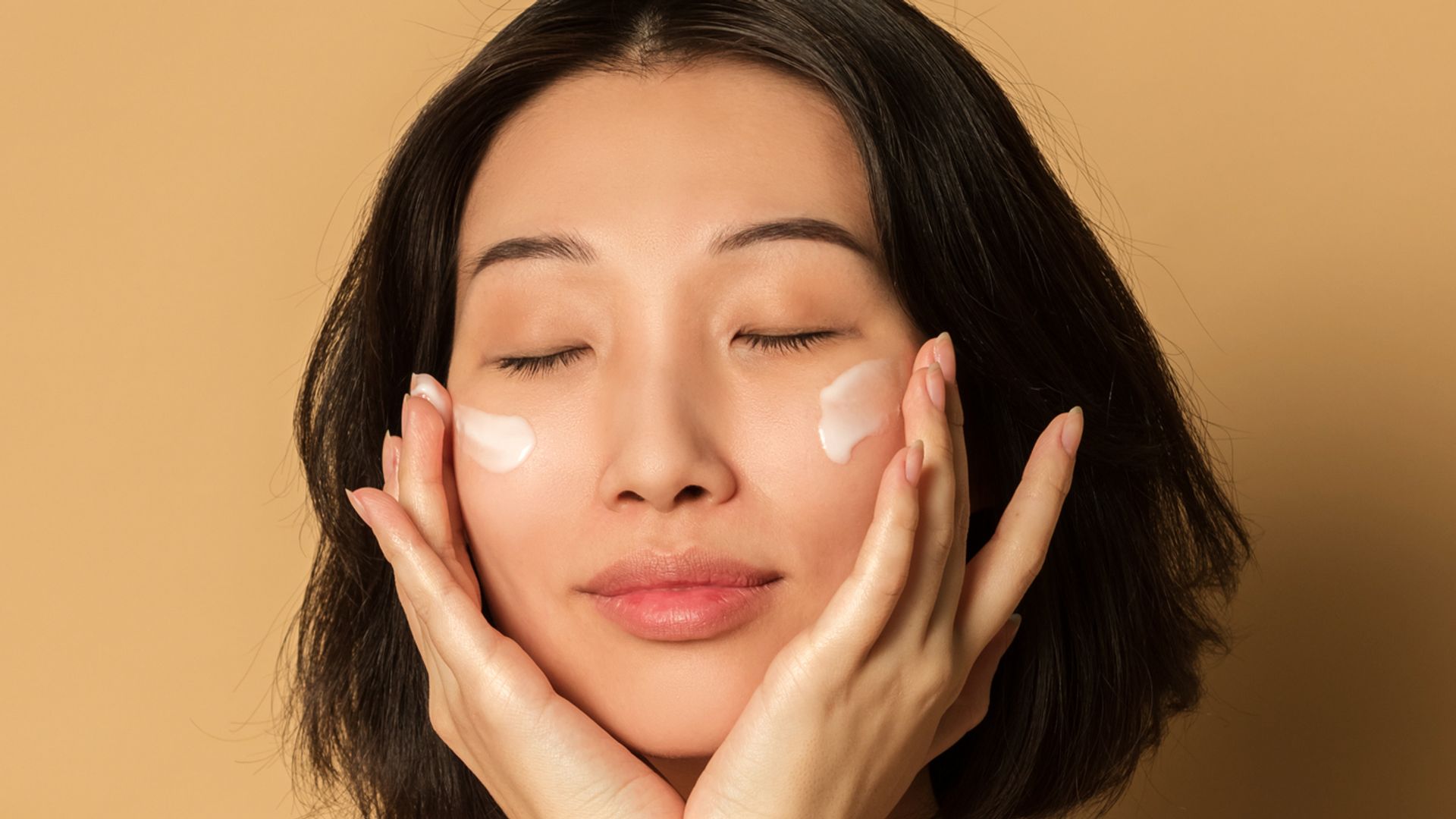
Move over, glass skin. The bloom skin K-beauty trend has arrived, and it is rewriting the rules of Korean skincare for 2026. Where glass skin pursued a mirror-like, wet-look sheen, bloom skin aims for something more organic: a soft-focus, petal-like radiance that looks like skin glowing from the inside out. Think of the luminous flush of a peony at sunrise rather than a sheet of polished glass. Refinery29, BeautyMatter, Hello Magazine, and dozens of beauty outlets are calling it the single biggest K-beauty shift of the year. Here is everything you need to know about why bloom skin is trending, how it differs from glass skin, and how to build a routine that delivers results.
What Exactly Is Bloom Skin?
Bloom skin describes a complexion that radiates a satin, soft-focused glow reminiscent of the inside of a flower petal. Unlike the high-gloss, almost reflective finish that defined the glass skin era, bloom skin is about hydrated luminosity that appears effortless and genuinely healthy. The texture is smooth but not artificially perfect. Pores are visible, fine lines are not erased, and the overall effect is dimensional rather than flat.
The concept originated in Seoul's dermatology clinics and beauty communities in late 2025, gaining traction as Korean women began gravitating toward routines that prioritize barrier health and natural radiance over the labor-intensive layering protocols of the past decade. By early 2026, the bloom skin trend had crossed over into global beauty media, with major publications from Refinery29 to BeautyMatter declaring it the definitive K-beauty aesthetic of the year.
Bloom Skin vs Glass Skin: Understanding the Evolution
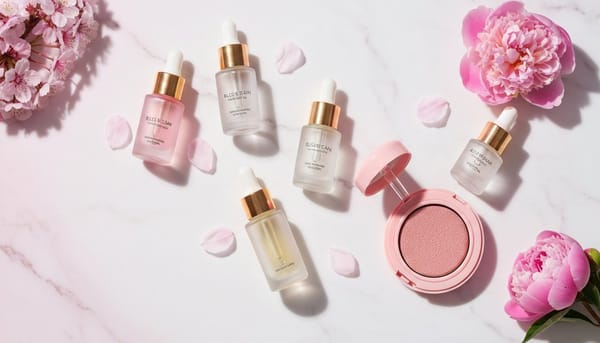
Glass skin dominated K-beauty conversations from roughly 2018 through 2025. The goal was a poreless, translucent, almost liquid-looking surface achieved through meticulous multi-step layering: double cleansing, toners, essences, serums, ampoules, moisturizers, sleeping masks. The result was undeniably striking, but it demanded time, product investment, and a discipline that many found unsustainable.
Bloom skin keeps the hydration obsession but drops the performative perfection. The finish is satin rather than glossy. The routine is shorter. The philosophy is "barrier-first" rather than "layer-more." As integrated facialist April Brodie told Refinery29, "Radiant skin is created through barrier health, consistency, and discipline, not quick fixes." That ethos sits at the heart of the bloom skin movement.
Here is a quick side-by-side comparison:
| ASPECT | GLASS SKIN | BLOOM SKIN |
|---|---|---|
| Finish | High-gloss, wet-look | Satin, soft-focus |
| Steps | 7-10+ products | 3-5 targeted products |
| Philosophy | Maximum layering | Barrier-first, skip-care |
| Key Ingredients | Hyaluronic acid, niacinamide, snail mucin | Ceramides, PDRN, postbiotics, peptides |
| Texture Goal | Poreless, translucent | Naturally luminous, dimensional |
If you are interested in the traditional approach, our Complete Guide to Glass Skin 2026 covers the full 10-step routine in detail. Bloom skin, however, represents where Korean beauty is heading next.
The Skip-Care Revolution Behind Bloom Skin
One of the most striking data points driving the bloom skin trend: according to multiple Korean beauty surveys cited by The Glow Pick and BeautyMatter, 67 percent of Korean women aged 20 to 35 now use five or fewer skincare products daily. The iconic 10-step routine is not dead, but it has been streamlined into what the industry calls "skip-care."
Skip-care does not mean skipping skincare. It means choosing fewer, smarter products that each serve multiple functions. A toner that also delivers ceramides. A serum that combines PDRN and peptides. A moisturizer that doubles as a primer. The bloom skin philosophy argues that overwhelming the skin with layers can actually compromise barrier function, leading to sensitivity, congestion, and the very dullness you were trying to eliminate.
Gabriella Sebestyen of Korean Skincare Coach summarizes the shift: "The direction is clear. Skincare in 2026 is becoming less aggressive and more strategic." This aligns with a broader Korean beauty movement toward "skin longevity" rather than short-term cosmetic results, a concept we explored in depth in our Anti-Aging Skincare Guide 2026.
The Science Behind the Bloom: Key Ingredients
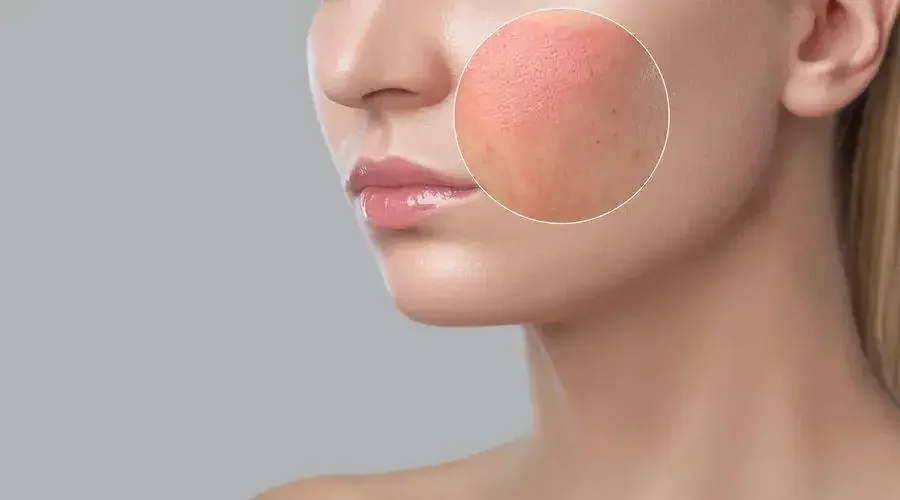
Bloom skin is not just an aesthetic preference. It is built on a specific combination of clinically studied ingredients that support barrier repair, cellular renewal, and sustainable hydration. Here are the actives driving the bloom skin K-beauty trend:
CERAMIDES: The foundation of bloom skin. Biomimetic ceramides in a 3:1:1 ratio with cholesterol and fatty acids mimic the skin's own lipid barrier. When the barrier is intact, moisture stays locked in and the complexion develops that natural, lit-from-within glow without any highlighting product. Products like the TOCOBO Multi Ceramide Cream and COSRX Ceramide Barrier Mist have become staples in Korean bloom skin routines.
PDRN (Polydeoxyribonucleotide): Searches for PDRN in skincare have surged 700 percent, according to multiple industry trackers. Originally derived from salmon DNA, PDRN promotes tissue regeneration and collagen synthesis at the cellular level. Brands like Medicube and Derma Factory have made PDRN serums accessible at drugstore price points. For a deeper look at this ingredient, check our K-Beauty Ingredients Encyclopedia 2026.
POSTBIOTICS: Lactobacillus ferment lysate and bifida ferment filtrate have become the next evolution beyond probiotics in skincare. Clinical studies suggest that postbiotic formulations can improve barrier function by up to 34 percent in eight weeks. Ma:nyo's Bifida Biome Complex Ampoule is one of the best-selling postbiotic products in Korea right now.
MODERNIZED HANBANG: Traditional Korean herbal medicine ingredients such as ginseng, mugwort, and bamboo sap are being reformulated with modern delivery systems. These botanicals offer antioxidant and anti-inflammatory benefits that complement the barrier-repair focus of bloom skin. The trend reflects a cultural pride in Korean medicinal heritage combined with cutting-edge cosmetic science.
PEPTIDES AND CENTELLA ASIATICA: Rounding out the bloom skin ingredient stack are signal peptides for collagen stimulation and Centella asiatica (cica) for its well-documented soothing and repair properties. Skin1004's Madagascar Centella line remains one of the most recommended cica ranges in Korean dermatology. If you are curious about barrier-supporting ingredients, our guide to Ectoin Skincare 2026 covers another powerhouse active that pairs well with bloom skin routines.
How to Build a Bloom Skin Routine: 4 Steps
The beauty of bloom skin is its simplicity. Where glass skin demanded double-digit product counts, a solid bloom skin routine can be achieved in four steps. Here is a framework based on recommendations from Korean dermatologists and beauty experts:
STEP 1 - HYDRATE AND PREP: Start with a gentle, pH-balanced cleanser followed by a ceramide-rich toner. The TIRTIR Milk Skin Toner is a top choice in Korea for its milky, barrier-nourishing formula that preps the skin for the next steps without stripping moisture.
STEP 2 - REVITALIZE: Apply a targeted serum. For bloom skin, look for formulas that combine PDRN, peptides, or postbiotics. The Medicube PDRN Pink Collagen Serum and Torriden Cellmazing Serum are two of the most recommended options. Apply to slightly damp skin and press gently rather than rubbing.
STEP 3 - MOISTURIZE AND SEAL: Lock everything in with a ceramide-forward moisturizer. The Aestura Atobarrier 365 Cream is a dermatologist favorite in Korea for its clinical-grade barrier repair without a heavy feel. This is the step that creates the satin finish that defines bloom skin.
STEP 4 - PROTECT: No skincare routine is complete without SPF. The Skin1004 Madagascar Centella Sun Serum offers broad-spectrum protection with a lightweight, non-greasy finish that works under makeup without pilling. Korean sunscreen formulations remain years ahead of Western equivalents in terms of texture and wearability.
For a comprehensive product comparison, visit our K-Beauty Product Database 2026.
K-Beauty Makeup Trends That Complement Bloom Skin
The bloom skin aesthetic extends beyond skincare into makeup. Several K-beauty makeup trends in 2026 are designed specifically to enhance the bloom skin look rather than mask it:
BLURRED LIPS: Google searches for blurred lips have increased 300 percent, according to Who What Wear. The technique involves applying lip color to the center of the lips and diffusing outward for a soft, just-bitten effect. It pairs perfectly with bloom skin's soft-focus philosophy.
UNDER-EYE BLUSH: Instead of applying blush to the cheekbones, Korean makeup artists are placing a sheer wash of color just below the lower lash line. The effect mimics the natural flush that comes with healthy, well-hydrated skin.
LIGHTER, SOFTER BROWS: The bold, structured brow is giving way to feathery, lighter strokes that maintain a low-contrast, natural aesthetic. Combined with bloom skin, the overall impression is youthful and unforced.
LOW-CONTRAST EVERYTHING: The unifying principle across K-beauty makeup in 2026 is reduced contrast. Monochromatic palettes, sheer formulas, and buildable coverage all serve to showcase the skin itself rather than the makeup sitting on top of it.
What Dermatologists and Experts Say
The bloom skin K-beauty trend has gained credibility not just through social media virality but through endorsement from skincare professionals:
April Brodie, an integrated facialist featured in Refinery29, emphasizes that "the globally admired Korean glow is not created by viral products or miracle creams. It comes from disciplined routines." She advises: "Start with the essentials. Cleanse gently, hydrate deeply, treat intentionally, and protect daily."
Melody Yuan, CEO of Skin Cupid and a prominent K-beauty expert quoted in Hello Magazine, predicts that "2026 will be a year defined by personalisation, skin health, and sustainable luxury." She sees bloom skin as part of a broader shift toward individualized skincare that respects each person's unique barrier needs.
Lucie Shin, Head of Data Business at Trendier AI, told BeautyMatter that K-beauty is "living in 2050" in terms of innovation, noting "data-backed credibility behind the hype." The numbers support this: South Korea ranked second globally as a cosmetics exporter in Q1 2025 with $3.61 billion in exports, and total Korean cosmetics exports reached $11.43 billion in 2025, up 12.3 percent year-over-year. South Korea has even surpassed France as the largest cosmetics exporter to the United States.
For more on how K-beauty continues to lead global skincare innovation, explore our K-Beauty Complete Guide 2026.
You May Also Like
- Complete Guide to Glass Skin 2026: The 10-Step Korean Skincare Routine
- Ectoin Skincare 2026: The Extremolyte Outperforming Hyaluronic Acid
- Snail Mucin Skincare 2026: Science, Benefits, and Best K-Beauty Products
FAQ
Q: What is bloom skin in K-beauty?
A: Bloom skin is K-beauty's newest skincare aesthetic for 2026. It describes a soft-focus, petal-like radiance that looks naturally luminous rather than artificially glossy. Unlike glass skin's wet-look sheen, bloom skin achieves a satin glow through barrier-first skincare with ceramides, PDRN, and postbiotics in a streamlined 3-5 step routine.
Q: How is bloom skin different from glass skin?
A: Glass skin aims for a poreless, translucent, mirror-like finish through 7-10+ product layers. Bloom skin targets a more natural, dimensional glow using fewer but more targeted products. The key shift is from maximum layering to strategic barrier repair with skip-care principles.
Q: What products do I need for a bloom skin routine?
A: A basic bloom skin routine requires four products: a ceramide-rich toner (like TIRTIR Milk Skin Toner), a PDRN or peptide serum (like Medicube PDRN Pink Collagen Serum), a barrier-repair moisturizer (like Aestura Atobarrier 365 Cream), and a lightweight Korean sunscreen (like Skin1004 Madagascar Centella Sun Serum).
Q: Is bloom skin suitable for oily or acne-prone skin?
A: Yes. Bloom skin's barrier-first approach is especially beneficial for oily and acne-prone skin types. When the skin barrier is healthy, oil production often normalizes and breakouts decrease. The skip-care philosophy also reduces the risk of product-induced congestion that can come from over-layering.
Q: Can I transition from a glass skin routine to bloom skin?
A: Absolutely. Start by gradually reducing the number of products in your routine while adding barrier-supportive ingredients like ceramides and postbiotics. Keep your cleanser and sunscreen, swap in a targeted serum, and choose a ceramide moisturizer. Most people find the transition improves their skin within two to four weeks as the barrier strengthens.
The Bottom Line
The bloom skin K-beauty trend represents a meaningful evolution in Korean skincare philosophy. It moves away from the pursuit of artificial perfection and toward a science-backed, barrier-first approach that delivers real results with less effort. With industry exports reaching record highs and K-beauty innovation continuing to outpace the global market, bloom skin is not just a passing fad. It is the future of how the world thinks about skincare. Start with barrier health, keep your routine strategic, and let your skin bloom.
Sources: Refinery29, BeautyMatter, Hello Magazine, OneulKorea, Korean Skincare Coach


댓글
댓글 쓰기