Spicule Skincare 2026: K-Beauty's Viral Microneedling Alternative
Spicule Skincare 2026: K-Beauty's Viral Microneedling Alternative That Dermatologists Are Watching Closely
Spicule skincare is rapidly emerging as one of the biggest K-beauty trends of 2026, with Google searches for the ingredient surging 119% year-over-year and social media buzzing with before-and-after results. Often described as "microneedling in a bottle," spicule-infused products promise to deliver the skin-refining benefits of professional microneedling treatments from the comfort of your bathroom — all for under $30. But do they actually work, and are spicules safe for every skin type? We spoke with board-certified dermatologists and reviewed the latest clinical evidence to bring you the complete guide to spicule skincare in 2026.
What Are Spicules and How Do They Work in Skincare?
Spicules are microscopic, needle-shaped structures derived from freshwater sponges, most commonly Spongilla species. These tiny structures, composed of natural minerals such as calcium and silica, form part of the sponge's exoskeleton and give it its distinctive rigid structure. When incorporated into skincare products and massaged onto the skin, spicule skincare creates thousands of tiny, temporary microchannels in the upper layers of the epidermis.
"They are needle-like structures that come from marine sponges and act as tiny physical stimulators," explains Dr. Marie Jhin, a board-certified dermatologist. The mechanism is straightforward: these microchannels remain open for approximately 24 hours before the spicules are naturally shed through normal skin cell turnover. During that window, any active ingredients applied to the skin can penetrate far more effectively than they would through topical application alone.
The results can be significant. Research suggests that spicule-enhanced delivery can improve skincare product absorption by up to 342%, and some studies indicate that active ingredients may penetrate up to 60 times more effectively when paired with spicules. This enhanced delivery system is what has earned spicule skincare the nickname "liquid microneedling" among K-beauty enthusiasts and dermatology professionals alike.
The Science Behind Spicule Skincare: What Clinical Studies Show
While spicule skincare is generating enormous excitement, the scientific evidence is still developing. One notable human study demonstrated that participants who used growth factors combined with spicules showed significantly better improvement in clinical wrinkle scores compared to those who applied growth factors alone. The spicule group experienced measurable improvements in both wrinkle depth and dermal density over an 8-week treatment period.
In another clinical trial, 14 participants with moderate to severe acne used a cleanser containing 3% spicule concentration for 12 weeks. Acne grades improved significantly after just 7 weeks of consistent use, suggesting that spicule skincare may offer benefits beyond anti-aging, including improved skin texture and reduced breakouts.
However, Dr. Rachel Ho, an aesthetic physician, urges caution: "Spicules are relatively new to the cosmetics scene with limited studies to assess their safety and efficacy." She highlights that most evidence currently derives from animal studies, and that human trials remain scarce. The depth of penetration achieved by spicules is also less precise and more superficial compared to professional microneedling, making the effects somewhat less predictable.
"Spicules take this one step further by causing a micro-injury response," adds Dr. Eleonora Fedonenko, a dermatologist and medical director. This controlled micro-trauma stimulates the skin's natural healing processes, potentially boosting collagen production and cell turnover — mechanisms similar to those seen in professional microneedling treatments, albeit at a more superficial level.
Top Spicule Skincare Products in 2026: Dermatologist-Reviewed Picks

The K-beauty market has responded to the spicule skincare trend with a wave of innovative products, many of which are now available globally through retailers like Amazon, Olive Young, and Sephora. Here are the standout spicule skincare products dermatologists are recommending in 2026:
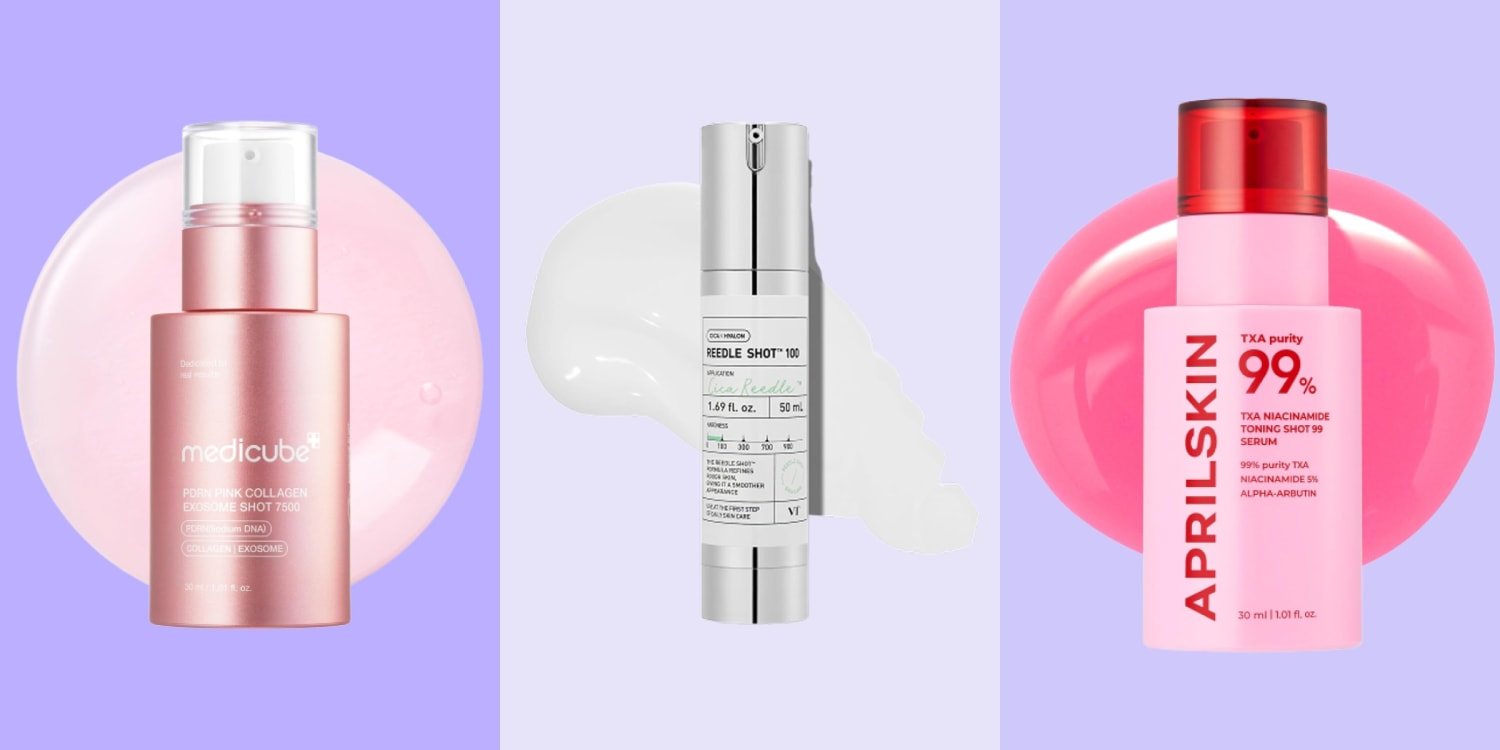
Medicube Exosome Shot ($21.99) — Widely considered the best overall spicule product on the market, this serum combines spicule technology with exosome delivery for enhanced anti-aging benefits. It targets fine lines, uneven texture, and dullness while remaining gentle enough for most skin types. The pairing of spicules with exosomes — another buzzy K-beauty ingredient — makes this a powerhouse formula.
VT Cosmetics Reedle Shot 100 ($22.10) — Recommended as the best option for sensitive skin beginners, VT Cosmetics' Reedle Shot line has been instrumental in bringing spicule skincare to Western markets. The "100" in the name refers to the spicule concentration level, making it a moderate-strength entry point for those new to the ingredient.
Mediheal Collagen Spicule 3000ppm ($22.00) — This product combines spicule delivery with marine collagen, targeting both penetration enhancement and collagen support in a single step. The 3000ppm concentration delivers noticeable results while remaining within the dermatologist-recommended range.
APRILSKIN TXA Niacinamide Toning Shot 99 ($18.90) — The most affordable option on this list, this product pairs spicules with tranexamic acid and niacinamide, making it particularly effective for those targeting dark spots and hyperpigmentation.
Biodance Bio Collagen Real Deep Spicule 2-in-1 Mask ($27.00) — For those who prefer a sheet mask format, Biodance offers a unique hybrid product that delivers spicule benefits through a collagen-infused mask, combining the convenience of a sheet mask with the penetration-enhancing properties of spicules.
How to Use Spicule Skincare Safely: A Dermatologist's Guide
Board-certified dermatologist Dr. Hannah Kopelman notes that spicule skincare can "improve texture, refine pores and make your treatments more effective," but proper usage is essential to avoid irritation. Here is the dermatologist-recommended approach to incorporating spicule skincare into your routine:
Start Low, Go Slow: Begin with products containing a spicule concentration between 0.1% and 1%. Many K-beauty brands offer tiered concentration levels — VT Cosmetics' Reedle Shot line, for example, comes in 100, 300, and 700 variants, allowing users to gradually increase intensity as their skin builds tolerance.
Frequency Matters: Limit spicule skincare use to once or twice weekly when first starting out. Overuse can compromise the skin barrier and lead to excessive irritation, redness, or sensitivity. As your skin adapts, you can gradually increase frequency based on how your skin responds.
Application Technique: Apply a thin, even layer to clean, dry skin and gently press or pat the product in — avoid aggressive rubbing or scrubbing motions. The spicules will work their way into the skin with minimal pressure. Follow with your preferred serum or moisturizer to take advantage of the enhanced absorption window.
Post-Spicule Care: Expect mild tingling, slight redness, or a prickly sensation for the first few hours — this is normal. Apply a gentle, fragrance-free moisturizer and, critically, use broad-spectrum sunscreen the following day, as the microchannels can increase photosensitivity. Consider pairing spicule treatments with barrier-repair ingredients like beta-glucan to support skin recovery.
Who Should Avoid Spicule Skincare? Important Safety Warnings
Despite the excitement surrounding spicule skincare, dermatologists are clear that this ingredient is not suitable for everyone. Dr. Eleonora Fedonenko is unequivocal: "Anyone with rosacea, active eczema or a compromised skin barrier needs to keep away." The mechanical nature of spicule exfoliation can significantly worsen inflammatory skin conditions and delay healing.
Dr. Jane Yoo, a board-certified dermatologist and Mohs surgeon, also emphasizes that spicule skincare is "not the same as in-office microneedling." Professional microneedling treatments offer precise, controlled depth penetration performed under sterile conditions, while spicule products create more variable and superficial channels. For those seeking dramatic anti-aging results or treating specific dermatological concerns, professional treatments remain the gold standard.
Additional safety considerations identified by dermatologists include:
- Mechanical trauma risk: Overly aggressive application can cause microtears beyond what is therapeutically beneficial
- Microbial risk: The temporary microchannels can potentially allow bacteria to penetrate deeper into the skin if products or hands are not properly sanitized
- Enhanced irritant penetration: While enhanced absorption is desirable for beneficial ingredients, it also means potential irritants, allergens, or harsh actives like retinoids can penetrate more deeply, increasing the risk of adverse reactions
- Active acne: Those with inflamed, active acne breakouts should avoid spicules, as the mechanical stimulation can exacerbate swelling and spread bacteria
Spicules vs. Microneedling vs. Other K-Beauty Actives: How Do They Compare?
The K-beauty innovation pipeline in 2026 is remarkably rich, with spicule skincare joining a constellation of trending ingredients including exosomes, PDRN (salmon DNA), and microbiome-supporting probiotics. Understanding how spicule skincare compares to these alternatives is key to building an effective routine.
Spicules vs. Professional Microneedling: Professional microneedling uses controlled needle depths (typically 0.5-2.5mm) to trigger significant collagen remodeling. Spicules penetrate more superficially and variably, making them better suited for maintenance, texture refinement, and product absorption enhancement rather than deep scar treatment or significant anti-aging intervention. The advantage of spicules is accessibility — treatments cost under $30 compared to $200-700 per professional session.
Spicules vs. Exosomes: While exosomes deliver cellular-level communication signals to promote skin repair, spicules primarily enhance the delivery pathway rather than serving as an active ingredient themselves. Many products, like the Medicube Exosome Shot, combine both technologies for a synergistic approach.
Spicules vs. Chemical Exfoliation: AHAs and BHAs dissolve the bonds between dead skin cells chemically, while spicules physically create microchannels. Spicule skincare may be preferred by those who find chemical exfoliants too drying, though the two approaches target slightly different mechanisms and can be complementary when used on alternate days.
The Future of Spicule Skincare: What Comes Next
The spicule skincare trend shows no signs of slowing down. K-beauty brands continue to innovate, with new formulations combining spicules with trending actives like EGF (Epidermal Growth Factor), peptide complexes, and fermented ingredients. The Korean beauty industry's expansion into SPF, inner beauty, and post-procedure skincare is also likely to incorporate spicule technology, particularly in the post-procedure recovery category where enhanced ingredient delivery is especially valuable.
Industry analysts at Cosmetics Business have identified spicules as one of the top five skincare ingredients primed to break through in 2026, placing them alongside established powerhouses like retinoids and vitamin C in terms of consumer interest and market potential. The ingredient's affordability and accessibility — with most products priced between $18 and $30 — positions spicule skincare as a democratizing force in the active skincare space.
Frequently Asked Questions About Spicule Skincare
Q: Are spicules safe for sensitive skin?
A: Spicules can be used on moderately sensitive skin if you start with a low concentration (0.1-1%) and limit use to once weekly. However, dermatologists strongly advise against spicule use for those with rosacea, active eczema, or a compromised skin barrier. VT Cosmetics Reedle Shot 100 is frequently recommended as the gentlest entry point for sensitive skin types.
Q: How often should I use spicule skincare products?
A: Beginners should start with once or twice weekly application. As your skin builds tolerance over 4-6 weeks, you may gradually increase frequency. Overuse can compromise the skin barrier and cause excessive irritation, so more is not always better with spicule skincare.
Q: Can I use spicule products with retinol or vitamin C?
A: Dermatologists recommend caution when combining spicules with potent actives like retinol or high-concentration vitamin C. The enhanced penetration created by spicules means these ingredients will absorb more deeply, which can increase the risk of irritation or retinoid dermatitis. If you want to use both, apply retinol or vitamin C on non-spicule days rather than immediately after spicule application.
Q: What is the difference between spicule skincare and professional microneedling?
A: Professional microneedling uses precisely controlled needle depths (0.5-2.5mm) under sterile clinical conditions to trigger deep collagen remodeling. Spicule skincare works more superficially and with less precise penetration depth. Spicules are best for maintenance, texture improvement, and enhancing product absorption, while professional microneedling is more appropriate for treating acne scars, deep wrinkles, and significant skin laxity.
Q: Do spicule skincare products really improve product absorption by 342%?
A: Some research does support significantly enhanced absorption rates, though the exact improvement varies by product formulation, spicule concentration, and application technique. The 342% figure comes from specific research conditions and may not be universally replicable with all products. That said, the general principle — that creating temporary microchannels improves topical delivery — is well-supported by dermatological science.
The Bottom Line on Spicule Skincare in 2026
Spicule skincare represents one of the most exciting developments in K-beauty's ongoing innovation cycle. For the right candidate — someone with healthy, intact skin looking to boost their skincare routine's efficacy without the cost or downtime of professional treatments — spicule products offer a compelling and affordable option. With products from trusted K-beauty brands like VT Cosmetics, Medicube, and Mediheal all priced under $30, the barrier to entry is remarkably low.
However, as with any trending ingredient, the key is informed, cautious adoption. Start slow, listen to your skin, and consult a dermatologist if you have any underlying skin conditions. The science behind spicule skincare is promising but still developing, and the most responsible approach is to treat these products as a complementary addition to your routine rather than a replacement for professional dermatological care.
Sources: NBC Select | Cosmetics Business | Marie Claire UK | Dr. Rachel Ho


댓글
댓글 쓰기