Spicule Skincare 2026: Is K-Beauty's Microneedling in a Bottle Worth the Hype?
Spicule Skincare 2026: Is K-Beauty's Microneedling in a Bottle Worth the Hype?

Spicule skincare is the breakout K-beauty trend of 2026, and if you have been anywhere near skincare social media this spring, you have almost certainly seen the phrase "microneedling in a bottle." Google searches for spicule skincare have surged by 119 percent year-over-year, and brands like Medicube, VT Cosmetics, and Genabelle are racing to bring this Korean innovation to Western shelves. But what exactly are spicules, how do they work, and should you actually add them to your routine? This guide covers everything you need to know about the spicule skincare revolution in 2026.
What Are Spicules and Why Is Everyone Talking About Them?
Spicules are microscopic, needle-like structures derived from freshwater sponges, most commonly the Spongilla species. Each spicule measures roughly two to four times the diameter of a human hair and appears on ingredient labels as Hydrolyzed Sponge. While microspicules have been used in K-beauty formulations for over a decade in South Korea, 2026 is the year they are going fully mainstream in the United States, Europe, and beyond.
According to Cosmetics Business, spicules are the next breakout ingredient following the exosome and PDRN wave of 2024-2025. The ingredient has earned the nickname "liquid microneedling" because of the way it creates temporary microchannels in the upper epidermis, mimicking some of the surface-level benefits of professional microneedling treatments without any invasive tools or clinic visits.
Dr. Jennifer Owens, founder of The Glow Clinic, explains that when spicules are massaged into the skin, they create thousands of tiny, temporary microchannels. Unlike metal microneedling rollers or pens, these microscopic particles remain in the superficial layers of the skin before naturally shedding within 48 to 72 hours.
How Spicule Skincare Actually Works
The science behind spicule skincare is straightforward but genuinely impressive. When you apply a spicule serum or ampoule to clean, dry skin and press it in, the tiny needle-shaped structures penetrate the outermost layer of the epidermis. This creates a mild, controlled mechanical stimulus that does three key things simultaneously.
First, it increases epidermal permeability, which means that active ingredients applied alongside or after spicules can penetrate far more effectively. Some clinical data suggests absorption rates can increase by up to 60 times compared to applying products on untreated skin, and Medicube claims its formulations boost active ingredient uptake by 242 percent. Second, the micro-trauma encourages gentle exfoliation by accelerating the natural shedding of dead skin cells. Third, the controlled stimulus supports cellular renewal and collagen production over time.
As we covered in our K-Beauty Ingredients Encyclopedia 2026, spicules represent a new category of delivery-system actives that are redefining how we think about skincare absorption. Rather than relying solely on molecular size or lipid solubility to get ingredients past the skin barrier, spicules physically create pathways for deeper penetration.
The Best Spicule Skincare Products to Try in 2026
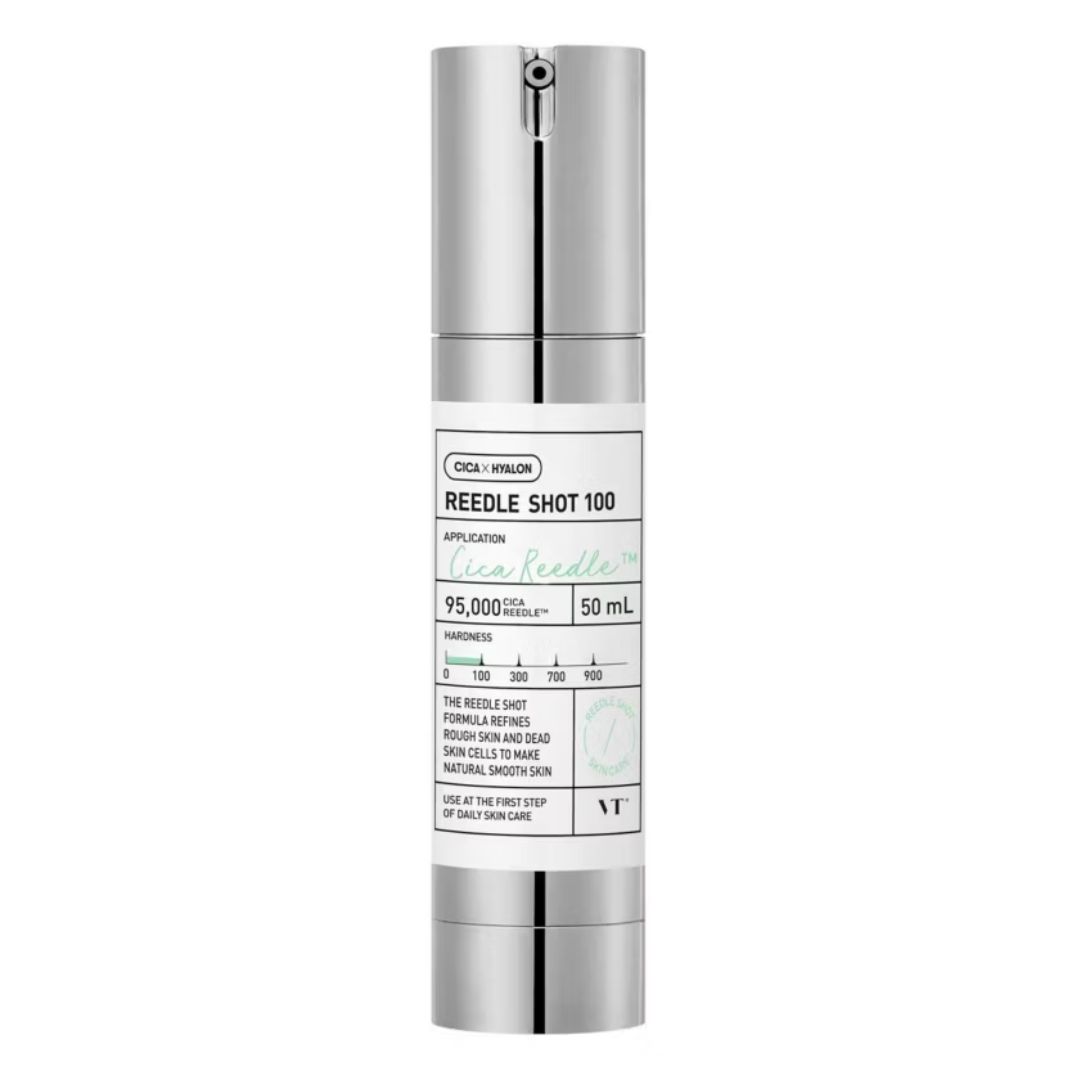
The spicule skincare market has exploded with options in 2026. Here are the most noteworthy products driving the trend, each offering different strengths and formulation approaches.
VT Cosmetics Reedle Shots are widely considered the best entry point for spicule skincare beginners. Available in four strengths (50, 100, 300, and 700), VT's Reedle Shots pair spicules with soothing cica (Centella Asiatica) extract to minimize irritation. The Reedle Shot 100 is the most popular option for daily or regular use, while the 300 and 700 versions are designed for intensive treatments once or twice a week. CNN Underscored and Who What Wear have both published positive reviews, noting smoother texture and visibly tighter pores within weeks of consistent use.
Medicube One Day Exosome Shot Pore Ampoule is the TikTok-viral option that combines spicules with exosomes for a dual-action approach. Available in 2000, 7500, and 25000 PPM concentrations, this ampoule targets pore size, skin texture, and overall radiance. It is now available at Ulta Beauty and Amazon, making it more accessible than ever for Western consumers. The brand claims its formulation enhances skincare absorption by 242 percent compared to using cosmetics alone.
Genabelle Glutathione Vita Glow Spicule Shot takes a brightening-focused approach by combining microspicules with ethyl ascorbyl ether, a stable form of vitamin C. This makes it particularly well-suited for anyone targeting dull skin, uneven tone, or mild hyperpigmentation alongside texture concerns.
Ac Fighting Spot Rx Cream brings spicules into the acne-fighting category, combining them with zinc oxide and niacinamide to target blemishes and dark spots without the harshness of traditional spot treatments.
Vita-A Retinol Shot Tightening Serum marries spicule delivery technology with 0.1 percent retinol and a peptide complex, positioning itself as an anti-aging solution that leverages microchannels to deliver retinol more effectively at lower concentrations.
How to Use Spicule Skincare: A Step-by-Step Guide
Using spicule skincare correctly is critical for getting results without unnecessary irritation. Here is the recommended routine, based on guidance from dermatologists and brand formulation experts.
Step one: cleanse your face thoroughly and ensure your skin is completely dry. Spicules work best on clean, dry skin because moisture can reduce the efficacy of the micro-penetration process. For the best cleansing method, refer to our Double Cleansing Method 2026 Guide.
Step two: dispense a small amount of your spicule serum or ampoule onto your fingertips and apply it evenly across your face, avoiding the immediate eye area. Gently press or pat the product into the skin rather than rubbing, which ensures the spicules embed properly into the epidermis.
Step three: wait five to ten minutes to allow full absorption before applying any follow-up products. You may feel a tingling or mild prickling sensation during this time, which is completely normal and indicates the spicules are working.
Step four: follow with a calming, hydrating serum or sheet mask. Products containing Centella Asiatica, panthenol, or beta-glucan work particularly well at this stage to soothe any temporary irritation while the microchannels are still open.
Step five: seal everything with a rich moisturizer to protect the freshly treated skin. If you are using spicules during the daytime, sunscreen with at least SPF 30 is absolutely non-negotiable, as the temporary microchannels make your skin more photosensitive.
Who Should (and Should Not) Use Spicule Skincare
Spicule skincare is generally well-tolerated across most skin types, but there are important exceptions. According to dermatologists and K-beauty experts, the ideal candidates for spicule products are people dealing with dull and uneven skin texture, enlarged pores, early signs of aging including fine lines, mild pigmentation or post-inflammatory hyperpigmentation, and anyone who wants to boost the absorption of their existing skincare routine.
However, Marie Claire UK reports several categories of people who should exercise caution or avoid spicules entirely. These include those with dry or chronically dehydrated skin, perimenopausal or menopausal skin that tends toward sensitivity, actively sensitized or reactive skin conditions, anyone with a weakened or compromised skin barrier, and people already using potent exfoliating acids or high-concentration retinoids. If you have eczema, psoriasis, broken skin, or active inflammation, consult a dermatologist before introducing spicule products.
As a general rule, beginners should start with the lowest available concentration (such as VT Reedle Shot 50 or Medicube 2000 PPM) and use it no more than once or twice per week initially. You can gradually increase frequency and strength as your skin acclimatizes. This approach is consistent with the broader trend toward what experts are calling "high rise skin," a concept focused on building skin resilience from the ground up, which we explored in our High Rise Skin 2026 article.
The Science Behind the Hype: What Dermatologists Are Saying
The dermatology community is cautiously optimistic about spicule skincare. Chelsey Saunders, Director of Skincare, Haircare and Fragrance at Boots, told Cosmetics Business that their team has been tracking the global innovation coming from K-beauty brands building entire franchises around spicule technology. The trend aligns with the broader consumer shift toward "skinvestment," where buyers want clinical-level results from at-home products.
The fusion of spicules with exosomes has become particularly noteworthy. According to a 2026 K-Beauty In-Depth Report by Magazine Kave, the convergence of spicule delivery systems and exosome technology represents a paradigm shift in how active ingredients are transported into the skin. Exosomes are nano-sized vesicles that carry growth factors, peptides, and genetic material directly to target cells. When paired with spicule-created microchannels, the result is a two-pronged approach: physical pathways plus biological messengers working in concert.
That said, it is worth noting that most of the clinical evidence supporting spicule skincare comes from brand-sponsored studies rather than independent, peer-reviewed research. While the mechanism of action is scientifically plausible and consistent with established principles of transdermal drug delivery, consumers should maintain realistic expectations. Spicule skincare offers a gentler, more accessible alternative to professional microneedling, but it does not replace in-office procedures for serious skin concerns like deep scarring or significant laxity.
Spicule Skincare vs. Professional Microneedling: How They Compare
One of the most common questions surrounding the spicule trend is how it stacks up against professional microneedling treatments. The comparison is useful, but it is important to understand that they operate at fundamentally different levels.
Professional microneedling uses stainless steel or titanium needles ranging from 0.5mm to 2.5mm in length, penetrating into the dermis to trigger significant collagen remodeling. The procedure typically requires numbing cream, involves visible redness and downtime of 24 to 72 hours, and costs between 200 and 700 dollars per session. Results for issues like acne scarring and deep wrinkles are well-documented in clinical literature.
Spicule skincare operates in the epidermis only, with penetration depths generally limited to the outermost layers of the skin. There is minimal to no downtime, and products typically cost between 15 and 40 dollars. The trade-off is that results are more subtle and cumulative, focused on texture refinement, pore appearance, brightness, and enhanced product absorption rather than structural remodeling of the skin.
Think of spicule skincare as the daily maintenance that keeps your skin in optimal condition between professional treatments, rather than a replacement for those treatments. For a comprehensive approach to anti-aging that includes both at-home and professional options, check our Anti-Aging Skincare Guide 2026.
You May Also Like
- K-Beauty Ingredients Encyclopedia 2026: Every Trending Skincare Active Explained
- K-Beauty Complete Guide 2026: Your Ultimate Korean Skincare Handbook
- High Rise Skin 2026: The Skin Prep Trend Replacing Glass Skin
- Anua Barrier Reboot 2026: K-Beauty's First Dermatologist-Developed Moisturizer Line
- Hanbang Skincare 2026: How Korean Herbal Medicine Is Getting a High-Tech Makeover
FAQ
Q: What are spicules in skincare and how do they work?
A: Spicules are microscopic, needle-like structures derived from freshwater sponges (listed as Hydrolyzed Sponge on ingredient labels). When applied to the skin, they create thousands of temporary microchannels in the upper epidermis, enhancing exfoliation, stimulating cellular renewal, and dramatically increasing the absorption of active ingredients applied afterward. The effect is often compared to microneedling, hence the nickname "microneedling in a bottle."
Q: Are spicule skincare products safe for sensitive skin?
A: Most people can tolerate spicule skincare when starting at lower concentrations, but those with actively sensitized skin, eczema, psoriasis, or a compromised skin barrier should consult a dermatologist first. Beginners should start with the lowest available strength (such as VT Reedle Shot 50) and use it only once or twice per week to assess tolerance before increasing frequency or concentration.
Q: What is the best spicule serum for beginners in 2026?
A: VT Cosmetics Reedle Shot 50 or 100 is widely recommended as the best starting point for spicule skincare beginners. These products pair gentle spicule concentrations with soothing Centella Asiatica extract to minimize irritation while still delivering noticeable texture and pore-refining benefits.
Q: Can spicule skincare replace professional microneedling?
A: Spicule skincare operates at the epidermal level only and produces more subtle, cumulative results focused on texture, brightness, and enhanced product absorption. Professional microneedling penetrates deeper into the dermis for significant collagen remodeling. Think of spicule products as excellent daily maintenance rather than a replacement for clinical procedures, especially for concerns like deep scarring or significant skin laxity.
Q: How often should I use spicule skincare products?
A: Usage frequency depends on the product strength and your skin tolerance. Lower-concentration spicule products (like VT Reedle Shot 50 or 100) can be used daily or every other day, while higher-strength formulations (300, 700, or Medicube 7500 and 25000) should be limited to once or twice per week. Always listen to your skin and reduce frequency if you experience persistent redness or irritation.
The Bottom Line
Spicule skincare deserves the attention it is getting in 2026. The science behind creating temporary microchannels for enhanced ingredient delivery is sound, the product options have matured significantly with offerings from VT Cosmetics, Medicube, and Genabelle providing real choices for different skin types and concerns, and the price point makes it accessible as a daily routine addition. If you have been curious about microneedling but hesitant about needles, professional procedures, or the associated downtime and cost, spicule skincare offers a genuinely compelling at-home alternative. Start low, go slow, and let your skin tell you how far to push it.
Sources: Cosmetics Business, Marie Claire UK, BeautyMatter, Magazine Kave
댓글
댓글 쓰기