Vegan Cosmetics Market 2026: How the Industry Is Racing Toward $29.89 Billion by 2030
Vegan Cosmetics Market 2026: How the Industry Is Racing Toward $29.89 Billion by 2030
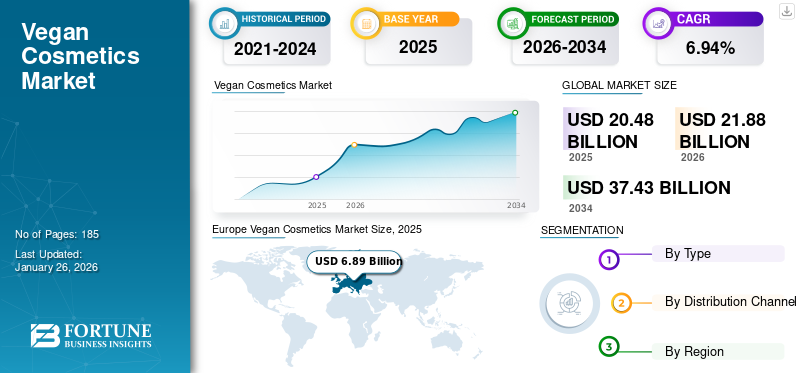
The vegan cosmetics market in 2026 is experiencing explosive growth that is reshaping every corner of the global beauty industry. According to multiple research firms including The Business Research Company and Grand View Research, the vegan cosmetics market is projected to reach between $26.16 billion and $29.89 billion by 2030, expanding at compound annual growth rates ranging from 6.3% to over 14% depending on the market segment analyzed. This is not a niche movement — it is a fundamental transformation in how the world manufactures, markets, and purchases beauty products. With over 65% of beauty consumers now prioritizing cruelty-free certifications when making purchase decisions, the vegan cosmetics market represents one of the most significant growth opportunities in consumer goods today.
Understanding the Vegan Cosmetics Market Size in 2026
The vegan cosmetics market presents varying valuations across research firms, reflecting different methodological approaches and category definitions. According to Mordor Intelligence, the market is worth approximately USD 5.75 billion in 2026 and is growing at a CAGR of 14.12% to reach USD 11.13 billion by 2031. Intel Market Research projects growth from USD 16.8 billion in 2026 to USD 25.9 billion by 2034 at a CAGR of 5.7%. Grand View Research estimates the global market will reach USD 26.16 billion by 2030, expanding at a CAGR of 6.3% from 2022.
The discrepancy in numbers stems from how "vegan cosmetics" is defined. Some analyses include only products with zero animal-derived ingredients, while others encompass the broader cruelty-free category. The cruelty-free cosmetics market itself is projected to rise from USD 6.93 billion in 2025 to USD 9.68 billion by 2035, registering a CAGR of 3.4%, according to Global Growth Insights.
Regardless of the specific numbers, the directional trend is unmistakable: the vegan cosmetics market is growing significantly faster than the overall beauty industry, which expands at approximately 3-5% annually. This growth differential is attracting investment, driving innovation, and forcing traditional beauty conglomerates to reformulate or risk losing market share.
Key Drivers Fueling the Vegan Cosmetics Boom
Several powerful forces are converging to drive the vegan cosmetics market expansion in 2026 and beyond:
Ethical Consumerism: The primary driver is the global rise of vegan consumerism, where consumers actively oppose animal cruelty and seek cosmetics that contain zero animal-derived ingredients. This ethical stance has moved from activist niche to mainstream consumer expectation. Younger consumers, particularly Gen Z and Gen Alpha, consider cruelty-free and vegan certifications as baseline requirements rather than premium features.
Regulatory Pressure: Governments worldwide are tightening regulations around animal testing in cosmetics. The European Union banned cosmetic animal testing in 2013, and similar legislation is progressing in the United States, India, South Korea, and Australia. These regulatory changes force brands to develop vegan and cruelty-free alternatives, expanding supply and normalizing vegan cosmetics across all price points.
Ingredient Innovation: Advances in biotechnology have made it possible to create plant-based and lab-synthesized alternatives to virtually every animal-derived cosmetic ingredient. Squalane derived from olives instead of shark liver, plant-based collagen stimulators, and fermentation-derived hyaluronic acid have eliminated performance gaps that previously limited vegan formulations. The rise of vegan PDRN alternatives in K-beauty exemplifies this innovation trend.
Environmental Consciousness: The vegan cosmetics market benefits from broader sustainability concerns. Animal agriculture — including the production of ingredients like beeswax, lanolin, and carmine — has a significant environmental footprint. Consumers who prioritize environmental sustainability are increasingly drawn to vegan cosmetics as part of a holistic approach to reducing their ecological impact.
Regional Market Analysis: Where Vegan Beauty Is Growing Fastest
Europe dominated the vegan cosmetics market with a 33.84% share in 2024, driven by strong consumer demand for cruelty-free, organic products and the rise of clean beauty trends across Germany, France, and the United Kingdom. The EU's progressive regulatory framework and high consumer awareness have created the most mature vegan beauty market in the world.
North America represents the second-largest market, with the United States being the single largest country market for vegan cosmetics. Retailers like Sephora, Ulta, and Target have expanded their clean beauty sections, making vegan products more accessible to mainstream consumers. Sephora's "Clean + Planet Positive" program has been particularly influential in driving consumer education and purchasing behavior.
Asia-Pacific is the fastest-growing region for the vegan cosmetics market, driven by increasing wealth, growing ethical awareness, and the influence of K-beauty brands that are incorporating vegan certifications. South Korea, in particular, has seen a surge in vegan beauty brands, with retailers like Olive Young dedicating significant shelf space to certified vegan products. This intersects with the broader K-beauty trends for 2026, where sustainability credentials are becoming essential for market competitiveness.
Top Vegan Beauty Brands Leading the Market in 2026
Several brands have emerged as leaders in the vegan cosmetics market, each approaching the space with different strategies:
e.l.f. Beauty: One of the most successful cases of a mass-market brand going fully vegan and cruelty-free. e.l.f.'s stock price has outperformed most beauty companies over the past three years, proving that vegan positioning drives both consumer loyalty and financial returns.
Rare Beauty: Selena Gomez's brand launched as 100% vegan and cruelty-free, demonstrating that celebrity beauty brands can lead with ethics without compromising performance or desirability.
Drunk Elephant: The Shiseido-owned brand has maintained its commitment to vegan formulations while expanding globally, showing that acquisition by a major conglomerate does not require abandoning vegan principles.
The Ordinary (DECIEM): By offering clinical-grade vegan skincare at accessible prices, The Ordinary has proved that the vegan cosmetics market does not require premium pricing.
Ilia Beauty: A clean beauty pioneer that has expanded into the prestige channel while maintaining organic and vegan certifications, Ilia represents the premium end of the vegan cosmetics market.
Vegan Cosmetics Market by Product Category
The vegan cosmetics market growth is not uniform across product categories. Skincare represents the largest segment, driven by the natural overlap between vegan values and clean skincare ingredients. Consumers who seek plant-based facial products often extend this preference to body care, hair care, and sun care.
Color cosmetics (makeup) is the fastest-growing segment within the vegan cosmetics market, as formulation technology has overcome previous challenges with pigment intensity, wear time, and texture in vegan makeup products. Advances in plant-based waxes, mineral pigments, and synthetic alternatives to beeswax and carmine have made it possible to create vegan lipsticks, mascaras, and foundations that match or exceed the performance of conventional formulations.
Fragrance is the most challenging category for vegan certification, as many traditional fragrance ingredients are animal-derived (musk, ambergris, civet). However, synthetic biology and green chemistry have created laboratory alternatives that are indistinguishable from animal-derived originals, and the vegan fragrance segment is growing rapidly. This aligns with the broader trend toward sustainable fragrance noted in our coverage of the natural cosmetics market projected to reach $96.4 billion by 2036.
Challenges Facing the Vegan Cosmetics Market
Despite robust growth, the vegan cosmetics market faces several challenges in 2026:
Certification Confusion: Multiple vegan and cruelty-free certification bodies (The Vegan Society, PETA, Leaping Bunny, Choose Cruelty Free) have different standards, creating consumer confusion. The lack of a universal global standard means that "vegan" can mean different things depending on the certifying body.
Greenwashing: As vegan beauty becomes commercially attractive, some brands engage in greenwashing — marketing products as vegan or clean without substantive ingredient or process changes. This erodes consumer trust and undermines legitimate vegan brands.
Supply Chain Complexity: Ensuring that every ingredient in a cosmetic product — including processing aids, solvents, and trace components — is truly free from animal involvement is logistically complex. Supply chain transparency remains a challenge, particularly for brands sourcing ingredients globally.
Performance Perception: Although formulation technology has largely closed the performance gap, a lingering perception exists among some consumers that vegan cosmetics underperform conventional alternatives, particularly in categories like mascara and long-wear lipstick.
Investment and M&A Activity in Vegan Beauty
The vegan cosmetics market growth is attracting significant investment and merger and acquisition activity. Major beauty conglomerates including L'Oreal, Estee Lauder, Unilever, and Shiseido have been actively acquiring vegan beauty brands and reformulating existing products to meet vegan standards. Venture capital investment in vegan beauty startups reached record levels in 2025, and this trend is continuing into 2026.
For entrepreneurs considering entering the space, our guide on how to launch a skincare business in 2026 covers the practical steps for establishing a new vegan beauty brand, including formulation, certification, and go-to-market strategy.
The Future of the Vegan Cosmetics Market: 2026-2030 Outlook
Looking ahead, several developments will shape the vegan cosmetics market through 2030. Biotech-derived ingredients — where individual molecules are produced through precision fermentation rather than extracted from animals or plants — will become increasingly common, blurring the line between "natural" and "synthetic" while maintaining vegan credentials. Personalized vegan beauty, powered by AI skin analysis, will allow brands to create custom formulations that are both optimized for individual skin needs and certified vegan.
Regulatory harmonization across major markets will eventually create clearer global standards for vegan cosmetics, reducing certification confusion and building consumer confidence. And as Gen Alpha enters the beauty market in the late 2020s, their deeply ingrained ethical and environmental values will further accelerate vegan cosmetics market growth.
Frequently Asked Questions About the Vegan Cosmetics Market
Q: How big is the vegan cosmetics market in 2026?
A: The vegan cosmetics market is valued between USD 5.75 billion and USD 16.8 billion in 2026, depending on the research firm and category definitions used. It is projected to reach between USD 26.16 billion and USD 29.89 billion by 2030, growing at compound annual rates of 6.3% to 14.12%.
Q: What is driving the growth of vegan cosmetics?
A: Key growth drivers include rising ethical consumerism (over 65% of consumers now prioritize cruelty-free certifications), regulatory bans on animal testing, advances in plant-based ingredient technology, environmental consciousness, and the influence of Gen Z purchasing values.
Q: What is the difference between vegan and cruelty-free cosmetics?
A: Vegan cosmetics contain no animal-derived ingredients (no beeswax, lanolin, carmine, collagen, etc.). Cruelty-free cosmetics are not tested on animals but may still contain animal-derived ingredients. A product can be cruelty-free but not vegan, and vice versa. The most ethical standard is products that are both vegan and cruelty-free.
Q: Which region has the largest vegan cosmetics market?
A: Europe leads the global vegan cosmetics market with approximately 33.84% market share, driven by the EU's progressive regulatory framework and high consumer awareness. North America is second, and Asia-Pacific is the fastest-growing region.
Q: Are vegan cosmetics as effective as conventional cosmetics?
A: Yes. Modern formulation technology has largely eliminated performance differences between vegan and conventional cosmetics. Plant-based waxes, mineral pigments, and biotech-derived alternatives now match or exceed the performance of animal-derived ingredients in most product categories.
Sources: Grand View Research, Mordor Intelligence, Fortune Business Insights, Global Growth Insights, Free Yourself


댓글
댓글 쓰기